
Landscape Architecture is a Master Degree program (100% Online) offered by Academy of Art University in San Francisco, CA. The program takes 36 units to complete, with a total tuition of $55,836.
Program Overview
The Master of Arts degree offers an introduction to the essential factors involved in the creation of outdoor spaces. For students with experience in or adjacent to landscape architecture, the program can build and strengthen specific skills needed to pursue a career in landscape architecture.
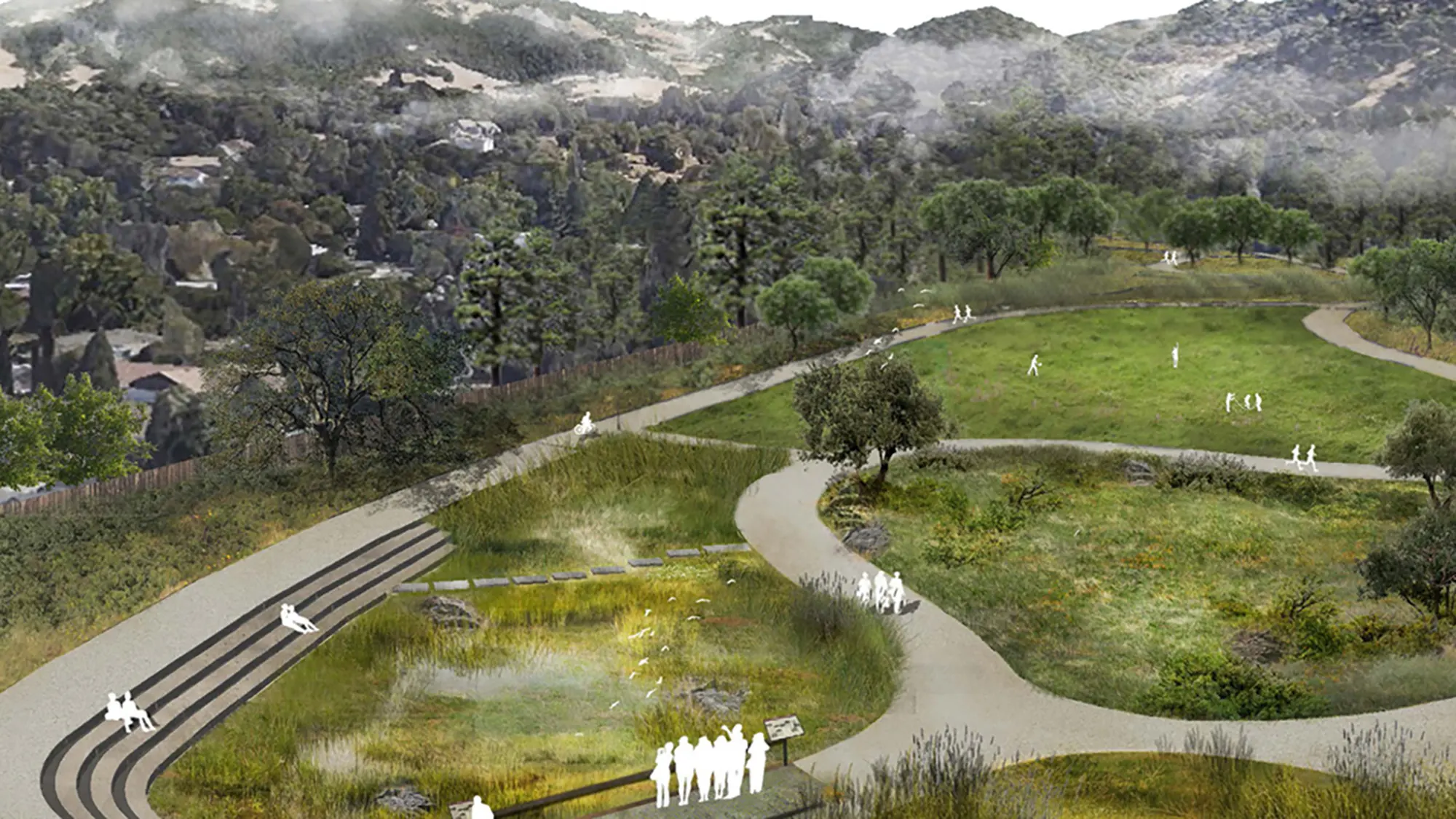
Our courses are designed to help you build a strong portfolio that showcases a wide range of skills such as sketching, digital graphics, design, research, analysis, and synthesis. Our curriculum teaches you to address what matters most: the scarcity of green open space, the inequity of food access, and the urgent need for healing environments. Whether you’re with us on campus or online, you’ll develop strategies to confront climate change head-on. From bioswales to wetlands to retention ponds to green corridors, you’ll design systems that serve both ecology and equity.
What sets this Program apart
In the Academy’s school of Landscape Architecture, you’ll train at the intersection of art and science, where living systems meet designed form and innovation builds on legacy.
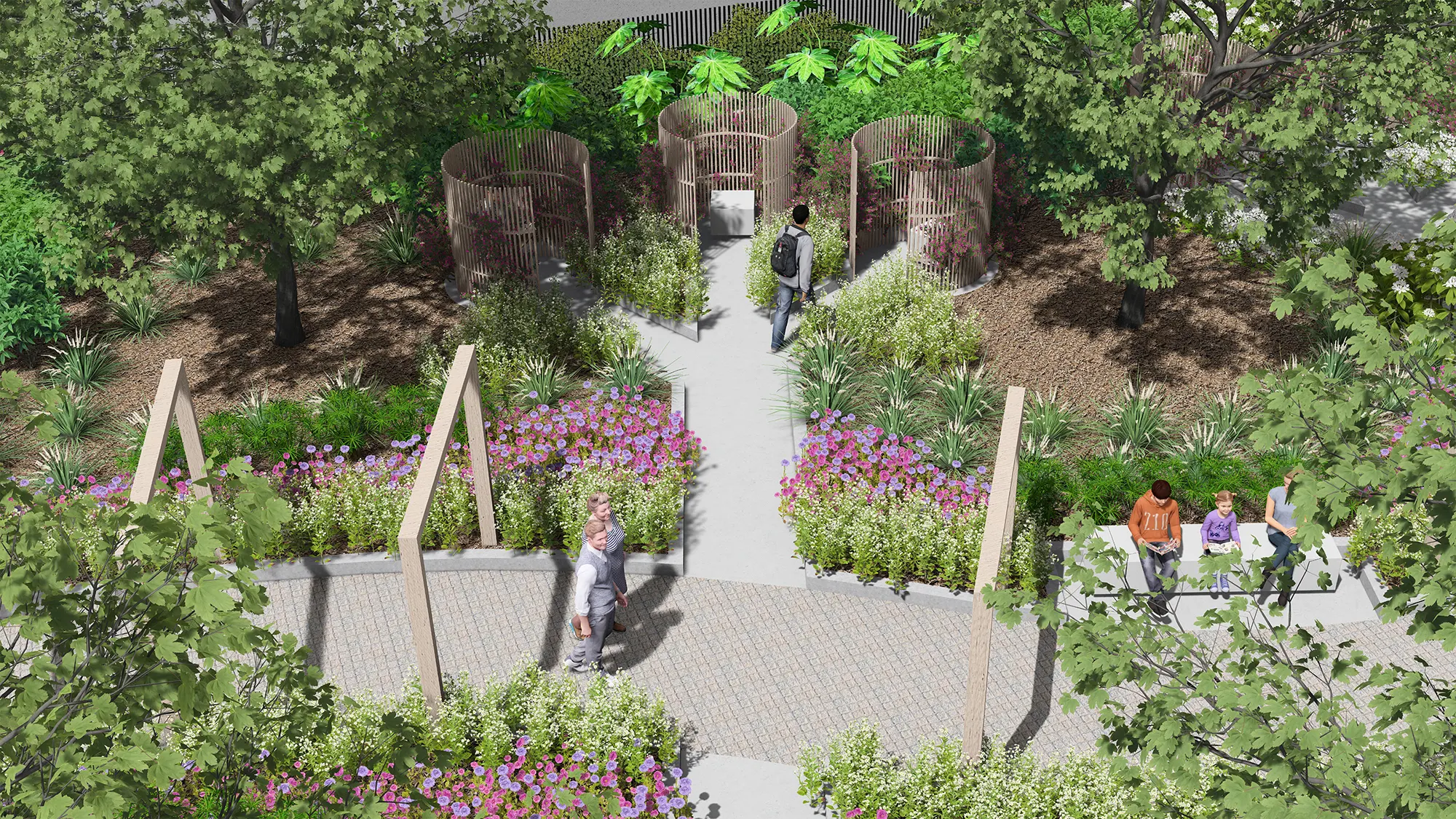
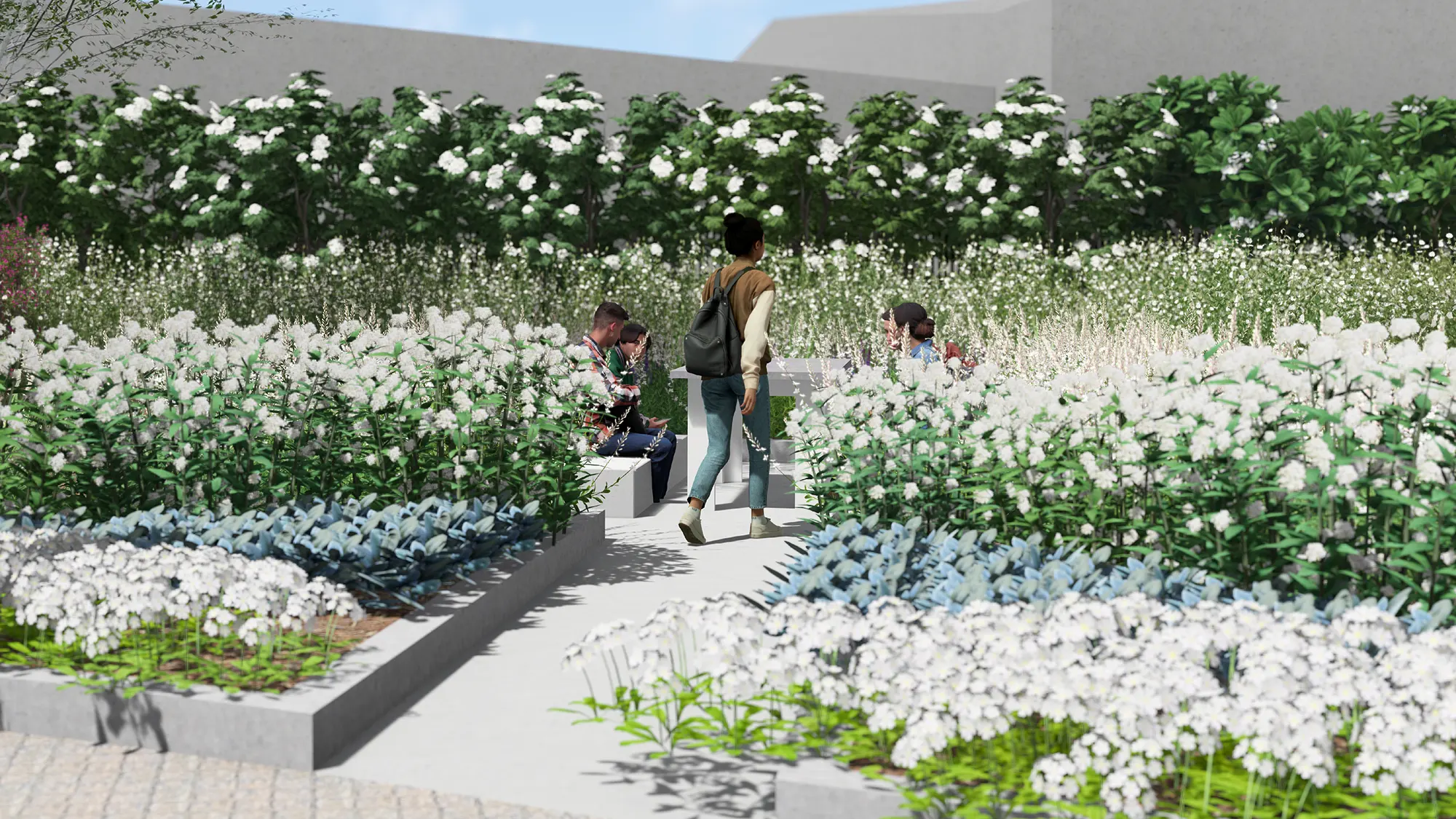
We teach the skills needed to resolve contemporary design challenges large and small—from urban plazas and parklets to tidal marshes and bike trails.
Led by practicing professionals in our STEM-designated school, you’ll gain fluency in responsive design, site planning, and advanced rendering.
You’ll work on solutions for climate change, improving the quality of urban life, protecting natural environments, and creating
With a focus on ecology, site engineering, planting design, sustainability, and construction documentation, you’ll graduate with a portfolio that demonstrates you are prepared to lead.
Online Learning Program. [img data-src="https://bpiqpjsgebtv-u1573.pressidiumcdn.com/wp-content/uploads/2025/08/LAN-609-Tsai-Yumeng-2000px-768x768.jpg"]
Admission Requirements and Process
The Academy requires graduate applicants to demonstrate their ability and intent to complete a Master of Arts (MA), Master of Fine Arts (MFA) or Master of Architecture program (M. Arch.). After submitting the application form and application fee, graduate applicants must submit a statement of intent, a résumé, college transcripts showing completion of at least a Bachelor’s Degree or equivalent, and a portfolio/reel. Upon receiving all application requirements, the department will review and will recommend that the student be accepted, not accepted or allowed to enroll in Graduate Preparatory Coursework.
State authorization for online education.
Online education providers are required to seek authorization by many U.S. states and territories to enroll their residents and those physically located in their jurisdictions. Academy of Art University restricts enrollment for applicants in and from areas where online programs are not approved. Current and prospective students are encouraged to consult the university’s State Authorization for Distance Education Status Table to determine whether the Academy is authorized to offer their degree programs in the state where they will be located while taking online courses.
General Requirements
- Bachelor’s degreeTranscripts must show completion of at least a Bachelor’s Degree or equivalent; you must submit official or unofficial transcripts from the institution from which you graduated.
- Application and feeSubmit the graduate application form and the $50 non-refundable application fee.
- Statement of IntentSubmit an explanation of Graduate School goals and desired outcomes of the graduate degree in a one page, typed essay.
- RésuméSubmit an itemized list of educational and professional experience.
- Portfolio/ReelA body of work representing the chosen discipline is required for class placement in the graduate program; additional materials may be required by the specific departments.
- Department reviewUpon receiving all application requirements, the department will review and will recommend that the student be accepted, not accepted or allowed to enroll in Graduate Preparatory…
Application Process
- 1Meet with an Admissions SpecialistSchedule a meeting with one of our admissions specialists. They’ll guide you to the school and program that best fits your goals and help you navigate the application process.
- 2Apply for admissionSubmit the graduate application form and the $50 non-refundable application fee.
- 3Send your supporting documentsSubmit your Statement of Intent, résumé and college transcripts showing completion of at least a Bachelor’s Degree or equivalent.
- 4Submit your portfolio/reelSubmit a body of work representing your chosen discipline; registration for the appropriate classes is based on the skills demonstrated in the portfolio/reel.
- 5Department reviewThe department reviews your application and recommends that you be accepted, not accepted or allowed to enroll in Graduate Preparatory Coursework.
- 6File the FAFSAComplete the FAFSA online at studentaid.gov and use Academy of Art University’s Federal School ID Number: 007531.FAFSA Code for San Francisco Campus: 007531
Program Schedule
Start dates. Spring 2027 semester starts 2/3/2027 (application deadline 1/25/2027); Summer 2027 starts 6/21/2027 (deadline 6/14/2027); Fall 2027 starts 9/8/2027 (deadline 8/30/2027).
Graduate students must carry a minimum study load of 9 units to be considered as full-time students. Students are expected to attend summer semesters to meet their scheduled completion date.
Our online programs offer immersive classroom experiences both in real time and on demand.
- February 03rd, 2027
- June 21st, 2027
- September 08th, 2027
Cost of Attendance and Financial Aid Information
Tuition. Graduate & Art Teaching Credential tuition for Fall 2026–Summer 2027 is $1,551 per unit for domestic students ($1,857 per unit for international students); tuition is the same for both on-campus and online classes. This 36-unit program’s tuition is $55,836 for domestic students.
Fees.
- Application Fee: $50 (one-time, nonrefundable)
- Registration Fee: $50 per semester (nonrefundable after the cancellation period)
- Enrollment Fee: $95 for first-term domestic students, charged in lieu of the $50 registration fee ($100 for international students)
- Student Activity Fee: $30 per semester, on-site only; waived for students taking all courses online
- Student Tuition Recovery Fund: $0
- Course fees vary by course; fees may be different for on-campus sections and online sections
- Materials/Supplies: $545 average per semester
Estimated total program cost for a full-time, onsite, domestic student (effective fall semester 2026): application fee $50, enrollment fee $95, registration fees $200, student activity fees $150, estimated course fees $1,285–$3,093, for an estimated $57,616–$59,424 due for the entire program.
Payment options. Academy of Art offers many different ways to help you structure your payments, including interest-free installment plans and pre-payment options. The installment plan enables students to pay their tuition in four separate payments during Fall and Spring and two separate payments for Summer.
Financial aid. Federal aid available to Academy of Art University graduate students includes Federal Work Study, Direct Stafford (unsubsidized) Loans and Direct Graduate PLUS Loans. Complete the FAFSA using Academy of Art University’s Federal School ID Number: 007531.
Military and veterans. The Academy processes the Post-9/11 GI Bill® (Chapter 33), the Yellow Ribbon Program, Montgomery GI Bill® (Chapters 30 and 1606), Veteran Readiness & Employment (Chapter 31), DEA (Chapter 35), Military Tuition Assistance and MyCAA.
Net Price Calculator. Estimate your cost with the Academy of Art University Net Price Calculator: https://npc.collegeboard.org/student/app/academyart
Living expenses. The cost of attendance budget includes the costs of tuition and fees, books, supplies, monthly allowances for room and board, transportation to and from school, and personal expenses such as clothes. Estimates of (Monthly) Living Expenses, 2026-2027:
- Food & Housing: $1,393 (student living with parents); $2,729 (student not living with parents); $4,133 (student living on campus, avg.)
- Personal Expenses: $507; $634; $441
- Transportation: $134; $184; $154
Federal student loan debt. From the program’s School Performance Fact Sheet:
- Most recent three year cohort default rate, as reported by the United States Department of Education: 2023: 0%; 2024: 0%.
- The percentage of enrolled students in 2023/2024 receiving federal student loans to pay for this program: 2023: 25%; 2024: 23%.
- The percentage of graduates in 2023/2024 who took out federal student loans to pay for this program: 2023: 0%; 2024: 0%.
- The average amount of federal student loan debt of 2023/2024 graduates who took out federal student loans at this institution: 2023: $14,395; 2024: $14,864.
Curriculum
Master of Arts (MA) Degree – Major Classes.
This program is available online.
Unit Requirements.
- Major Coursework: 36 units
- Total: 36 units
MA Landscape Architecture Degree Requirements.
- Successful completion of Final Portfolio Review.
- Minimum 2.0 cumulative GPA.
- Minimum grade of C in all required 36 units.
Program Learning Outcomes.
Graduate students will meet the following student performance criteria:
Design Proposals
- Demonstrate basic command of the key principles, systems, and elements of design that inform two- and three- dimensional planning and design as well as graphic composition
- Produce defensible design and planning proposals that reflect an awareness of the historical, ecological and climatic factors of a given site
- Creatively solve planning and design problems
Research and Design Process
- Conduct sufficient research and analyze findings at appropriate junctures in the planning and design process
- Explore sufficient concepts and alternatives, and test them against relevant criteria and standards
Natural Systems
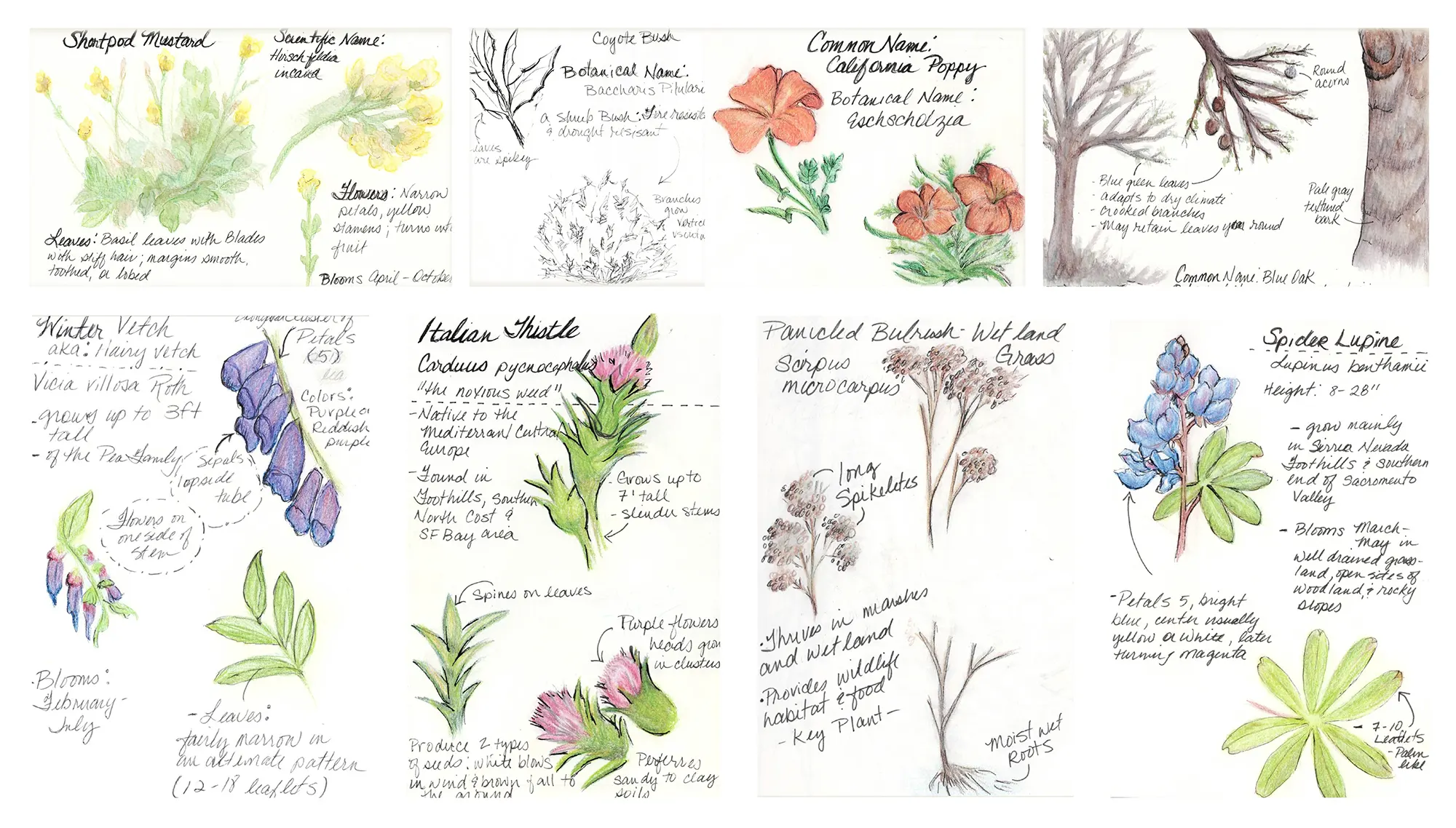
- Identify and evaluate key features and processes found on a site (such as soil types, individual plant species, plant communities, wildlife, climatic conditions, and hydrology) to determine design opportunities and constraints
Human and Social Factors
- Demonstrate an understanding of the complexities that exist between human behavior and outdoor space in planning and design proposals
Technical Systems and Materials
- Apply the principles of sustainability when planning and designing grading and drainage plans
- Select and evaluate materials that will both enhance the aesthetic and ecological qualities of a given site and provide for the programmatic requirements of the client and/or user group
History, Theory, and Criticism
- Demonstrate an awareness of fundamental design traditions, ideas, and influences in planning and design proposals
Visual and Verbal Communication
- Consolidate research and present ideas in concise and convincing verbal and written presentations
- Successfully apply various graphic media to clearly communicate ideas and concepts that reflect the design process and project proposals
Professional Readiness
- Produce a professional portfolio demonstrating their skills and design process
Required Courses
| Subject # | Name | Credits |
|---|---|---|
Career Outcomes
At our
STEM-designated
School of Landscape Architecture, you’ll design living systems that fight climate change, heal communities, and reimagine urban life. From plazas to wetlands, your portfolio will showcase the skills and vision to lead where art, science, and environment collide.
Critical thinking and process-driven design methods will help you successfully transition to the profession. Our courses are designed to help you build a strong portfolio that showcases a wide range of skills such as sketching, digital graphics, design, research, analysis, and synthesis. You will gain knowledge in ecology, site engineering, planting design, sustainability, construction documents, professional practices, and more. Possible careers include:
- Landscape Architect
- Garden Designer
- Landscape Designer
- Environmental Planner
- Landscape Renderer
- Master Planner
- Planting Designer
- Urban Designer
- Urban Strategist
Program performance. From the program’s School Performance Fact Sheet filed with the California Bureau for Private Postsecondary Education (calendar years 2023 & 2024, revised November 25, 2025):
- On-Time Completion Rate: 2023: 50% (3 of 6 students available for graduation); 2024: 20% (1 of 5 students available for graduation).
- Placement Rate % Employed in the Field: 2023: 0% (0 of 2 graduates available for employment); 2024: 0% (0 of 2 graduates available for employment).
- License Examination Passage Rates: Not Applicable.
Graduation and retention rates (university-wide).
- Graduate Students (Full-time): % of all incoming full-time students (503) in Fall 2019 graduated in 5 years: 75%.
- Retention Rates – 2024 Cohort: All incoming full-time graduate students (199) in Fall 2024 re-enrolled in Fall 2025: 81%.
Professional licensure.
Our degree programs in Landscape Architecture (AA, BFA, MA, and MFA) are not accredited by the Landscape Architectural Accreditation Board (LAAB) and do not meet the educational prerequisites for professional licensure in many US states and territories. Those seeking professional licensure will need to obtain pre-approval before starting the exam process.
What to expect as a Academy of Art University student
You’ll learn to design spaces with empathy and intention that improve mental, emotional, and physical wellbeing and improve the quality of urban life. You’ll gain the skills needed to resolve contemporary design challenges large and small—from urban plazas and parklets to tidal marshes and bike trails. You will work on projects designed to meet extraordinary challenges like the lack of green open spaces and access to fresh foods in urban areas.
Campus Address
Why Accreditation Is Important
Academy of Art University is institutionally accredited by the WASC Senior College and University Commission (WSCUC), currently on warning; its accredited status continues during the Warning period.
Approved to operate by the California Bureau for Private Postsecondary Education (BPPE).
- A reliable indicator of quality
- Approved program of study
- Qualified instructors
- Recognition by employers nationwide
Accreditations
Student Demographics
These are demographics for all students at the San Francisco Campus (IPEDS, 2024).
Percentages are of total fall enrollment. 910 students whose race or ethnicity was not reported are included in that total but shown as no category, so the figures above come to 83.4% rather than 100%.
Testimonials



Images