
Aviation Maintenance Technician is a Certificate program (Hybrid) offered by Aviation Institute of Maintenance in Houston, TX. The program takes 21 months to complete, with a total tuition of $47,410.
Program Overview
The Aviation Maintenance Technician (AMT) program prepares students for entry-level employment within the aviation maintenance industry. Students learn the specialized skills necessary to work on structures, powerplants, aircraft systems, flight-controlled systems, and engine systems, and become eligible and prepared for certification by the Federal Aviation Administration (FAA) as an Airframe and Powerplant (A&P) Mechanic. The AMT program provides students with the proper knowledge and skill levels to earn employment as an aircraft mechanic, avionics technician, aircraft inspector, or other entry-level role related to the aviation maintenance field.
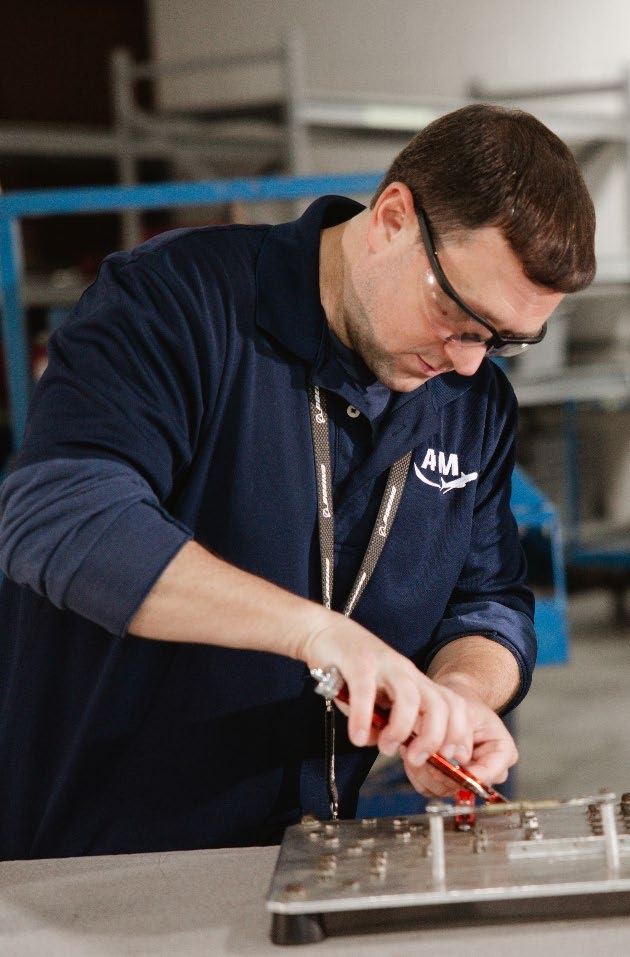
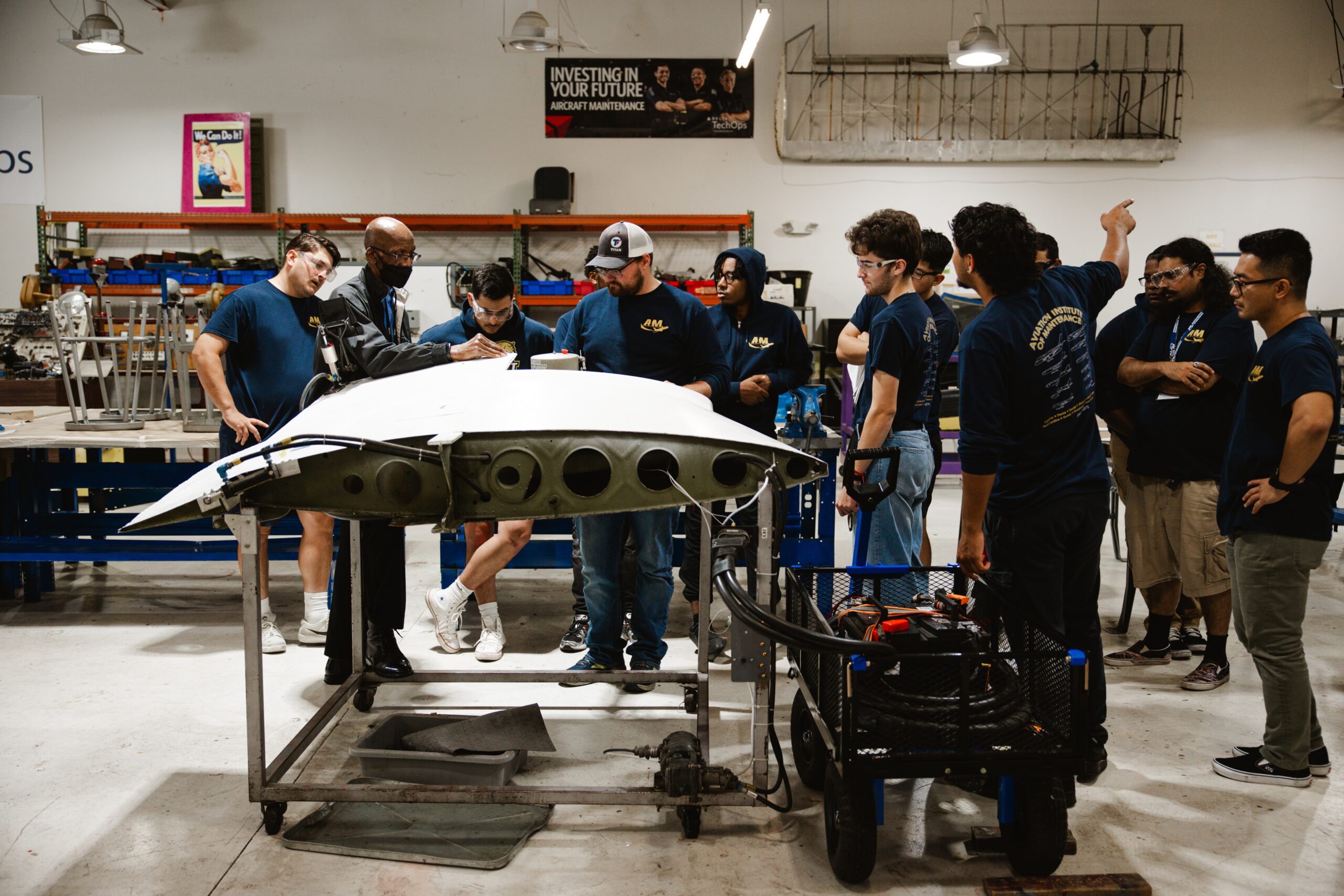
While in school, students gain valuable hands-on experience in the hangar while studying the General, Airframe, and Powerplant subjects required by the FAA. During lab instruction, students are trained using FAA-approved equipment used throughout the aviation industry, and students learn to repair and maintain a variety of powerplants, including jet engines, turbo props, and reciprocating engines. Students are also trained to service, repair and overhaul aircraft components and systems, including the airframe, electrical systems, hydraulic systems, propellers, instrumentation, warning systems, and environmental systems.
What sets this Program apart
The aviation industry, as well as other repair and overhaul companies, desire not only the technical skills of our graduates, but also:
- The professional skills, attention to detail, and commitment to safety taught within the program
- The ability to follow procedures and document processes, and interpersonal soft skills
- A Capstone course that guides students in preparing for the FAA certification examinations
- Hours of instructor-guided, hands-on training in the hangar and classrooms — students often work on carburetors, magnetos, turbo chargers, and other complex equipment found on aircraft
General Requirements
- AgeApplicants must be beyond the age of compulsory high school attendance and have an approved cosigner if under the age of 18.
- EducationApplicants must provide acceptable proof of graduation from high school, a General Education Diploma, or equivalent. An international/foreign transcript must be translated into English, evaluated by an approved third party, and determined to be equivalent to a US high school diploma.
- IdentificationApplicants must submit a government-issued photo ID, such as a copy of a state issued driver's license, state issued identification card, or passport.
- ApplicationApplicants must submit an Application for Admissions and a $25 application fee in order to be considered for admission. The application fee is waived for veterans with proof of service.
School Information
Campus Location
Accreditation & Approvals
Accredited by ACCSC; FAA-certified under Part 147. Exempt under Texas Education Code §132.002(a)(8); not approved nor regulated by the Texas Workforce Commission.
- A reliable indicator of quality
- Approved program of study
- Qualified instructors
- Recognition by employers nationwide
Accreditations

Application Process
- 1Submit ApplicationComplete the online application form with your personal information and educational background.Apply Now
- 2Submit TranscriptsProvide official high school transcripts or GED certificate. Some programs may require additional documentation.
- 3Financial AidComplete the FAFSA to determine eligibility for federal financial aid. Meet with a financial aid advisor to review your options.FAFSA Code for Houston: 041467Complete FAFSA Application
- 4EnrollmentOnce accepted, complete enrollment paperwork, register for classes, and attend orientation.
Program Schedule
A "semester" (term) is a 15-week period comprised of three consecutive 5-week blocks. One course is scheduled each 5-week block. One academic year is two semesters, or 6 consecutive 5-week blocks.
Class schedule at this campus
The catalog's campus appendix does not publish a class-schedule table for this campus. Standard shifts across AIM campuses are Day (Mon–Thu, morning–early afternoon), Evening (Mon–Thu), and Weekend where offered; not all shifts are offered at all campuses. Confirm shift times with the campus before publishing specifics.
- September 28th, 2026
- November 02nd, 2026
- December 07th, 2026
- January 19th, 2027
- February 22nd, 2027
- March 29th, 2027
- May 10th, 2027
- June 14th, 2027
- July 19th, 2027
- August 23rd, 2027
- September 27th, 2027
- November 01st, 2027
- December 06th, 2027
- January 10th, 2028
Curriculum
The Aviation Maintenance Technician program runs 91 weeks (about 21 months) as a sequence of five-week course blocks that build from foundational general science through airframe structures, aircraft systems, and powerplant technology, finishing with a capstone that prepares you for the FAA Airframe & Powerplant (A&P) certification exams.
| Course | Credits | Clock Hours |
|---|---|---|
| BLK 01 — General Science I: Math and General Physics | 5.0 | 120 |
| BLK 02 — General Science II: Tools, Surfaces, and Corrosion Control | 4.5 | 120 |
| BLK 03 — General Science III: Maintenance Operations and Records | 5.0 | 120 |
| BLK 04 — General Science IV: Basic Electricity | 4.5 | 120 |
| BLK 05 — Metallic Structures | 4.5 | 120 |
| BLK 06 — Electrical, Navigational, and Communication Systems | 4.5 | 120 |
| BLK 07 — Non-Metallic Structures | 4.5 | 120 |
| BLK 08 — Aircraft Systems I | 4.5 | 120 |
| BLK 09 — Aircraft Systems II | 5.0 | 120 |
| BLK 10 — Airframe Assembly and Inspection | 4.5 | 120 |
| BLK 11 — Aircraft Systems III | 5.0 | 120 |
| BLK 12 — Reciprocating Engines | 4.5 | 120 |
| BLK 13 — Turbine Engines | 4.5 | 120 |
| BLK 14 — Powerplant Systems I | 4.5 | 120 |
| BLK 15 — Powerplant Systems II | 4.5 | 120 |
| BLK 16 — Aircraft Propellers and Inspections | 4.5 | 120 |
| BLK 17 — AMT Capstone | 4.0 | 120 |
| Total | 78.0 | 2,040 |
Cost of Attendance and Financial Aid Information
How tuition is calculated
Tuition is calculated based on a cost per credit and includes the use of equipment needed to complete the program. General Credit fees apply to credits attempted in the first and second academic years; Advanced Credit fees apply to credits attempted in the third and fourth academic years. Textbooks and tool kits are not included in the tuition but can be purchased through the school.
Financial assistance
The school is recognized by the U.S. Department of Education as a proprietary institution of higher education for participation in federal grant and loan programs. Eligibility requires that a student be a U.S. citizen, eligible non-citizen, or permanent resident, and maintain Satisfactory Academic Progress. Available programs include:
Federal Pell Grant
Federal Supplemental Educational Opportunity Grant (FSEOG)
Federal student loans (Direct Subsidized/Unsubsidized and PLUS)
Federal Work-Study
Veterans' education benefits and military tuition assistance
Outside scholarships — the school will match, dollar for dollar, up to 10% of tuition, books and fees, the total of all outside scholarships received
Fees charged separately from tuition (where applicable)
$25 Application Fee (waived for veterans with proof of service)
$125 Administrative Fee; $12 Library Fee; $100 Security Fee
$25 per-credit Technology Fee for courses taken via distance education
Aviation programs: $1,550 Aviation Maintenance Lab Fee (third academic year); $425/academic year Aviation Maintenance Materials Fee; $1,900 Advancing Status Fee (final academic year); $175 avionics testing fee in AY2 of the AMTE program
Not all fees apply to all programs — see the student's Enrollment Agreement.
Licensure and accreditation at this campus
AIM Houston has been granted an exemption under Texas Education Code, Section 132.002(a)(8), whereby the FAA-regulated Aviation Maintenance Technician program is not approved nor regulated by the Texas Workforce Commission. AIM is accredited by the Accrediting Commission of Career Schools and Colleges (ACCSC), 2101 Wilson Boulevard, Suite 302, Arlington, VA 22201, (703) 247-4212.
Total program tuition $47,410 (19 general credits at $570 per credit; 59 advanced credits at $620 per credit). With fees, the total program cost is $52,372.
Career Outcomes
Graduates of the Aviation Maintenance Technician program are prepared for entry-level roles maintaining, repairing, and inspecting aircraft. Common career paths include:
- Aircraft Mechanic (A&P)
- Avionics Technician
- Aircraft Inspector
Graduates find opportunities with airlines, repair stations (MROs), and aircraft manufacturers.
What to expect as an Aviation Institute of Maintenance student
Educational and training objectives
Servicing, repairing, and modifying engines, airframes, and components
Repairing wings, brakes, electrical systems, and other aircraft components
Replacing defective parts using hand tools or power tools; examining replacement parts for defects
Using maintenance manuals in the efforts to make repairs; employing diagnostics to troubleshoot and repair systems
Keeping records of maintenance and repair work and logs of all inspections, discrepancies, and replacements
Conducting specified periodic inspections of engines and airframes
Troubleshooting and diagnosing mechanical or electrical problems
Inspecting completed work to ensure it meets required performance standards; complying with applicable safety standards and guidelines
Campus facility
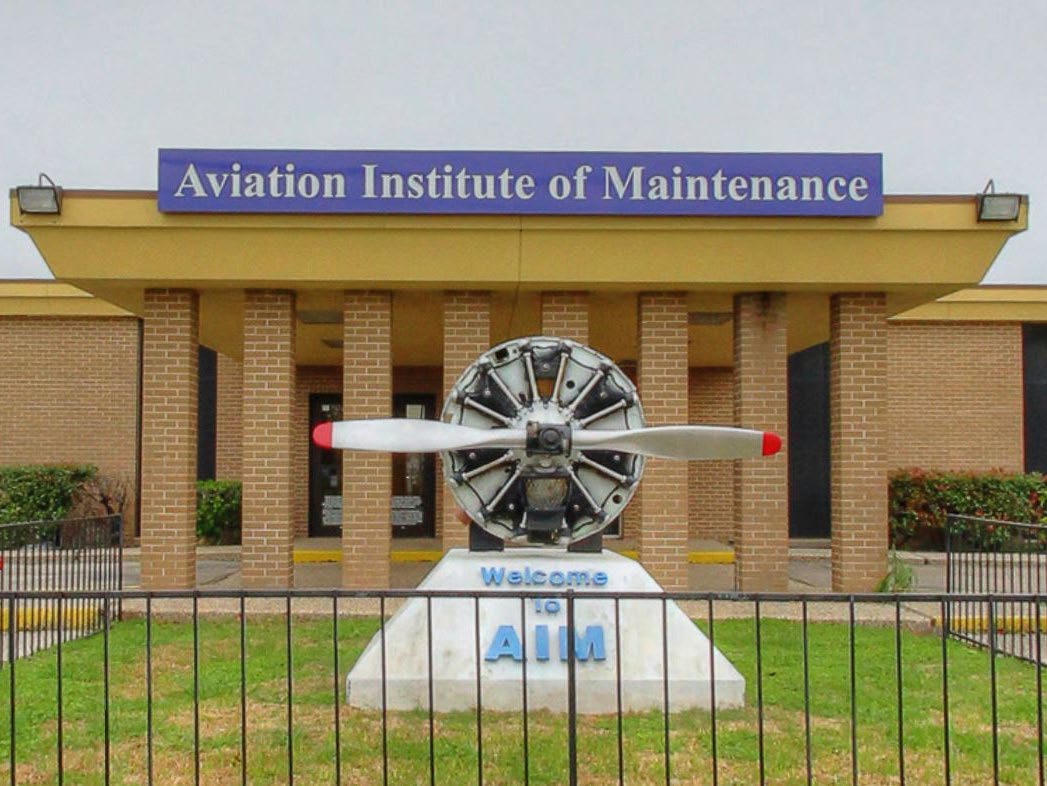
The Houston, TX campus includes 40,500 square feet of space and consists of large classrooms, student break area, and an FAA testing center. The primary hangar is approximately 18,000 square feet and contains classrooms, an electronics lab, and a tool room with specialty aviation equipment. A secondary lab area is approximately 3,400 square feet and is primarily dedicated to the powerplant segment of our curriculum. Over 21,000 square feet of laboratory space allows our students to hone their general, airframe, and powerplant skills.
Across all AIM campuses
Campuses are Wi-Fi enabled, and all necessary learning resources are available on the school's intranet. Each campus offers various spaces for student recreation, relaxation, and study. Each year, Program Advisory Committees from the industries served review the campus facility, equipment, training aids, learning resources, and other aspects of the campus to provide input and guidance on improving the learning space for students.
Testimonials

Frequently Asked Questions
School Information
Campus Location
Accreditation & Approvals
Accredited by ACCSC; FAA-certified under Part 147. Exempt under Texas Education Code §132.002(a)(8); not approved nor regulated by the Texas Workforce Commission.
- A reliable indicator of quality
- Approved program of study
- Qualified instructors
- Recognition by employers nationwide