
Electrician Technician is a Certificate program offered by Capstone College in Pasadena, CA. The program takes 52 weeks to complete, with a total tuition of $19,150.
Program Overview
The Electrician Program is designed to provide graduates with the knowledge and skills necessary to obtain entry level employment in Residential, Commercial, or Industrial settings. Course work includes proper safety, trade mathematics, theory, blueprint reading, and the planning, layout, and installation of devices according to the National Electrical Code. The program prepares individuals to apply technical knowledge and skills to install, operate, maintain, and repair electric apparatus and systems such as residential, commercial, and industrial electric-power wiring; and DC and AC motors, controls, and electrical distribution panels.
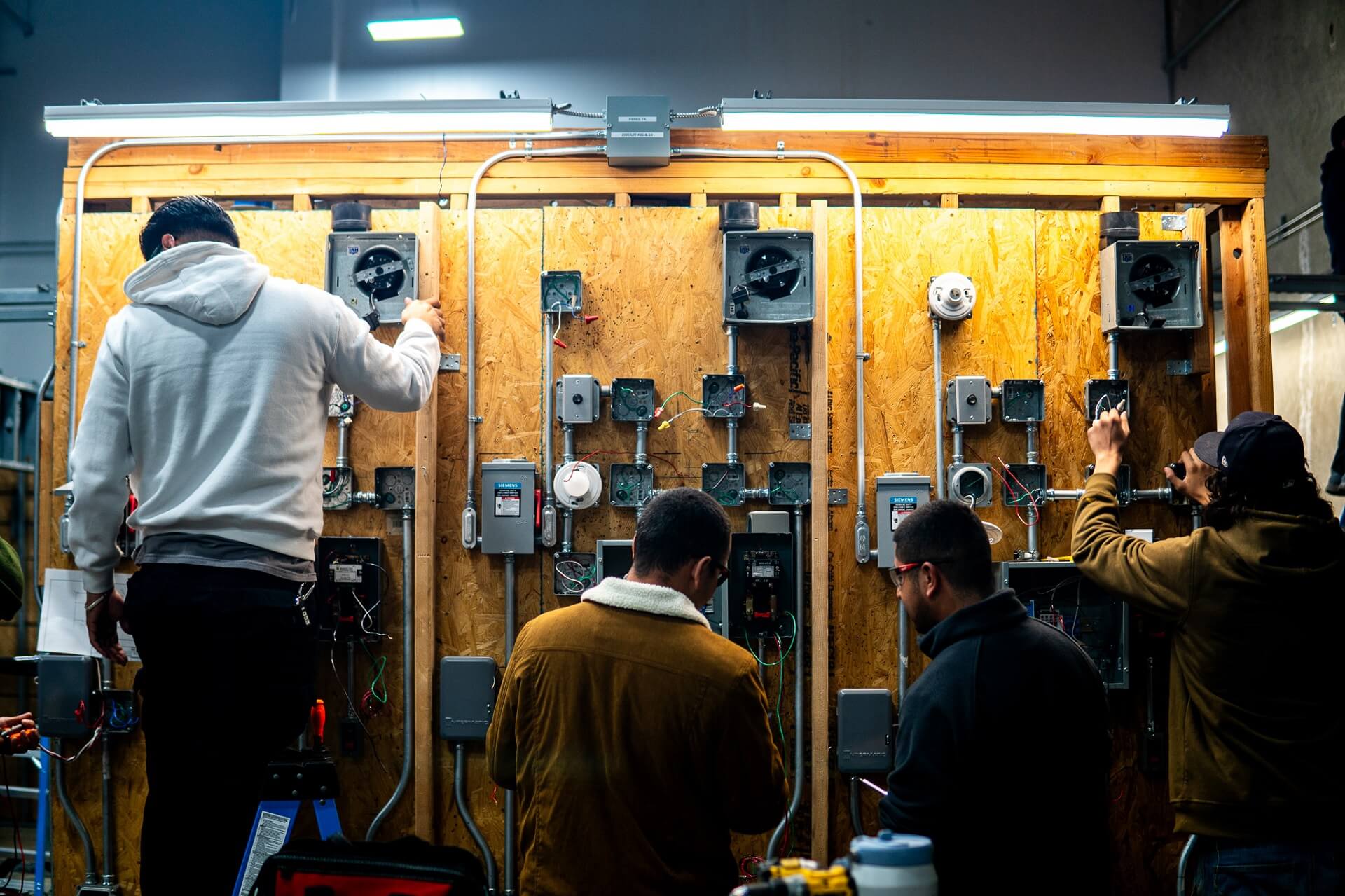
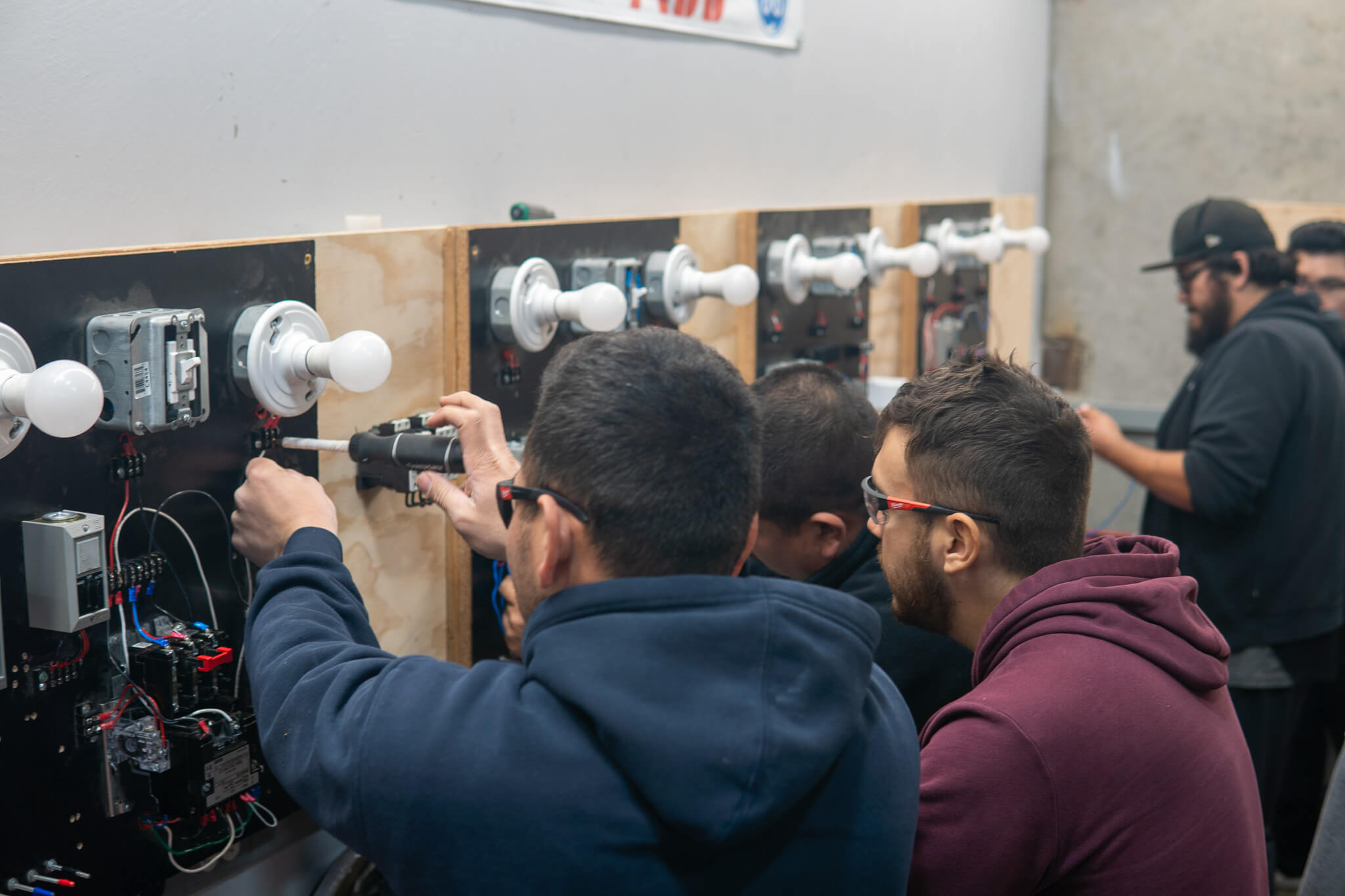
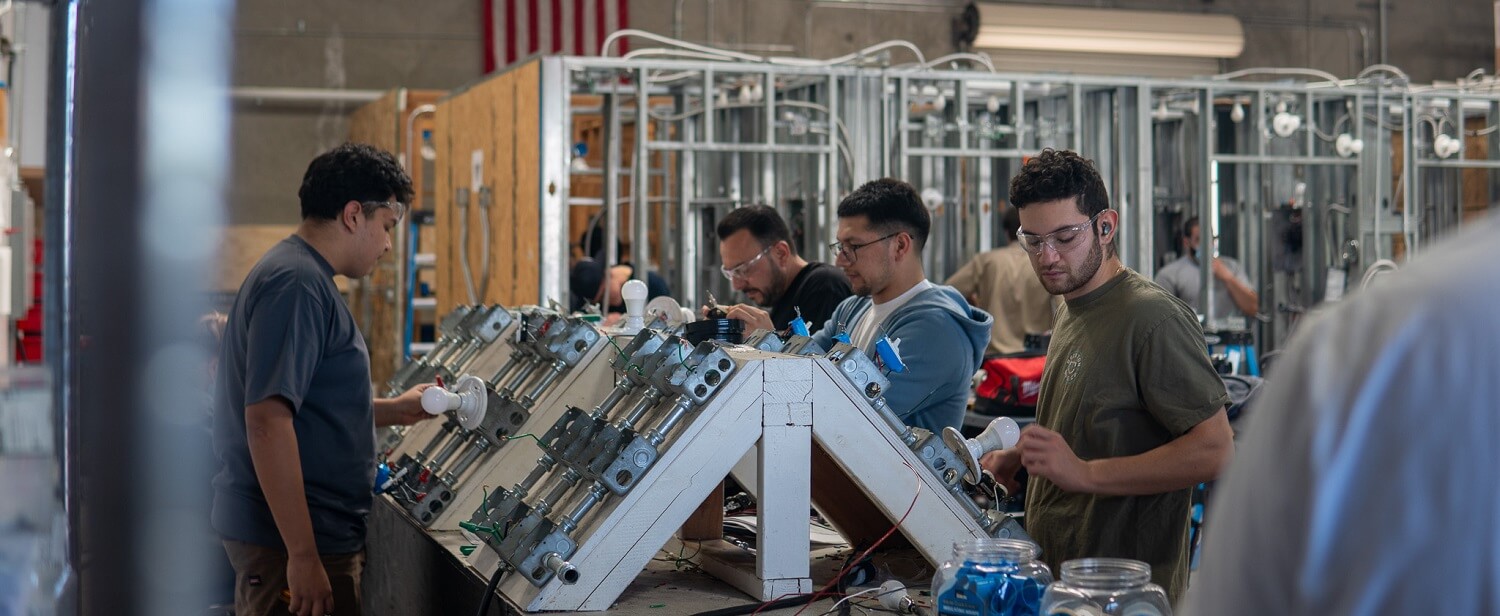
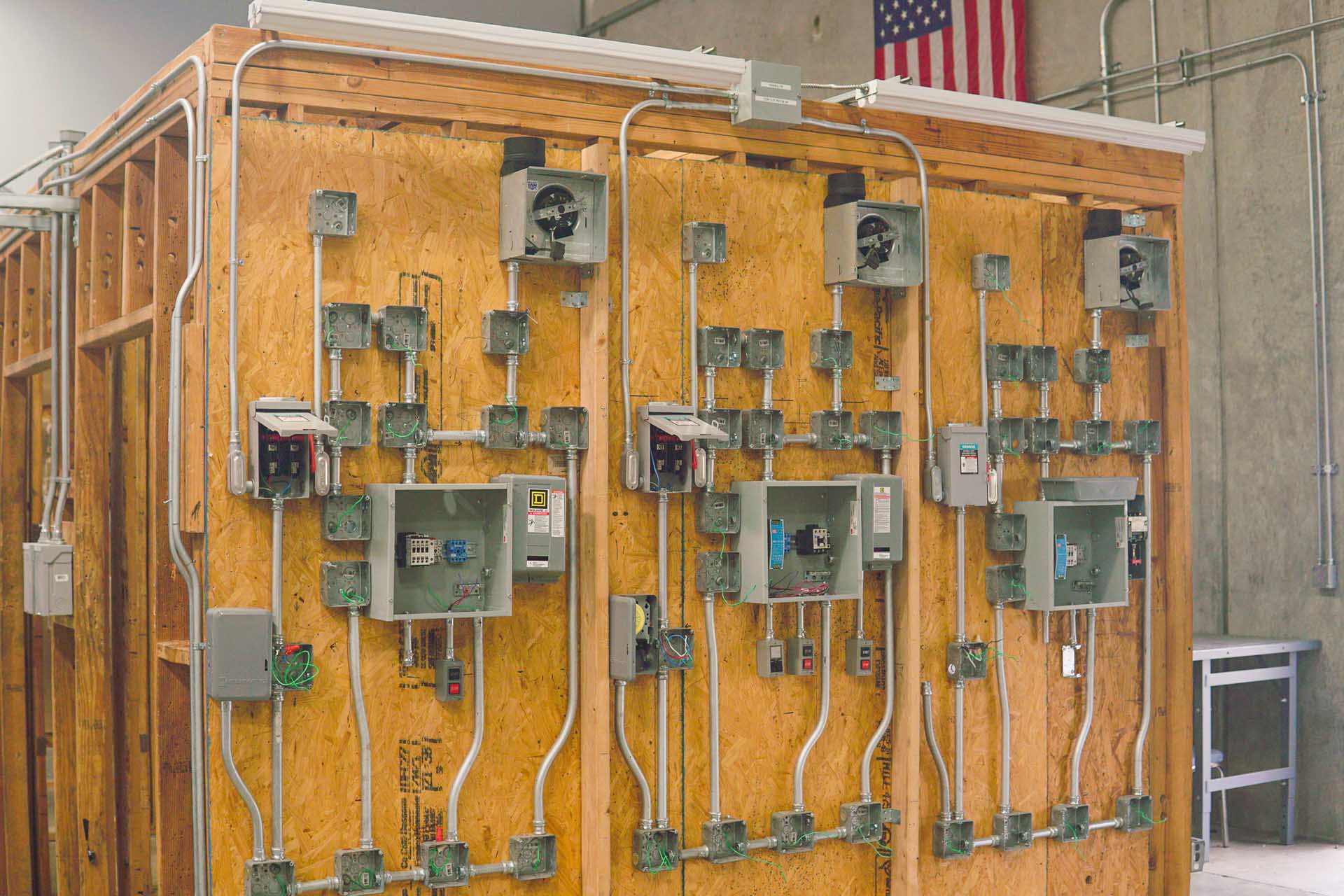
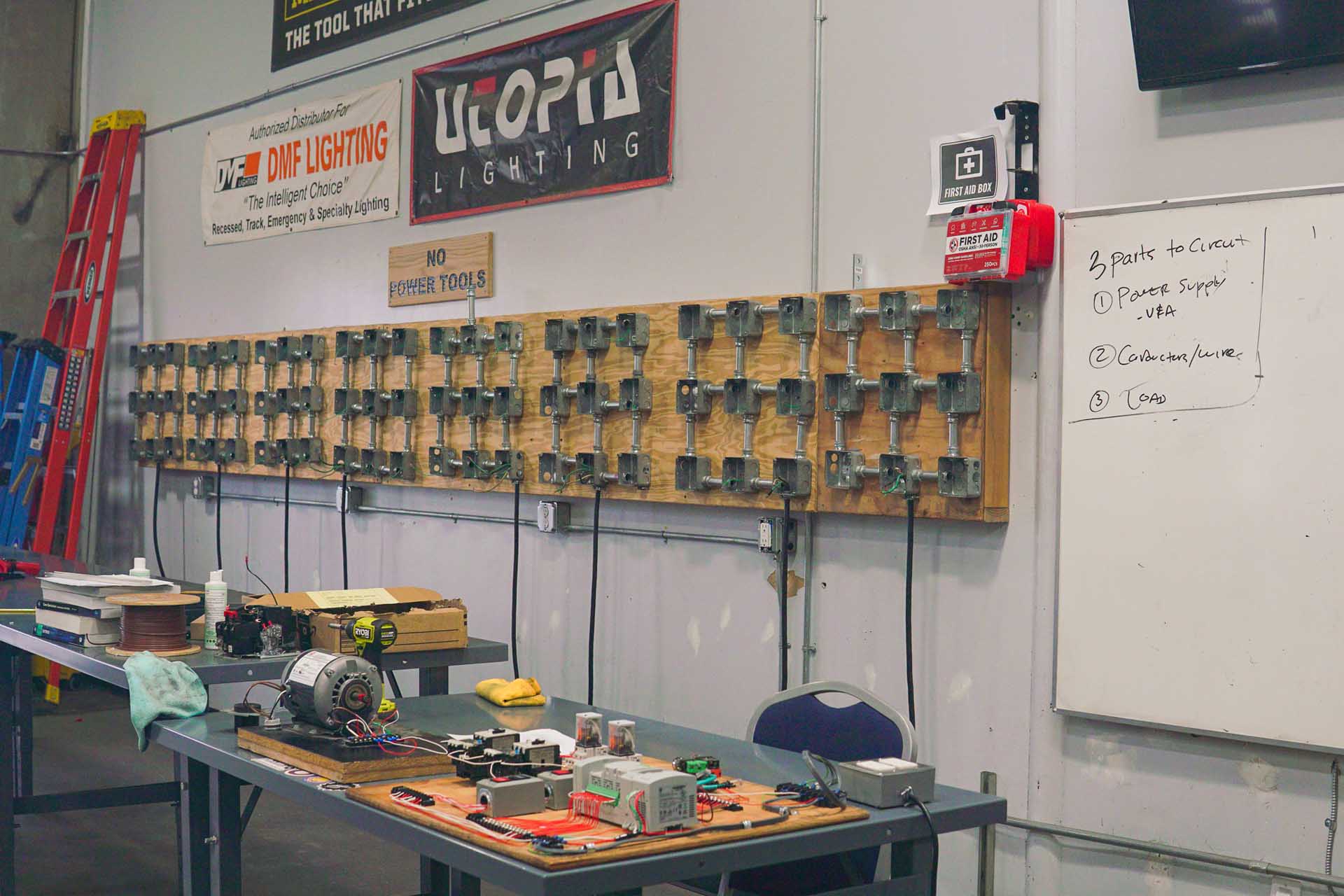
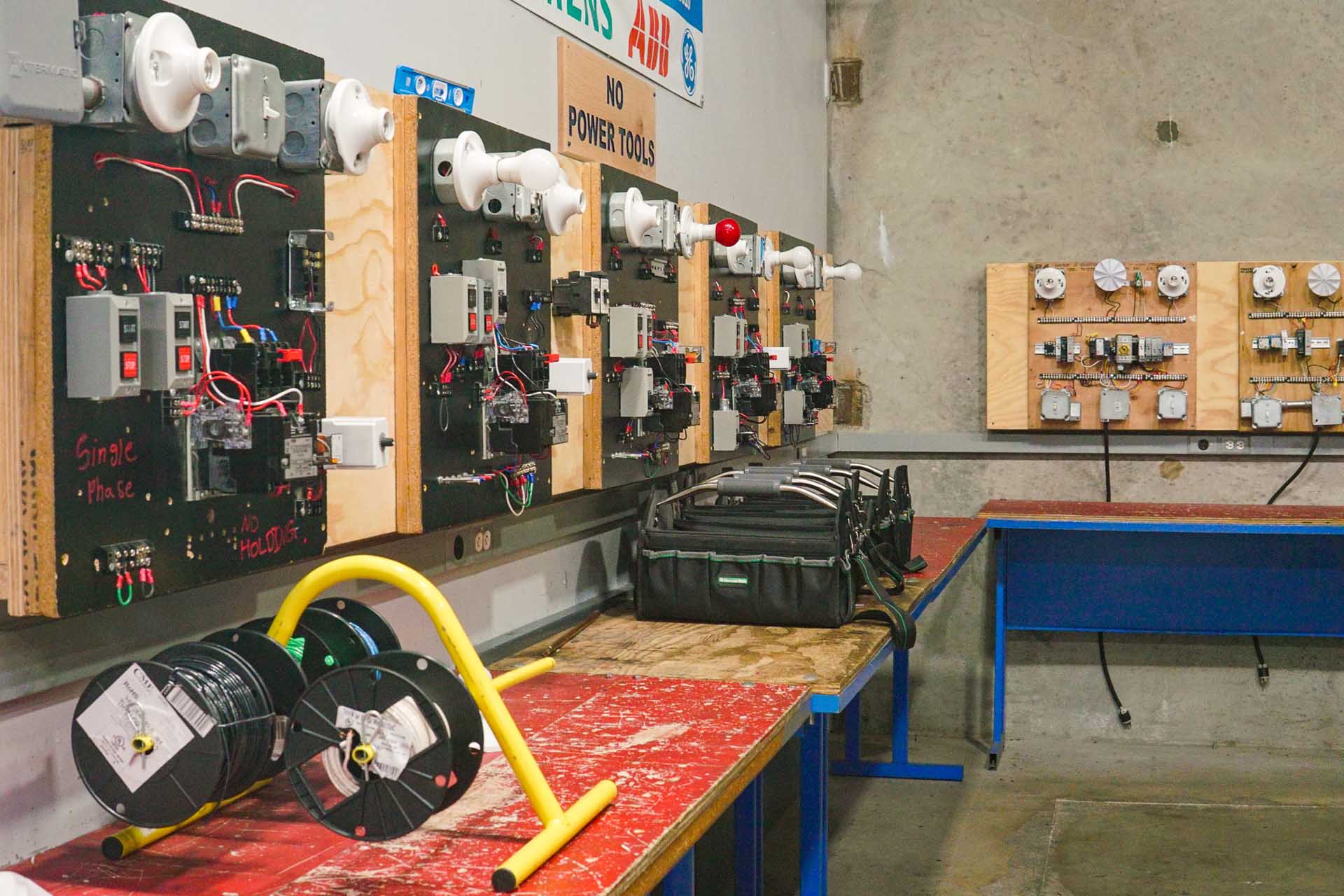
Capstone College’s Electrician Program prepares you for a career in electrical work, offering hands-on experience in our extensive 10,000-square-foot lab. You’ll gain practical skills in residential and commercial wiring, working with motor control boards and other industry-standard equipment. Train in a hands-on learning environment that simulates real-world job sites: learn essential electrical techniques, practice troubleshooting, and prepare for entry-level work in residential, commercial, and industrial settings.
Program Mission and Objectives. The mission and objective of the Electrician Program is to provide students with the knowledge and technical ability to install and service electrical systems across residential, commercial, and industrial environments while abiding by the National Electrical Code. Instruction includes safety, trade mathematics, electrical theory, electrical codes, electrical blueprints, and the planning, layout and installation of electrical wiring, equipment, or fixtures, based on job specifications according to National Electrical Codes.
Skills you’ll gain.
- Electrical System Installation: install electrical systems in residential, commercial, and industrial environments with proper safety procedures and National Electrical Code (NEC) compliance.
- Blueprint Reading and Wiring Diagrams.
- Circuitry and Wiring Techniques: assembling and connecting electrical circuits, switches, and outlets.
- Troubleshooting and Repair.
- Conduit Bending and Installation.
- Electrical Safety Protocols.
- Energy-Efficient Solutions, including renewable energy solutions like solar panels.
- Communication and Teamwork.
What sets this Program apart
State-Of-The-Art Lab. Work in our 10,000 square foot facility equipped with the latest technology and tools. Get exposure to residential, commercial, and industrial systems.
Experienced Instructors. Learn from certified electricians with years of experience in the field. Get personalized guidance and feedback to ensure skill mastery.
Graduate in Less Than a Year. Accelerated programs designed to get students workforce-ready in under a year.
Hands-On Training. Gain practical real-world experience working with real tools and systems, and complete projects that mirror the challenges faced on the job.
Flexible Class Schedules. We offer both morning and evening class schedules to help you train for a new career while balancing work, family, or other responsibilities.
Career Support. Job placement assistance upon graduation, including resume workshops and interview coaching, and connections with local employers in the industry through partnerships.
One-on-One Tutoring. Our instructors offer personalized one-on-one tutoring to ensure you fully understand the material.
Admission Requirements and Process
Our Admissions team is here to guide you in selecting the best training program to match your career goals. All applicants complete an application for admission and an enrollment agreement prior to the start of any class, and a High School diploma or GED is required for all programs. A personal interview with an Admissions Representative is also required; it enables administrators to determine the qualifications of a potential applicant and gives the candidate a tour of campus.
Applicants must be at least 18 years old. If younger than 18, a parent or legal guardian must be present during the enrollment process and sign the enrollment agreement. The institution accepts applicants with physical or mental handicaps or learning disabilities; the building and bathrooms are handicapped accessible.
Transfer of credit. Advanced placement/transfer of credit may be requested and awarded up to a maximum of one-third of the total program credit hours. There is no fee assessed for testing, evaluation, or granting of transfer of credit.
General Requirements
- Application and enrollment agreementAll applicants are required to complete an application for admission and an enrollment agreement prior to the start of any class.
- High school diploma or GEDA High School diploma or GED is required for all programs.
- Admissions interviewCompletion of a personal interview with an Admissions Representative is a requirement for admission; it also gives the candidate a better understanding of career fields, program…
- Minimum ageApplicants must be at least 18 years old; if younger than 18, a parent or legal guardian must be present during the enrollment process and sign the enrollment agreement.
- English proficiencyInstruction is provided in English only, and English language proficiency is required at the level of a high school diploma or GED certificate.
- Mandatory orientationOrientation is mandatory: attend a one-hour on-campus meeting or schedule an online session, where you receive all course materials and set up your online student account.
Application Process
- 1Schedule a VisitGive us a call at (626) 486-1000 or apply online. Your admissions advisor will help answer questions and recommend a program that fits your goals; after your initial call you'll be sent a preliminary application and scheduled for an in-person visit to tour the 10,000 sq ft facility, meet instructors, and see classes in action.
- 2Meet with an Admissions RepSpeak to our admissions rep to talk about your career goals and how we can best help you on your journey into the trades.
- 3Meet with Financial AidMeet with our Financial Aid team to explore your options and see if you qualify. Start by filling out the FAFSA (Capstone College's Federal School Code is 030199).
- 4Apply and EnrollOrientation is mandatory. Attend a one-hour on-campus meeting or schedule an online session. You'll receive all course materials and set up your online student account.
- 5First Day of ClassWelcome to Capstone College! Make sure to complete your enrollment agreement and interview with an Admissions Rep before your first day.
Program Schedule
Evening classes meet 6:00 p.m. to 10:00 p.m. The program is 52 weeks during the evening. Courses are scheduled on a modular system: students may start with any module and continue until all modules are successfully completed, so classes start throughout the year.
Upcoming start dates: October 28, 2026, January 11, 2027, March 11, 2027, May 10, 2027, July 7, 2027, September 2, 2027, and November 2, 2027.
Hours of operation are Monday through Thursday, 7:30 a.m. to 10:00 p.m., and Friday, 7:30 a.m. to 4:30 p.m. The school observes New Year’s Day, Martin Luther King Jr. Day, Presidents’ Day, Memorial Day, Independence Day, Labor Day, Thanksgiving Day and Friday, and is closed for the Christmas and New Year break from December 18, 2026 through January 4, 2027 and from December 17, 2027 through January 3, 2028.
- January 11th, 2027
- March 11th, 2027
- May 10th, 2027
- July 07th, 2027
- September 02nd, 2027
- November 02nd, 2027
Cost of Attendance and Financial Aid Information
Tuition and fees (Electrician). Tuition: $19,150.00 (includes books & supplies). Registration Fee: $100.00 (non-refundable). STRF: $0 (STRF is charged by the State of California). Total cost: $19,250.00. Fees do not include tools.
Payment. Total tuition and fees for a program are due and payable upon starting classes for the specified term or enrollment period. Cash, check, money order, credit and/or debit card are accepted, and arrangements will be made for students to make payments according to a schedule acceptable to the student and the school. Capstone College offers interest-free, flexible payment plans, and payment options are available for all students regardless of their chosen program.
Federal financial aid. Capstone College is approved by the Department of Education to participate in the Federal Student Aid-Title IV programs; loans and grants are available to eligible students. The school participates in Pell Grants, Federal Student Loans and PLUS Loans for parents of dependent students. The school does not participate in State Financial Aid Programs. To apply, complete the FAFSA using Capstone College's Federal School Code 030199, then schedule a one-on-one meeting with a Financial Aid Advisor to review your FAFSA results and choose your best option.
Military and veteran benefits. Capstone College is approved to train veterans by the State Approving Agency, and its HVAC, Plumbing, and Electrical programs are approved for GI Bill® benefits. The school accepts VA benefits (including Vocational Rehabilitation & Employment) and has a Military Benefits Coordinator to help you understand your eligibility. Unearned military Tuition Assistance is returned on a proportional basis through at least the 60% point of the period for which the funds were provided.
Cancellation and refunds. You have the right to cancel the enrollment agreement and obtain a refund of charges paid through attendance at the first class session, or the seventh day after enrollment, whichever is later. If you do not begin classes or withdraw on the first day, no more than $100 of the tuition and fees may be retained.
Curriculum
The Electrician Program consists of a total of 792 clock hours and 66.4 units, divided into 6 course modules. Students apply all classroom theory in a hands-on laboratory setting under the supervision of the instructor, and students who complete the program satisfactorily are awarded a Certificate as Electrician.
Course curriculum highlights.
- Electrical Theory: understanding foundational concepts like voltage, current, and resistance.
- Wiring and Installation: practical skills for wiring outlets, circuits, and control systems.
- Troubleshooting and Repair: diagnosing and fixing common electrical issues.
- Safety Practices: emphasis on safety protocols and regulations (OSHA standards).
- Blueprint Reading: learning to interpret electrical blueprints and diagrams.
Lab equipment. Students train on meter enclosures, circuit breakers, motor control boards, single- and three-phase motors, 120/208 main and sub panels, a dry type transformer, residential and commercial lab structures, motor starters and a fire alarm control panel, using electricians’ hand tools, conduit hand benders, fish tapes, clamp-on ammeters and EMT, MC and NM cable.
Required Courses
| Subject # | Name | Credits |
|---|---|---|
Career Outcomes
Graduates of the Electrician Program will be prepared to work as entry-level electricians performing duties such as basic electrical wiring, connecting circuits and breakers, and installing, maintaining, and repairing electrical wiring, equipment, and fixtures of commercial, industrial and residential electrical installations in accordance with the safety and National Electric Codes. Graduates can obtain entry-level positions such as:
- Electrician
- Electrician Trainee
- Electrical Apprentice
- Electrician's Helper
- Residential Electrician
- Commercial Electrician
- Industrial Electrician
- Maintenance Electrician
- Electrical Installer
- Electrical Contractor
- Building Maintenance worker
Reported outcomes (BPPE 2024 Annual Report). Of 65 students who began the Electrician program, 49 graduated on time (completion rate 75.38%) and 58 graduated within 150% of the published program length (89.23%). Of 49 graduates available for employment, 17 were employed in the field (placement rate 34.69%). Total charges for the program: $19,250.
School Performance Fact Sheet (calendar year 2023). Electrician (36 weeks day, 53 weeks evening): 59 of 73 students available for graduation completed on time (81%) and 63 within 150% of program length (86%); 46 of 59 graduates available for employment were employed in the field (78%). The program is not required to be licensed by the State of California.
Capstone College assists graduates in obtaining employment upon the successful completion of a program. While no job placement guarantees are made, the school offers job placement services to all graduates, including assistance with resume preparation, mock interviews, interview readiness and provision of job leads.
Campus Address
Why Accreditation Is Important
Capstone College is accredited by the Accrediting Council for Continuing Education and Training (ACCET), an accrediting agency recognized by the United States Department of Education. Capstone College is licensed to operate by the California Bureau for Private Postsecondary Education (BPPE) and is approved to train veterans by the State Approving Agency.
- A reliable indicator of quality
- Approved program of study
- Qualified instructors
- Recognition by employers nationwide
Accreditations

Student Demographics
These are demographics for all students at the Pasadena Campus (IPEDS, 2024).
Testimonials
Images