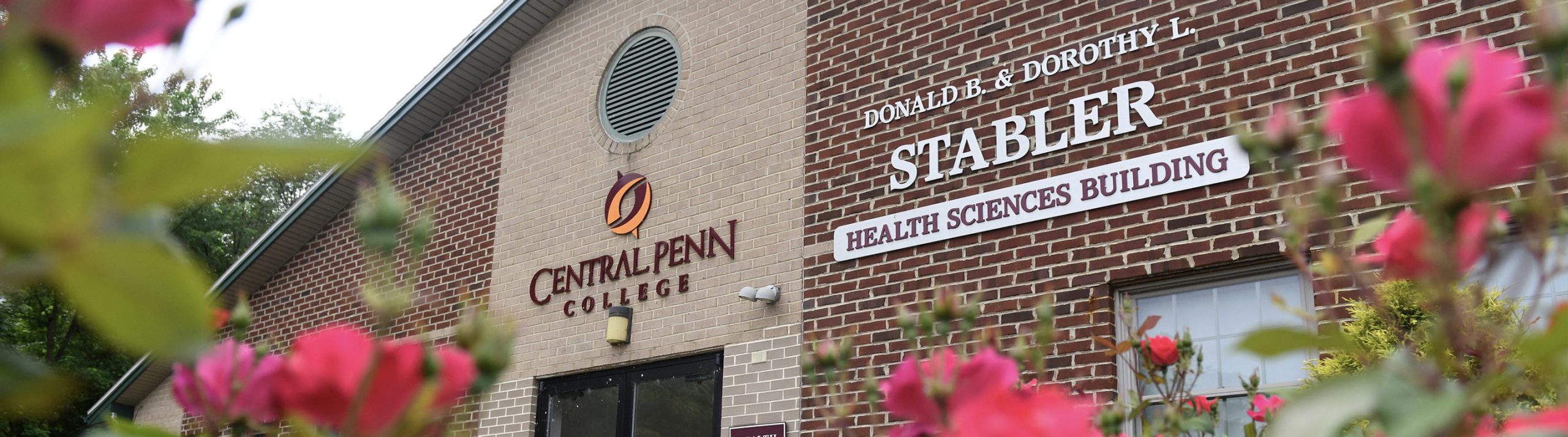
Occupational Therapy Assistant is an Associate Degree program offered by Central Penn College in Enola, PA. The program takes 24 months or less to complete, with a total tuition of $525.
Program Overview
Occupational Therapy Assistant Program Mission.
The Occupational Therapy Assistant (OTA) program is dedicated to providing holistic active learning experiences to graduate competent, entry-level, generalist occupational therapy assistants by instilling the values of evidence-based, ethical practice, professionalism, service, and life-long learning.
About the Occupational Therapy Assistant Program.
The Associate in Applied Science degree in Occupational Therapy Assistant (OTA) prepares students for entry-level general practice as an occupational therapy assistant in a variety of clinical settings. Graduates may find jobs in physical rehabilitation, mental health, pediatrics and with children/adults with developmental disabilities. The program is based on a sequential curriculum design and developmental model. Early coursework builds a foundation of knowledge in structure and function of the human body, human development and behavior, sociocultural influences, socioeconomic influences, and diverse lifestyles. Upon this foundation, occupational therapy principles and clinical practices in pediatrics, geriatrics, mental health, and physical rehabilitation are introduced and mastered through integrated laboratory and observational (Level I) Fieldwork Experiences. Coursework is layered with threads of evidence-based practice, professional behaviors and lifelong learning practices necessary for achieving and maintaining professional competence.
The OTA program culminates in 16 weeks of Level II Fieldwork Experiences, (internship), which must be completed within 12 months after completing all other required coursework. Due to the academic rigor of the program, students will be dismissed if they receive a 77% or below in three core courses. A passing final grade of C+ (2.5 GPA) in all OTA core courses is required in addition to achieving the necessary credit hours in order to graduate from the OTA program.
The OTA program at Central Penn College is accredited by the Accreditation Council for Occupational Therapy Education (ACOTE) of the American Occupational Therapy Association, Inc., located at 7501 Wisconsin Avenue, Suite 510E, Bethesda, MD 20814. ACOTE’s telephone number c/o AOTA is (301) 652-6611. Graduates are eligible to sit for the national certification examination for the occupational therapy assistant administered by the National Board for Certification in Occupational Therapy (NBCOT). After successful completion of this exam, the individual will be a Certified Occupational Therapy Assistant (COTA). In addition, most states require licensure in order to practice; however, state licenses are usually based on the results of the NBCOT Certification Examination. Note that a felony conviction may affect a graduate’s ability to sit for the NBCOT certification examination or attain state licensure. Any student having a criminal record will need to contact NBCOT directly to discuss eligibility for the examination: NBCOT, 1 Bank Street, Suite 300, Gaithersburg, MD 20877, phone: (301) 990-7979.
Clinical Fieldwork Considerations.
Students enrolling in the OTA program will be required to participate in Level I Fieldwork Experiences in conjunction with coursework, and Level II Fieldwork Experiences at the conclusion of the program. These Fieldwork Experiences involve travel to locations off campus to observe and participate in occupational therapy practice in a variety of service delivery models working with clients from a variety of demographics. Students should expect to provide their own transportation to and from clinical fieldwork sites. While every effort will be made to place students in fieldwork sites close to where they reside, this is not always possible. Students will need to consider that the maximum for traveling to fieldwork is 90 miles.
The spring cohort is delivered in a hybrid format. Students enrolling in the spring cohort will participate in didactic learning online in an asynchronous format. Students are expected to attend weekly in-person lab portions of courses on Tuesday and Thursday evenings as scheduled to complete necessary hands-on coursework and competencies.
Level I Fieldwork: Students enrolled in the hybrid program are required to complete fieldwork associated with OTA200 Developmental Occupational Therapy, OTA205 Occupational Therapy in Mental Health, and OTA210 Physical Rehabilitation in Occupational Therapy. Level I fieldwork requires students to engage in 24 hours of experience at a site established by the Academic Fieldwork Coordination (AFWC). Student must schedule level I fieldwork during the term of each associated course. Students need to have daytime availability to complete necessary fieldwork requirements.
Level II Fieldwork: Once all coursework is completed, students in the hybrid program must complete Two (2) eight-week full-time clinical affiliations. Affiliations will be established by the ADWC in collaboration with the students. Students must have full-time daytime availability during level II fieldwork.
Program learning objectives.
- Understand the structure and function of the human body, the sensorimotor, psychosocial and cognitive components and their development throughout the lifespan.
- Apply knowledge of occupational therapy theory, principles and philosophies across all stages of the occupational therapy process.
- Demonstrate clinical reasoning skills, solve problems, and offer innovative occupation-based treatments through ethical, evidence-based practice.
- Distinguish between the distinct roles and responsibilities of the Occupational Therapist & Occupational Therapy Assistant in the supervisory process.
- Understand the necessity of life-long learning to support competence, service-minded behaviors and professional development.
- Demonstrate professional behaviors within the classroom, clinic and community settings.
- Achieve entry-level competence by successfully completing academic and fieldwork education requirements.
Admission Requirements and Process
To be considered for admission into a degree or professional certificate program, students must be a high school graduate or have received a General Equivalency Diploma (GED), Pennsylvania Home School Diploma or other recognized equivalency diploma. High School Students applying with an overall GPA of 2.0 or higher may be considered for regular admission. Students applying with a GPA below a 2.0 in high school or from another college or university, if accepted, will be admitted conditionally. Please submit an application for admission and a copy of high school and/or college transcript(s). Some applicants may be required to attend a personal interview with the Admissions Office.
An admission essay may be deemed optional for all applicants whose GPA meets or exceeds the minimum for acceptance into the desired program. For certificates and degrees in the Schools of Humanities and Business, the minimum GPA for acceptance is 2.0. For most Health Sciences certificates and degrees, unless otherwise specified, the minimum GPA is 2.2.
Admissions Requirements.
The Occupational Therapy Assistant program must limit enrollment due to classroom space and available clinical facilities. The OTA program accepts students based on the scores given for admissions criteria listed below. Admissions criteria include:
- Students are required to have earned a cumulative GPA of 2.5 or higher. GPA is calculated off of all schools attended. Cumulative GPA is based off of school transcripts and pending all course completion.
- Two letters of professional reference.
- Professional admissions interview.
- Timed written essay.
- Eight observation hours in the occupational therapy field.
- SAT or ACT scores are not required but are preferred for transfer students.
- OTA core courses must be taken at Central Penn College. There will be no transfer credits accepted for OTA core courses.
Students should take into consideration that the OTA program, to meet legal standards, will require the PA State Police and Federal Bureau of Investigations Criminal Background Checks and PA Child Abuse History Clearance prior to beginning fieldwork (internship) experiences. Additionally, a felony criminal record may prohibit eligibility to sit for the Certified Occupational Therapy Assistant Certification Examination by the National Board for Certification in Occupational Therapy (NBCOT) and to obtain licensure to practice as an occupational therapy assistant. Students with a criminal record will need to contact NBCOT directly to discuss eligibility for the exam (NBCOT, 1 Bank Street, Suite 300, Gaithersburg, MD 20877, phone: 301-990-7979).
OTA Application Deadline.
The OTA program has a rolling deadline and acceptance is on a first come first served basis for those who meet the criteria.
General Requirements
- High school diploma or equivalentApplicants must be a high school graduate or have received a GED, Pennsylvania Home School Diploma or other recognized equivalency diploma.
- Proof of eligibilityAll applicants must provide proof of eligibility through an official high school diploma, transcripts, a GED, a home-schooling certificate, a PA home school diploma, or an…
- Minimum GPAStudents are required to have earned a cumulative GPA of 2.5 or higher, calculated off of all schools attended.
- Official transcriptsStudents must request their high school guidance office to send an official transcript directly to the Admissions Office.
- References and interviewProvide two letters of professional reference and complete a professional admissions interview and a timed written essay.
- Observation hoursComplete eight observation hours in the occupational therapy field.
- ClearancesPA State Police and FBI criminal background checks and PA Child Abuse History Clearance are required prior to fieldwork.
- Math placementCentral Penn College administers a placement exam to all incoming students to determine placement in mathematics.
Application Process
- 1Apply online for freeThe application is available on the College’s website at centralpenn.edu/apply; the online application is 100% free and can be completed in minutes.
- 2Send your transcriptsRequest that your high school guidance office send an official transcript directly to the Admissions Office; a GED or Pennsylvania Home School Diploma is also acceptable.
- 3Interview, essay and observation hoursOTA applicants complete a professional admissions interview, a timed written essay, eight observation hours and two professional references; the program has a rolling deadline, first come, first served.
- 4Receive your decisionApplication and transcripts are reviewed as soon as they are received; students are notified of acceptance or next steps within one week of the College receiving all materials.
- 5Reserve your seatWithin 30 days of receiving the registration fee notice, a $100 registration fee is paid to reserve a position in the entering class; a deposit may be required to hold your enrollment slot.
- 6Apply for financial aidComplete the FAFSA (Central Penn’s school code is 004890); the Financial Aid Office recommends filing by March 1 of each filing year.FAFSA Code for Summerdale Campus: 004890Complete FAFSA Application
Program Schedule
The fall cohort follows the on-ground day schedule. The OTA program culminates in 16 weeks of Level II Fieldwork Experiences (internship), which must be completed within 12 months after completing all other required coursework; students should expect to travel up to 90 miles to fieldwork sites.
This program has Fall start. Upcoming start dates: October 11, 2027.
- October 11th, 2027
Cost of Attendance and Financial Aid Information
Tuition and fees. Undergraduate tuition is $525 per credit for all majors. A Student/Technology Fee of $510 per term (5 or more credits) or $315 (4 or fewer credits) is required. A one-time $150 graduation fee applies.
Program fees. OTA program lab fee, per term $200.
Certification and other costs not covered by tuition. NBCOT exam $540; Pennsylvania license $30 (not covered by tuition).
Books and other expenses. Variable expenses per term (estimates): textbooks $350–$450; course material fees approximately $50–$150 per course; personal $150–$250; transportation $150–$300. Uniforms (where required) are estimated at $100–$150.
Housing and meals. Campus housing per term: individual private bedroom $2,205, standard apartment bedroom $1,505, super suite bedroom $1,595, utilities $330. Meal plans per term range from $550 (Block 75) to $1,125 (14 Meal Plan); a $250 housing security deposit is required.
Financial aid. Central Penn College processes grants, scholarships, loans, and work-study through federal, state, private, and institutional sources to help eligible students meet some of those costs, including the Federal Pell Grant, PA State Grant, Federal Supplemental Educational Opportunity Grant (SEOG), Federal Work-Study and Federal Direct Stafford Loans. To apply for all federal and state financial aid programs, students must complete the FAFSA; Central Penn’s Federal School Code for FAFSA is 004890. To receive financial aid a student must be enrolled in an eligible degree or certificate program and be enrolled on at least a half-time basis (4 credits).
Payment options. Tuition and expenses are paid each term approximately three weeks before the term starts. Central Penn has a short-term three-month payment plan through CASHNet that divides the balance of the tuition owed by three payments; there is a $35 non-refundable application fee paid with the first payment. An Employer Reimbursement Tuition Agreement Plan lets students who receive tuition reimbursement from their employer defer payment until the specified dates.
Military benefits. Military benefits accepted include the Montgomery GI Bill® (Chapters 30 and 1606), Veterans Readiness and Employment (Chapter 31), the Post-9/11 GI Bill® (Chapter 33) and Yellow Ribbon Program, Dependents’ Education Assistance (Chapter 35) and Tuition Assistance.
Net price calculator. Use Central Penn’s Net Price Calculator at https://npc.collegeboard.org/app/centralpenn for an early estimate of your total annual cost.
Curriculum
Students are required to take a total of 79 credits as directed below.
Required Courses
| Subject # | Name | Credits |
|---|---|---|
Career Outcomes
Careers you can pursue. Occupational Therapy Assisting.
Graduation rates. OTA graduation rate: 2023 – 20 students entering, 20 graduating (100%); 2024 – 13 entering, 13 graduating (100%); 2025 – 10 entering, 4 withdrew for non-academic reasons, 6 graduating (100%); total 2023–2025: 100%.
Graduate outcomes. 100% of Occupational Therapy Assistant graduates (8 graduates contacted) were employed in their field or continuing their education (One-Year Graduate Follow-up Report, graduates July 1, 2024 – June 30, 2025).
College-wide outcome. 89.2% of Central Penn graduates were employed in their chosen field or continuing their education within one year of graduation (graduates July 1, 2024 – June 30, 2025; One-Year Graduate Follow-up Report published July 1, 2026).
Campus Address
Why Accreditation Is Important
Central Penn College is accredited by the Middle States Commission on Higher Education (MSCHE); status: Accreditation Reaffirmed (June 25, 2026). The Occupational Therapy Assistant program is accredited by the Accreditation Council for Occupational Therapy Education (ACOTE).
- A reliable indicator of quality
- Approved program of study
- Qualified instructors
- Recognition by employers nationwide
Accreditations
Student Demographics
These are demographics for all students at the Summerdale Campus (IPEDS, 2024).
Percentages are of total fall enrollment. 26 students whose race or ethnicity was not reported are included in that total but shown as no category, so the figures above come to 96.2% rather than 100%.
Images