Magnetic Resonance Imaging Technology is an Associate Of Occupational Science program (Hybrid) offered by CNI College in Santa Ana, CA. The program takes 75 weeks to complete, with a total tuition of $43,712.
Program Overview
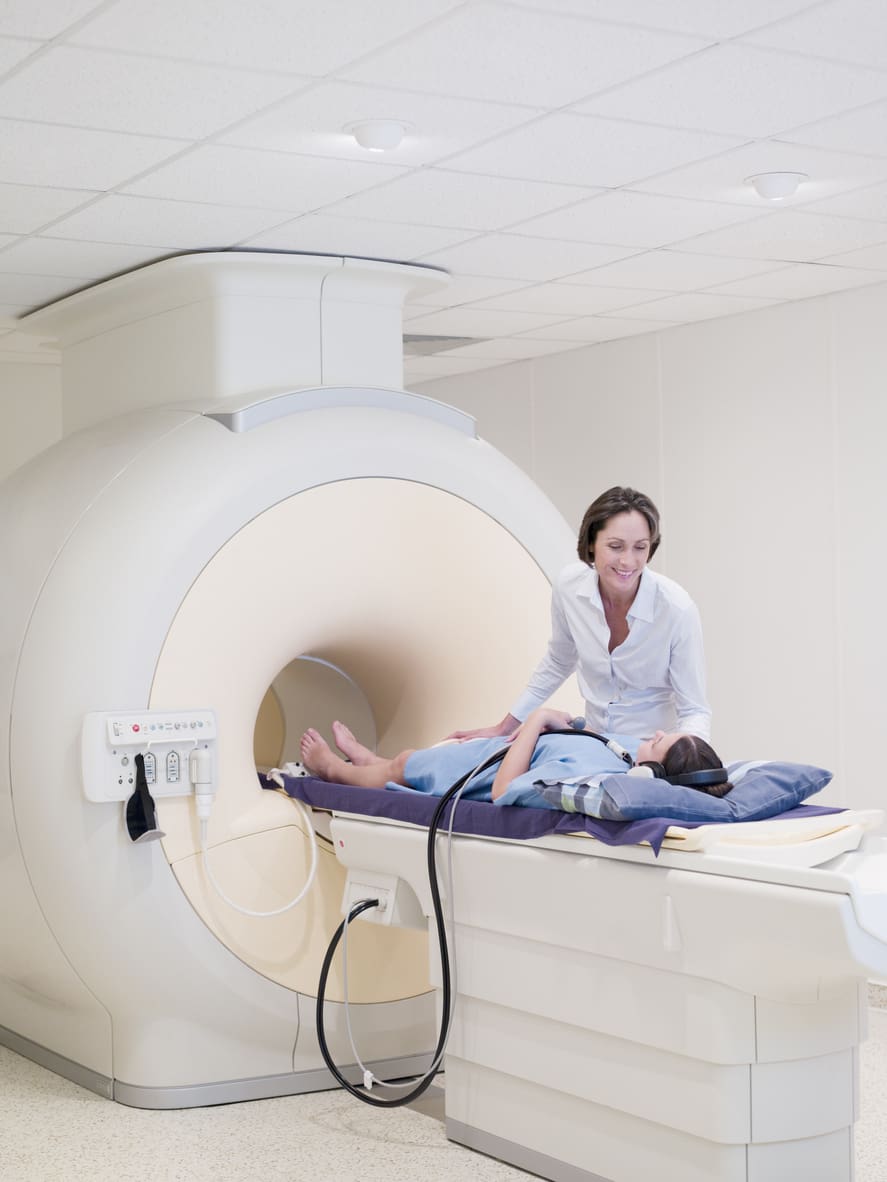
MRI technologists use magnetic resonance imaging equipment to produce detailed cross-sectional images that physicians and radiologists can use in patient diagnosis and treatment. CNI College’s MRI tech program teaches students both the technical and patient-care sides of the profession, covering MRI technology and physics, anatomy, imaging procedures, patient positioning, safety, pathology, medical terminology, and professional communication.
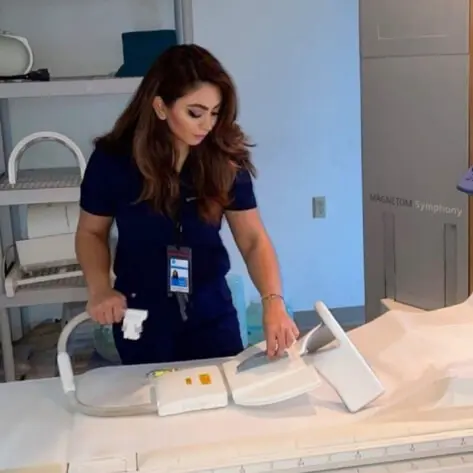
Students apply concepts from the classroom through laboratory practice, simulation, and clinical experience; the program includes more than 120 hours of hands-on lab and simulation training as well as a 1,000-hour clinical externship. Equipment identified for the program includes GE, Siemens, Philips, Fonar, and Hitachi MRI systems with different field strengths and configurations.
Program objectives. Graduates identify and demonstrate knowledge of human anatomy and physiology and cross-sectional anatomy; recognize MRI case studies; apply math and MRI physics; understand magnetic-field hazards and MRI health and safety regulations, HIPAA and OSHA; practice patient care, vital signs, asepsis, First Aid, venipuncture and CPR; position patients and explain procedures; and perform required MRI studies to meet the competencies to sit for the ARMRIT and/or ARRT National Exams.
What sets this Program apart
Hands-On Learning. Students reinforce classroom instruction through laboratory training, MRI simulation, and clinical experience.
Clinical Experience. The program includes a 1,000-hour externship where students can apply their training in a supervised healthcare environment and continue developing MRI competencies.
Certification Exam Preparation. MRI review resources, tutoring, and the required capstone course help students reinforce program material and prepare for the ARMRIT and/or ARRT examination process.
Industry Connections. CNI College works with affiliated imaging sites to provide clinical learning opportunities and help students experience professional MRI environments.
Academic Resources. Students have access to instructors, tutoring, library resources, online research tools, and additional review opportunities throughout the program.
Admission Requirements and Process
Students interested in the MRI Technology program must meet the College’s admissions requirements before beginning the program. The program requires a minimum score of 18 on the Wonderlic Scholastic Level Exam (SLE), dated within five years of the program start, unless the applicant has an SAT score of 1220 or above or an ACT score of 17 or above within five years. AOS MRI applicants must make an appointment with the Admissions Department to take the Wonderlic on campus with a proctor present; it is not administered online to AOS MRI applicants.
A $75.00 non-refundable applicant fee is required to apply. Additional requirements apply before clinical training, including background clearance and other health or clinical documentation.
General Requirements
- Minimum ageApplicants must be at least 17 years of age to be considered for admission; an applicant under 18 must have the Enrollment Agreement signed by a parent or guardian.
- High school diploma or equivalentApplicants must have a high school diploma, a GED certificate, or a foreign degree credentialed for 12th-grade proficiency, and must be able to read, speak and write English…
- Wonderlic entrance examPass the Wonderlic Scholastic Level Exam with a minimum score of 18, taken on campus with a proctor, or provide an SAT score of 1220+ or ACT score of 17+ from the last five years.
- Questionnaire, interview and campus tourApplicants complete a potential student questionnaire form and attend an initial personal interview with a CNI College Admissions Advisor, including a tour of the campus.
- Health documentationDocumentation of any required health examinations, pathology tests and/or immunizations must be presented, with full disclosure of any known medical condition that would affect…
- Background checkA background check is required after admission, and students must obtain background clearance at their own expense before beginning clinical practicum or externship.
- Criminal historyCNI College does not accept admissions applications from prospective students with felony convictions or who are currently on probation; misdemeanors are reviewed and may prevent…
- California residencyAll programs, whether residential, blended, or delivered exclusively through online distance education, are offered only to California residents.
Application Process
- 1Request more informationYour starting place is the CNI College website: the moment you submit the Request Information form, you are on your way.
- 2Fill out our questionnaireAll applicants complete a potential student questionnaire form so the College has a clearer picture of your career goals and what you are looking for in your education.
- 3Complete an interview and a campus tourAn admissions advisor will reach out for a one-on-one conversation about your situation and program of interest and to set up a tour of the campus.
- 4Prep your finances and any other paperworkOnce your application has been accepted, work with the financial aid team on the best ways to cover education costs, and turn in your Enrollment Agreement and documentation of any required health exams, tests, or vaccines.
- 5Join us in the classroom and get startedWhen your first day of classes arrives, CNI College will be ready and waiting to welcome you.
Program Schedule
Evening/weekend classes. Quarter 1: COMP 101 meets Mondays 1:00 PM – 5:00 PM online (Zoom/Teams); ENG 101 and MTH 101 are asynchronous online courses. Quarter 2: BIO 201 online (Zoom/Teams) Mondays and Tuesdays 4:00 PM – 10:00 PM. Quarter 3: MRIT 301/302 theory online Mondays and Tuesdays 4:00 PM – 9:00 PM, MRI Safety I on alternate Saturdays 9:00 AM – 1:00 PM, and labs on alternate Saturdays or Sundays 8:30 AM – 5:00 PM.
Quarters 4 and 5: theory on campus Thursday and Friday 4:00 PM – 10:00 PM, MRI Safety II/III on alternate Saturdays 9:00 AM – 1:00 PM, and labs Saturday, Sunday, Monday or Tuesday 8:30 AM – 5:00 PM. Quarter 6: a 1,000-hour externship (35-40 hours per week, between 6:00 AM and 11:00 PM, Monday through Sunday, depending on site) and a ten-week online capstone on Saturdays 9:30 AM – 1:30 PM. All exams for synchronous online courses are held on campus.
Next start: classes start November 16, 2026 (CNI College homepage).
- November 16th, 2026
Cost of Attendance and Financial Aid Information
Cost of the program. The catalog’s estimated schedule of total charges for the entire educational program is $49,899.00:
- Registration fee: $75.00
- Books, supplies, uniforms: $1,350.00
- Technology fees: $3,178.00
- License fees, tests: $1,584.00
- Tuition: $43,712.00
Tuition by pay period. Institutional charges are posted to the student tuition account pay period by pay period; the registration fee, books and supplies for the entire course are assessed in the first payment period. The catalog’s schedule for this program is: pay period 1: $8,394.32, pay period 2: $8,394.32, pay period 3: $10,259.60, pay period 4: $10,259.60, pay period 5: $6,295.67, pay period 6: $6,295.67.
Overtime charges. If a student needs additional time beyond the expected graduation date, CNI College extends a courtesy period of up to three weeks without additional charges; thereafter overtime tuition is charged at $24.28 per hour for the remaining hours.
Books and supplies allowance. For cost-of-attendance budgets the College uses the California Student Aid Commission’s 2026–2027 student expense budget, which allows $1,089 per academic year for books and supplies (tuition, registration fee and other charges are actual institutional charges).
Federal financial aid. CNI College is approved by the U.S. Department of Education to participate in selected Title IV programs, and this program is eligible to participate in USDE Title IV programs. Available aid includes Federal Pell Grants, Federal Supplemental Educational Opportunity Grants (FSEOG), William D. Ford Federal Direct Subsidized and Unsubsidized Loans, and Federal Direct Parent PLUS Loans. Complete the FAFSA at studentaid.gov and use federal school code 032423 (Career Networks Institute – CNI College).
Cal Grant. The State of California, through the California Student Aid Commission, sponsors Cal Grant A, B and C for undergraduate students; applicants must file a FAFSA (or Dream Act Application) and a Cal Grant GPA Verification Form by the March 2 or September 2 deadline.
Veterans’ benefits. CNI College is approved for the training of veterans and eligible persons, including Chapter 31 (Veteran Readiness & Employment) and Chapter 33 (Post-9/11 GI Bill®) benefits; contact the College’s School Certifying Official in the Financial Aid Office.
Payments. Students are encouraged to make tuition payments electronically through Tuition Options unless alternative arrangements have been approved by the Financial Aid Office. The Student Tuition Recovery Fund (STRF) assessment rate is currently $0.00 per $1,000 of institutional charges.
Curriculum
CNI College’s MRI tech curriculum begins with foundational general education and healthcare subjects before moving into MRI-specific imaging, physics, anatomy, pathology, clinical training, and certification preparation: 680 lecture, 120 lab and 1,000 externship hours (1,800 clock hours, 107 quarter credits).
Required Courses
| Subject # | Name | Credits |
|---|---|---|
Career Outcomes
The program prepares graduates for an entry-level position as an MRI Technologist. The catalog states that employment opportunities for the MRI Technologist are found in medical clinics and imaging centers under the supervision of a physician and radiologist, not in hospitals; the program’s website lists hospitals, diagnostic imaging centers, outpatient care facilities, specialty clinics, mobile imaging units and travel positions.
The State of California does not require licensure or a state-administered certification exam for MRI Technologists, but employers typically expect national certification; CNI College requires all MRI students to take the ARMRIT National Certification Examination prior to graduation, and eligible students may also sit for the ARRT MRI exam.
Outcomes (School Performance Fact Sheet, calendar years 2023 & 2024, 1,746-hour program). Job placement rate: 47% (2023) and 53% (2024). Completion within 150% of program length: 84% (2023) and 80% (2024); on-time completion: 37% (2023) and 35% (2024). License examination passage data is not available from the state agency.
Campus Address
Why Accreditation Is Important
CNI College is institutionally accredited by the Accrediting Bureau of Health Education Schools (ABHES) and approved to operate by the California Bureau for Private Postsecondary Education (BPPE). The AOS MRI Technology program holds programmatic accreditation from the American Registry of Magnetic Resonance Imaging Technologists (ARMRIT); ARRT is approved under ABHES for CNI MRI graduates to sit for its national examination.
- A reliable indicator of quality
- Approved program of study
- Qualified instructors
- Recognition by employers nationwide
Accreditations

Testimonials
Images