Radiologic Technology is an Associate Degree program (Hybrid) offered by CNI College in Santa Ana, CA. The program takes 104 weeks to complete.
Program Overview
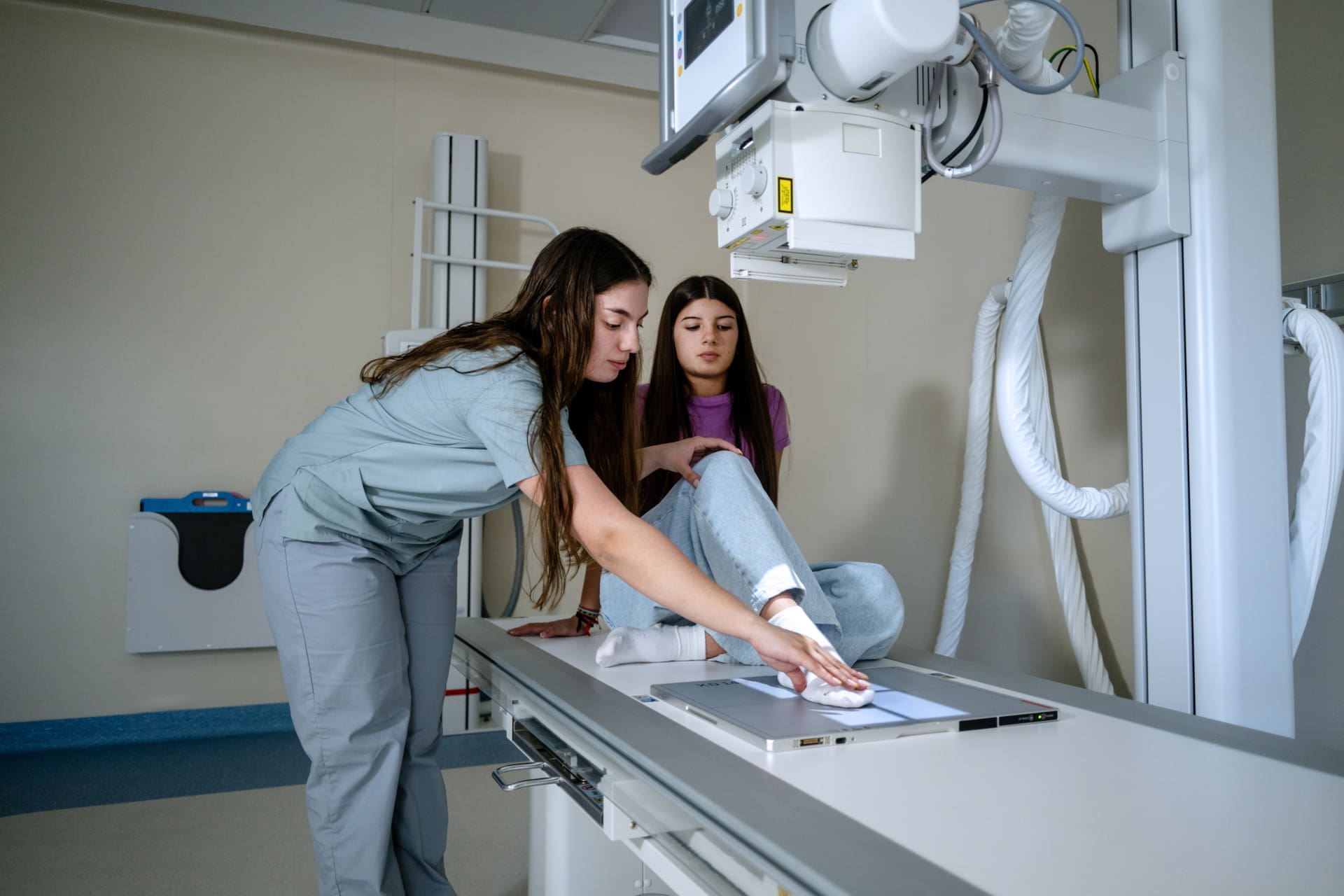
Radiologic Technologists are part of the healthcare team responsible for producing diagnostic images that physicians and radiologists use when evaluating patients. Their responsibilities can include preparing and positioning patients for imaging procedures, operating radiographic equipment, following imaging protocols, applying radiation safety practices, evaluating image quality, and providing professional and compassionate patient care.
The program is designed to prepare students with the knowledge, technical skills, and professional behaviors needed for entry-level work as Radiologic Technologists, and emphasizes compassion, professionalism, ethical practice, and patient safety through classroom instruction, hands-on laboratory training, simulation, and clinical experience.
What sets this Program apart
Program materials indicate that Radiologic Technology students receive access to resources and supplies designed to support their training, including:
- E-books
- Program supplies
- College-issued uniforms
- CPR training
- Laptop computer
- Venipuncture training
- Dosimeter monitoring services
- Radiography simulation software
- Lead markers
- Registry examination review resources
- Career preparation services
Admission Requirements and Process
The program page directs prospective students to contact CNI College Admissions for the current Radiologic Technology admission requirements and enrollment process. Per CNI College’s admissions policies, all applicants must be at least 17 years of age, have a high school diploma, GED certificate, or a foreign degree credentialed for 12th-grade proficiency, be able to read, speak, and write English fluently, and pass the College’s entrance testing; some programs have additional or different testing requirements.
General Requirements
- Minimum ageApplicants must be at least 17 years of age to be considered for admission; an applicant under 18 must have the Enrollment Agreement signed by a parent or guardian.
- High school diploma or equivalentApplicants must have a high school diploma, a GED certificate, or a foreign degree credentialed for 12th-grade proficiency, and must be able to read, speak and write English…
- Entrance testingApplicants must take and pass the College’s entrance exam (Wonderlic SLE) within the past five years unless exempt with an ACT score of 17+ or SAT score of 1220+; contact…
- Questionnaire, interview and campus tourApplicants complete a potential student questionnaire form and attend an initial personal interview with a CNI College Admissions Advisor, including a tour of the campus.
- Health documentationDocumentation of any required health examinations, pathology tests and/or immunizations must be presented, with full disclosure of any known medical condition that would affect…
- Background checkA background check is required after admission, and students must obtain background clearance at their own expense before beginning clinical practicum or externship.
- Criminal historyCNI College does not accept admissions applications from prospective students with felony convictions or who are currently on probation; misdemeanors are reviewed and may prevent…
- California residencyAll programs, whether residential, blended, or delivered exclusively through online distance education, are offered only to California residents.
Application Process
- 1Request more informationYour starting place is the CNI College website: the moment you submit the Request Information form, you are on your way.
- 2Fill out our questionnaireAll applicants complete a potential student questionnaire form so the College has a clearer picture of your career goals and what you are looking for in your education.
- 3Complete an interview and a campus tourAn admissions advisor will reach out for a one-on-one conversation about your situation and program of interest and to set up a tour of the campus.
- 4Prep your finances and any other paperworkOnce your application has been accepted, work with the financial aid team on the best ways to cover education costs, and turn in your Enrollment Agreement and documentation of any required health exams, tests, or vaccines.
- 5Join us in the classroom and get startedWhen your first day of classes arrives, CNI College will be ready and waiting to welcome you.
Program Schedule
The program consists of 10 quarters; clinical training begins in Quarter 5 and continues through Quarter 10. Clinical schedules vary by site and may take place Monday through Sunday between 6:00 a.m. and 11:00 p.m. CNI College’s homepage announces “Classes Starting October 26th!” for the new Associate in Science in Radiologic Technology Program.
Cost of Attendance and Financial Aid Information
Tuition and fees are established by CNI College and may change over time. Prospective students should review the current CNI College Catalog or speak with an Admissions Advisor for the most current program cost information. (The October 5, 2026 catalog does not list this program or its charges.)
Curriculum
The Radiologic Technology program consists of 2,728 clock hours and 136.5 quarter credits completed over 10 quarters, including 1,860 hours of supervised clinical externship. The school does not publish per-course hours or credits.
Required Courses
| Subject # | Name |
|---|---|
Career Outcomes
Graduates of the Radiologic Technology program may pursue entry-level opportunities as a Radiologic Technology Technician in healthcare settings such as:
- Hospitals
- Physicians’ offices
- Diagnostic laboratories
- Imaging centers
- Outpatient healthcare facilities
- Other clinical imaging environments
Students will be eligible to sit for the ARRT registry examination and apply for the California Certified Radiologic Technologist (CRT) license through the CDPH RHB; the school states ARRT eligibility applies after all of the approvals are received.
Campus Address
Why Accreditation Is Important
CNI College is institutionally accredited by the Accrediting Bureau of Health Education Schools (ABHES). The school states the Radiologic Technology program is approved by the California Department of Public Health, Radiologic Health Branch (CDPH-RHB), the BPPE and the US Department of Education, and that graduates will be approved to take the ARRT exam after all approvals are received.
- A reliable indicator of quality
- Approved program of study
- Qualified instructors
- Recognition by employers nationwide
Accreditations

Testimonials
Images