
Tom Savini's Special Make-Up Effects is an Associate In Specialized Business Degree program (Hybrid) offered by Douglas Education Center in Monessen, PA. The program takes 16 months to complete, with a total tuition of $37,400.
Program Overview
Special make-up effects are at the heart of every production. Started by Tom Savini, a pioneer in the special make-up effects industry, students will have the opportunity to learn his most valuable tips and tricks to become successful.
Objective. This sixteen-month program is designed to provide students with the skills necessary for a career in the special make-up effects and show design businesses. This program of study develops student competencies in four skill areas of special effects to equip the graduate for careers with theater companies, cosmetic companies, department stores, television studios, film and photographers studios, special effects labs, architectural restoration firms, amusement parks, entertainment design and fabrication companies, costume companies, computer special effects firms, display design firms, museums, science centers, and prosthetic sculpting and mold making studios.
Skills you’ll walk out with.
- Sculpting & Mold Making: Create complex molds and casts for prosthetic pieces.
- Prosthetic Make-Up: Apply and finish prosthetic pieces for film and stage.
- Airbrushing Techniques: Master airbrushing for seamless skin tones and textures.
- Prop Making: Build realistic props and accessories for characters.
- Digital Sculpting: Sculpt digital models for 3D printing and production.
- Scanning & 3D Printing: Scan and print models for rapid prototyping and production.
- Create Eyes, Teeth, & Character Effects: Create realistic eyes, teeth, and character-specific effects.
- Portfolio Development: Build a professional portfolio for industry interviews.
What sets this Program apart
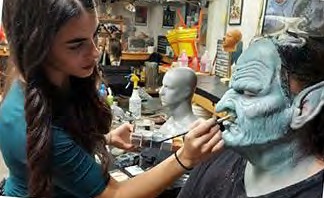
Master the craft in a real-world shop. Smaller classroom settings help make education more personalized and thorough. Students sculpt, mold, apply prosthetics, and work under real deadlines to achieve professional results, often on the same set as the George A. Romero Filmmaking Program students.
Pro photo studio support. DEC’s Portfolio & Career Development Center photographs your work in studio so your portfolio is camera-ready before you graduate.
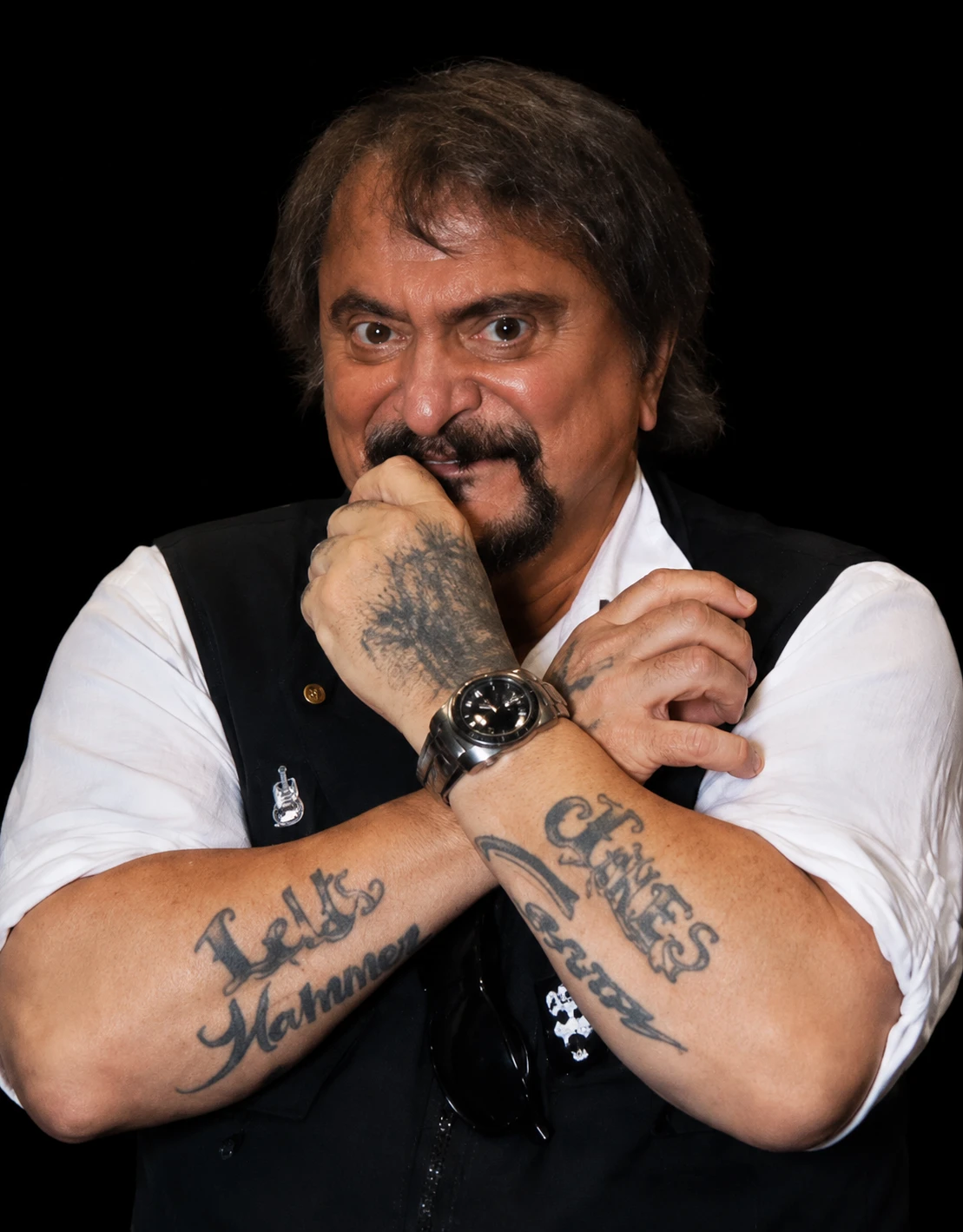
Learn from the legend who revolutionized the genre. Known as the “Godfather of Gore,” Tom Savini helped revolutionize the horror genre through his work on films including Dawn of the Dead, Friday the 13th, Monkey Shines, and Creepshow. His program at DEC was created to help students develop the skills they need to become successful in special make-up effects.
Program Director. Jerry Gergely is an Emmy-nominated special makeup effects artist and educator, director since the inception of the program in 2000.
Admission Requirements and Process
A prospective student seeking admission to DEC must be a high school graduate or possess a General Education Development (GED) Diploma or recognized equivalency certificate. All programs require successful completion of the Wonderlic Scholastic Level Examination with a minimum score of 17. DEC admits, trains and refers students without regard to race, religion, age, national origin, sex or handicap. DEC is not authorized to enroll international students. The ASB degree programs also require the “Student Acknowledgement for Online Education,” the “Are You Ready for Online Education?” assessment and an Online Basic Computer Literacy Assessment (minimum score 70%).
General Requirements
- High school diploma or GEDYou must be a high school graduate or possess a General Education Development (GED) Diploma or recognized equivalency certificate; high school seniors may submit a partial…
- Application and feesComplete an application form and pay a one-time application fee ($50.00) and one-time registration fee ($100.00); both are fully refundable if the applicant is denied acceptance.
- Official transcriptRequest that an official high school transcript be sent directly to the Admissions Department; GED holders must submit official evidence of satisfactory performance.
- Wonderlic Scholastic Level ExamSuccessfully complete the Wonderlic Scholastic Level Examination with a minimum score of 17; a maximum of 3 attempts will be granted.
- Online education readinessSign the “Student Acknowledgement for Online Education,” complete the assessment “Are You Ready for Online Education?” and pass an “Online Basic Computer Literacy Assessment” with…
- Admissions interviewThe Admissions Department will contact all applicants via telephone, postal mail, and/or email to schedule an interview.
- Enrollment AgreementSign an Enrollment Agreement, the contractual agreement between the student and the school; those accepted receive a formal letter of acceptance.
Application Process
- 1Complete the online applicationApply online and pay the $50 application fee; a $100 registration fee is also required. You can pay online, over the phone, or in person.
- 2Admissions reaches outThe Admissions Department will contact you to confirm your application status and next steps.
- 3Send your high school transcriptSubmit an official high school transcript directly to the Admissions Department; applicants with a GED must provide official evidence of satisfactory performance. Transfer-of-credit requests also need official post-secondary transcripts and course descriptions.
- 4Admissions interview and Wonderlic examThe Admissions Department will schedule your interview and the Wonderlic Scholastic Level Examination; a minimum score of 17 is required.
- 5Sign your Enrollment AgreementThis is the contractual agreement between you and the school. Accepted applicants receive a formal letter of acceptance.
- 6Complete your FAFSAFile the FAFSA at studentaid.gov using DEC’s Federal School Code 013957, then complete the steps in the Financial Aid Student Portal to receive your Financial Aid Award Notification.FAFSA Code for Monessen: 013957
Program Schedule
Tom Savini’s Special Make-Up Effects Program has classes scheduled in 5-hour blocks between 8:30 A.M. – 1:30 P.M. and/or 2:00 P.M. – 7:00 PM. If scheduling is necessary, a third 5-hour block will be added to the semester, from 7:10 PM – 12:10 AM; students will never be scheduled for 3 consecutive 5-hour blocks.
The program includes online and hybrid general education courses; Anatomy and Anthropology is the only 100% on-ground general education course. General Education courses can be on-ground, hybrid, or online, depending on the particular course. Hybrid courses consist of 2.5 hours online and 2.5 hours on-ground; the on-ground portion is scheduled as one 2.5-hour block between 8:30 A.M and 7:00 PM. Students are required to submit two (2) academically related activities each week for courses that contain online components.
Classes start three times a year: February, June and October. Upcoming semester starts are February 9, 2027, June 9, 2027 and October 6, 2027.
- February 09th, 2027
- June 09th, 2027
- October 06th, 2027
Cost of Attendance and Financial Aid Information
Cost and fees (Catalog Vol. 69). Tuition is $9,350 per semester ($37,400 for 4 semesters). Program totals: application fee $50, registration fee $100, graduation fee $215, books $890, supplies $7,140, lab fee $800, technology fee $600 and student support services fee $1,300, for a program total of $48,495.
Per credit. A per credit rate of $530/credit is assessed when a student attends less than 12 credits or more than 17 credits per term.
Scholarships. The IDEA Scholarship is worth $9,350 (25% of tuition) for new students; private scholarships include the Tom Savini Scholarship and the Zach Lydard Scholarship.
Federal student aid. DEC is approved by the U.S. Department of Education for federal student financial assistance programs including the Federal Pell Grant, FSEOG, Federal Work Study and William D. Ford Federal Direct Loans (Subsidized, Unsubsidized and Parent PLUS). Complete the FAFSA at studentaid.gov using DEC’s Federal School Code 013957.
Payment. DEC accepts financial aid, agency funding (Veterans, Vocational Rehabilitation, job retraining benefits), cash, check, credit card and online payment at www.dec.edu/pay. Payment schedules are interest-free and do not extend beyond the semester or instructional period.
Veterans. DEC is approved by the Pennsylvania Department of Education for the training of veterans; eligible students may use the GI Bill® at DEC.
Curriculum
Associate in Specialized Business Degree Program / 4 semesters / 60 weeks: 490 didactic and 1,160 supervised lab hours, 71 credits. Fourth semester students choose Track One (Animatronics) or Track Two (Fashion & Performance) no later than the middle of the third semester.
Required Courses
| Subject # | Name | Credits |
|---|---|---|
Career Outcomes
Graduates of this program leave with advanced, industry-relevant training in the art of special effects makeup for film, television, and live production environments.
DEC graduates have worked with well-known studios including ADI Legacy Effects, Advanced Prosthetic Design, Alliance Studios, Asylum Films, Atomic Body Art, Quantum Creation Effects, Beholder FX, CFX Silicone Masks, Saturday Night Live, Universal Studios, McFarlane Toys and RAW Studios. Graduates have worked on productions including Avengers, Captain America, X-Men, Guardians of the Galaxy, American Horror Story, The Walking Dead and Pirates of the Caribbean.
Student outcomes. As reported to ACCSC in its 2025 Annual Report (reporting date July 1, 2025; cohort 4/22–3/23): graduation rate 81%, employment rate 73%; licensure is not required for employment in this field.
What to expect as a Douglas Education Center student
8th Street Arts Building (Savini Building). The 8th Street Arts Building is home to Tom Savini’s Special Make-Up Effects Program. This building houses faculty offices, specialized workshop style classrooms, studios, mold rooms, a machine shop, sculpting and make-up studios, a photography studio, fabrication rooms and the supply room. It contains all necessary safety equipment as well as items such as stand mixers, scales, ovens, saws, drill presses, and other various hand and power tools.
Career Services for life. DEC graduates have access to Career Services for life at no cost. The team works with students from the time they begin their program through graduation and after, helping with resumes, portfolios, mock interviews and job search strategies.
Campus Address
Why Accreditation Is Important
Douglas Education Center is accredited by the Accrediting Commission of Career Schools and Colleges (ACCSC), a recognized accrediting agency by the U.S. Department of Education. DEC is licensed by the Commonwealth of Pennsylvania Department of Education, State Board of Private Licensed Schools.
- A reliable indicator of quality
- Approved program of study
- Qualified instructors
- Recognition by employers nationwide
Accreditations
Testimonials
Images