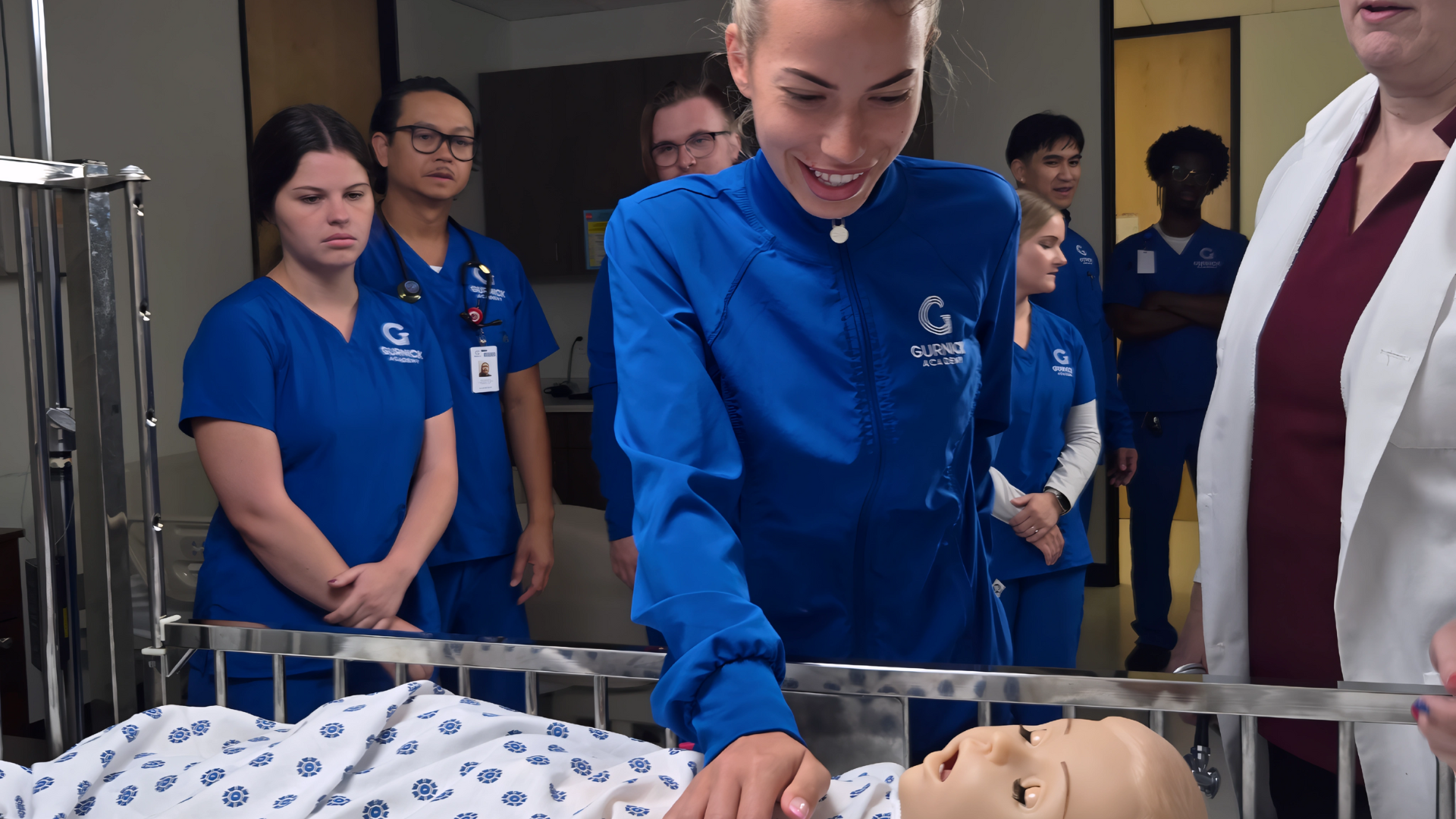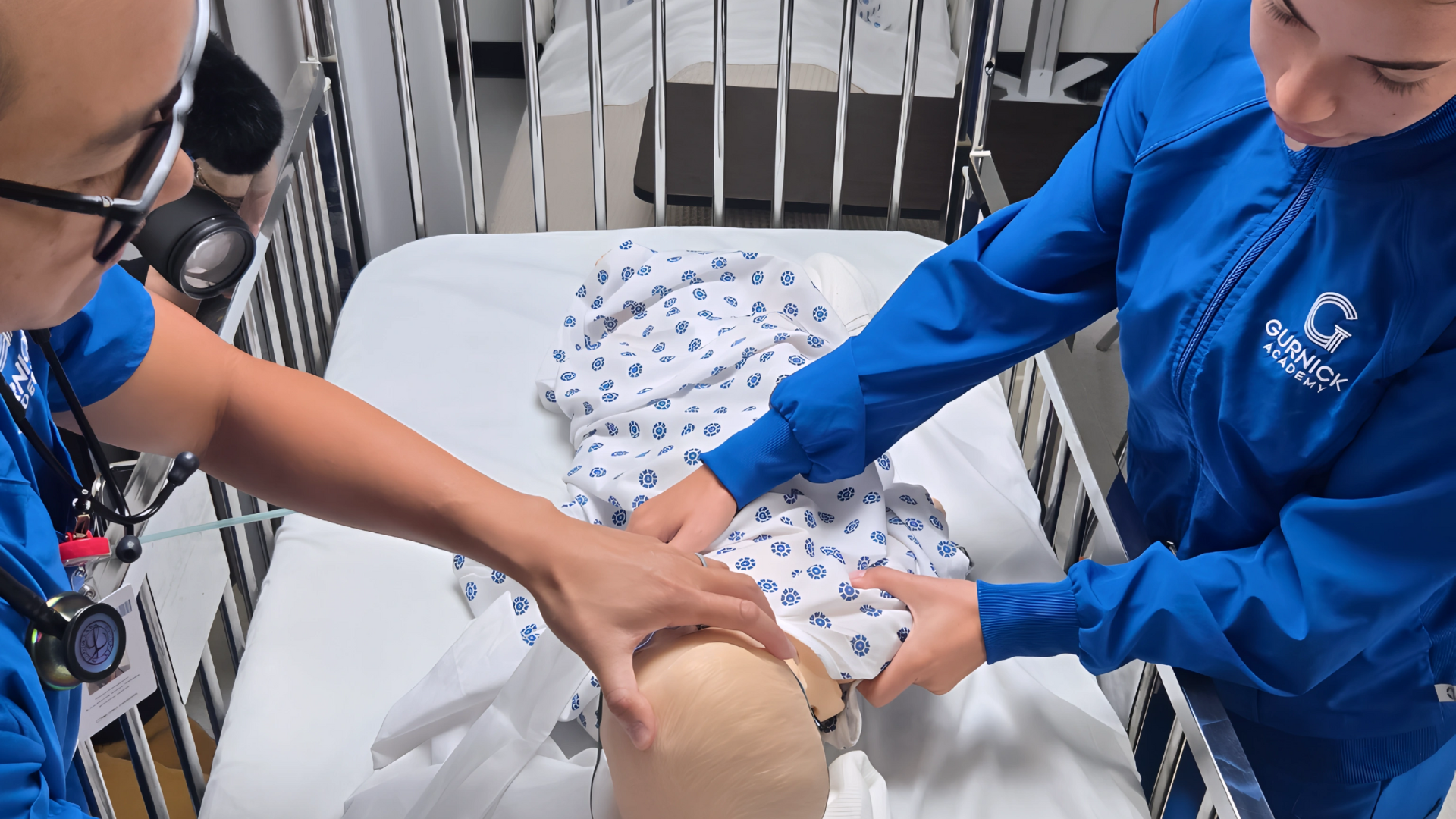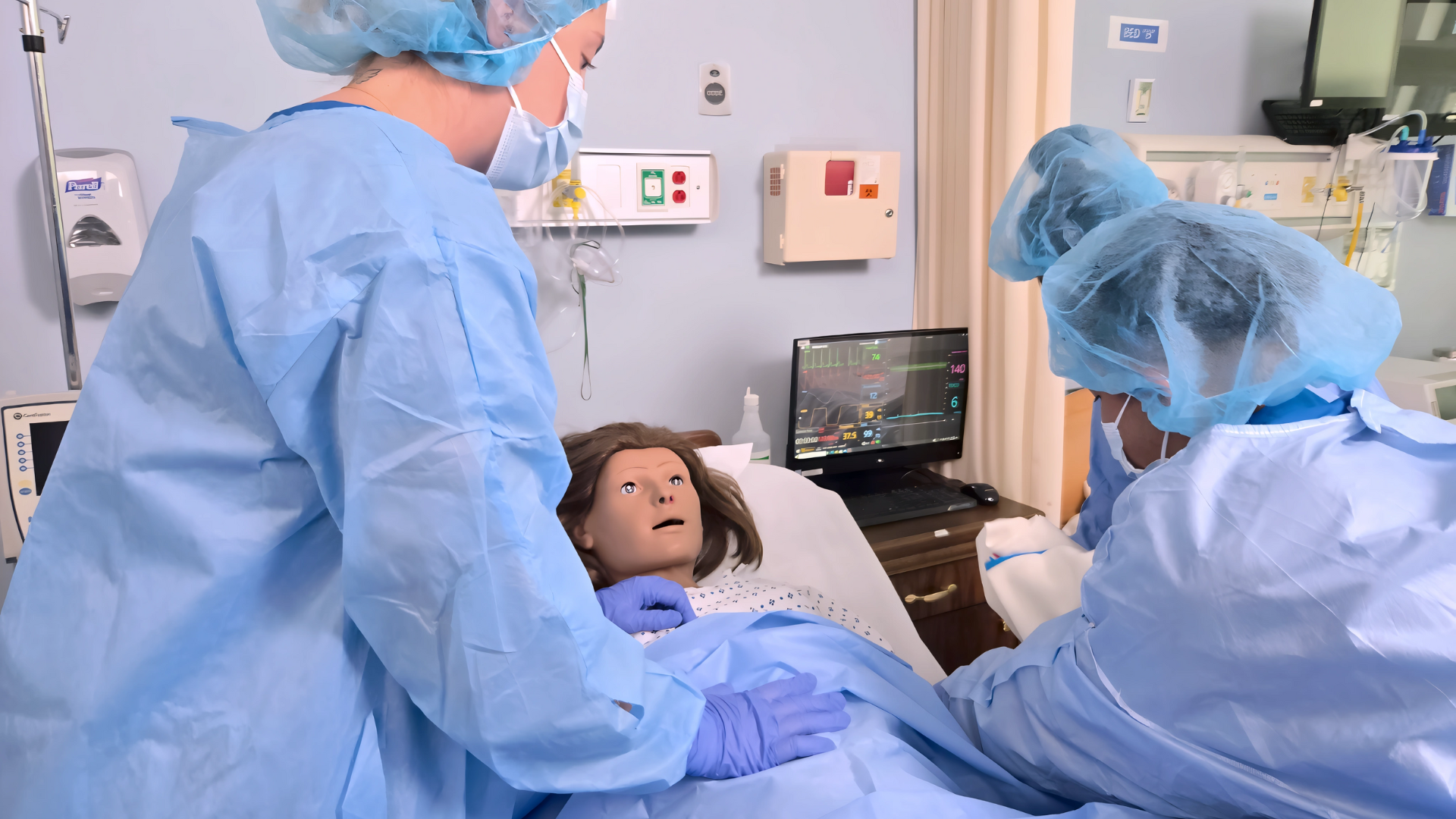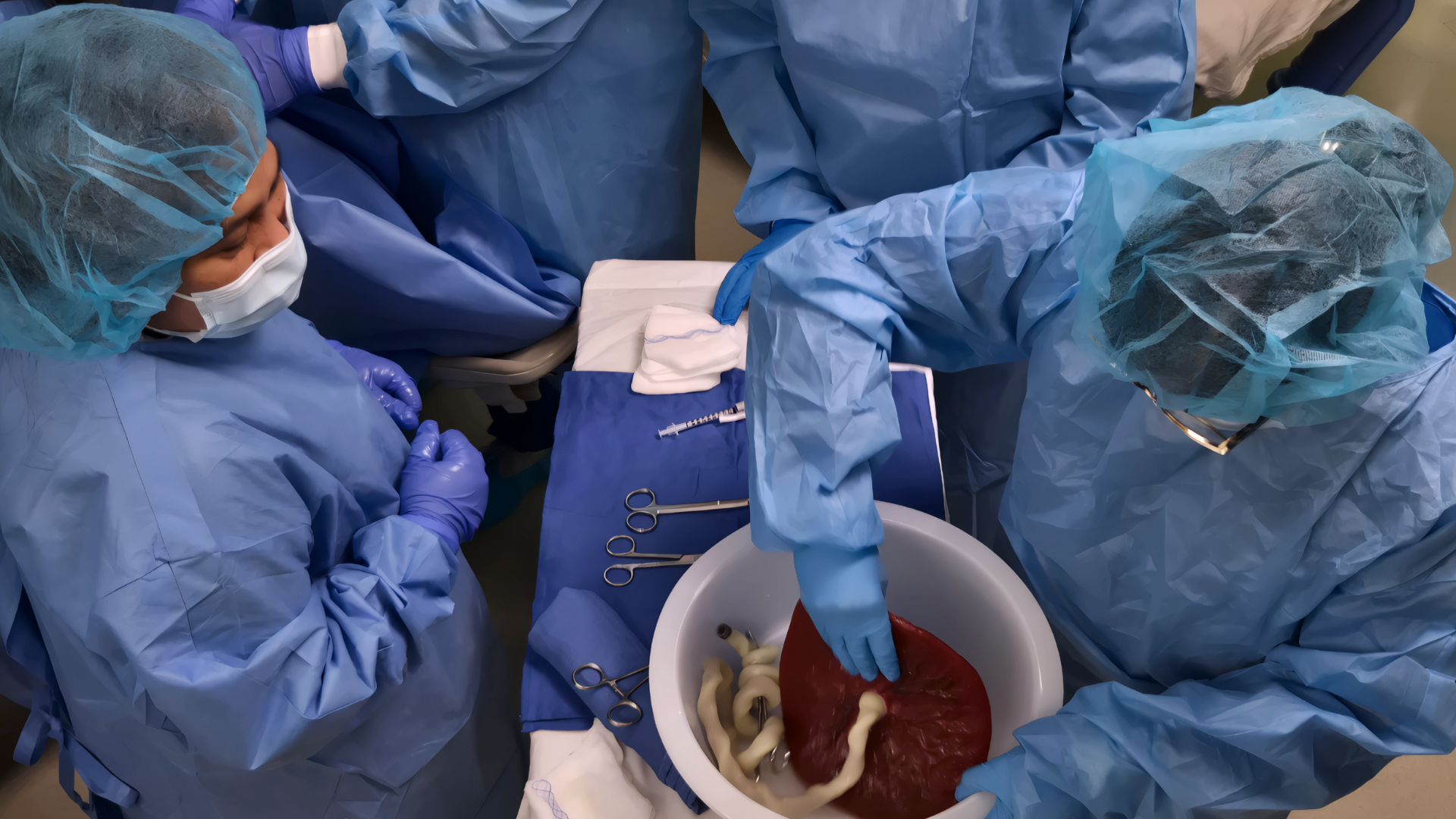
Nursing is a Bachelor Degree program (Hybrid) offered by Gurnick Academy of Medical Arts in San Jose, CA. The program takes 120 weeks to complete, with a total tuition of $147,100.
Program Overview
Students will study a wide range of curricular content required for licensure by the California Board of Registered Nursing. Students will also study the organization and function of health services, ethics and law in health care, writing skills for health professionals, leadership and management, nursing research, and the essentials of patient education.
Emphasis will be placed on evidence-based practice and critical thinking skills to provide safe and effective care to patients from diverse and multicultural populations and communities across the lifespan. Students will also take Community Health Nursing, which includes certification in reporting child abuse and disaster management, in accordance with the California Public Health Code of Regulations.
Program goals and objectives.
The faculty at Gurnick Academy of Medical Arts is committed to the following:
1. Providing a learning environment that nurtures cultural diversity and differences in learning styles and is free of discrimination and judgment.
2. Graduate well-prepared Bachelor of Science in Nursing students who demonstrate clinical behaviors and judgments to meet the essential competencies necessary to obtain licensure and join the workforce as an entry-level nurse.
3. Ensure that graduates possess the knowledge and skills necessary to respond to the community’s evolving healthcare delivery and practice needs.
4. Produce well-rounded nurses who are culturally sensitive, situationally adaptive, and active advocates for the community they serve.
5. Continuously review and revise its curriculum to ensure that its nursing graduates are well-equipped to adapt to the rapid changes in healthcare delivery and practice.
6. Build a learning platform to inspire nursing graduates to pursue recognition and excellence in practice, research, and community outreach.
7. Foster nurturing partnerships with its community organizations for academic programs.
8. Inspire nursing graduates to seek higher education by developing a plan for faculty growth and professional development.
What sets this Program apart
- Approved by the BRN
- Hands-On Sim Lab Training
- Clinical Hours Provided
- NCLEX-RN Exam Prep
- Job Placement Assistance
Admission Requirements and Process
All applicants to Gurnick Academy of Medical Arts must meet the General Admission Requirements for all Programs, including the entrance exam where required, and the additional admission requirements for this program.
- Attend or view a live or recorded Information Session.
- Applicants must meet the following admission policies of Gurnick Academy of Medical Arts: immunization, health screening, background check, and CPR certification (See Policies of Gurnick Academy of Medical Arts in the School Catalog and “Admissions”).
- Applicants must submit a completed application. It is recommended that interested applicants meet with the admission advisor to complete the application.
- Applicants must take an Admission Assessment: The Test of Essential Academic Skills (TEAS VII). It tests math, reading, English, language use, and science. All students are encouraged to log on to atitesting.com for study material and other valuable resources and information. The TEAS VII Test Passing score = 64% or better.
- Applicants will be asked to participate in an interview with the Nursing Program Director, Assistant Program Director, or their designee, either in person or via a virtual conferencing platform, if necessary.
- Applicants must submit a two to three-page (2 – 3) written essay on why they have chosen professional nursing as a career.
- Applicants must submit three (3) letters of recommendation to the nursing program. These may come from employers, immediate work supervisors, health-related facilities where the applicant has volunteered, or faculty from previous college/university coursework. These letters of recommendation must be submitted using formal organizational stationery.
- The applicant will submit proof of health-related &/or community work, e.g., volunteering at health fairs, hospitals, or clinics, working with the homeless, mentoring or tutoring other students, or serving as a Big Brother or Big Sister. These experiences must be substantiated with a document or letter of verification on formal organizational stationery.
- Applicants will be rank-ordered based on the following score, which includes: • Admission Assessment Test (TEAS) • Personal Interview • Written Essay • Three Letters of Recommendation • Community Work • Health-Related Experience BSN (LVN to BSN) Pathway
General Requirements
- Entrance examComplete the entrance exam with the minimum required score: Test of Essential Academic Skills (TEAS®).
- High school transcriptPossess an official high school transcript from an approved/accredited high school or equivalent; foreign credentials follow the Foreign Transcript/Degree Evaluation Policy.
- Minimum ageBe at least 18 (official ID is required) to enroll in a core program; some programs allow enrollment at age 17.
- Online applicationComplete the Online Application, the Distance Education Questionnaire, the Academic Integrity Statement and the Consent to Receive Electronic Communications.
- Health and background requirementsComply with Gurnick's immunization, health screening, background check and CPR/First Aid requirements; documentation is due before clinical rotations.
- Admissions meetingMeet with the program's Admission Advisor to review all required disclosures and receive complete information before enrolling with Gurnick Academy of Medical Arts.
- Financial aid meetingMeet with a Financial Aid Advisor to review all required disclosures and receive complete information before enrolling (this does not apply to non-financial aid programs or…
Application Process
- 1Attend an information sessionAttend or view a live or recorded information session for the program.
- 2Meet with an Admission AdvisorMeet with the program's Admission Advisor to review all required disclosures and receive complete information before enrolling.
- 3Take the entrance examComplete the entrance exam with the minimum required score (Test of Essential Academic Skills (TEAS®)).
- 4Complete the online applicationComplete the Online Application, including the Distance Education Questionnaire, the Academic Integrity Statement and the Consent to Receive Electronic Communications.
- 5Meet with a Financial Aid AdvisorMeet with a Financial Aid Advisor to review required disclosures; to apply for federal aid, complete the FAFSA using Gurnick's school code 041698.
- 6Pay fees and enrollPay the $100 non-refundable registration fee and all applicable fees per the published fee schedule before an enrollment agreement is issued.
Program Schedule
The BSN is a degree program that provides a library and classrooms equipped with audiovisual teaching aids, textbooks, journals, anatomical charts, and models. The Instructor-to-Student ratio is 1:12 in the laboratory and clinical, 1:28 during residential lectures, and 1:25 during online lectures.
The BSN program is designed with three (3) separate admission pathways for full-time attendance.
Generic BSN (8 semesters for 120 Semester Credit Hours):
In the first three (3) program semesters, students will take 50 Semester-Credit Hours of General Education courses via online delivery.
The fourth semester is 15 weeks and consists of 14 semester credit hours (nine (9) lectures and five (5) clinical and skills lab hours). Courses include Fundamentals of Nursing, which covers theory, skills, and clinical practice, as well as Health Assessment and Pharmacology. Theory and Lab will be held Monday through Friday. The clinical schedule may vary depending on the availability of the clinical site.
The fifth semester consists of 13 semester credit hours (nine (9) lectures and four (4) clinical hours). Courses include Pathophysiology, Introduction to Med/Surg I Theory and Clinical, and Intermediate Med/Surg Theory and Clinical. Classes will be held Monday through Friday. The clinical schedule may vary depending on the availability of the clinical site.
The sixth semester consists of 14.5 semester credit hours (nine (9) lectures and 5.5 clinical hours). Courses include Mental Health Theory and Clinical, Maternal/Newborn Theory and Clinical, and Advanced Med/Surg I Theory and Clinical. Theory and Lab will be held Monday through Friday. The clinical schedule may vary depending on the availability of the clinical site.
The seventh semester consists of 14.5 semester credit hours (nine (9) lectures and 5.5 clinical hours). Courses include Care of Children Theory and Clinical, Complex Med-Surg Theory and Clinical/Leadership, and Community Health Theory and Practicum. Classes will be held Monday through Friday. The clinical schedule may vary depending on the availability of the clinical site.
The eighth semester consists of 14 semester credit hours (12 lectures and two (2) clinical hours). Courses include Leadership Theory and Practicum, Nursing Research, Nursing Informatics, and BSN Capstone Portfolio. Classes will be held Monday through Friday. The clinical schedule may vary depending on the availability of the clinical site.
Students receive 1,425 didactic hours and 1,080 clinical and lab hours during this pathway, allowing them to apply the lecture topics to practical use.
Upcoming start date for this program: January 4, 2027 (application deadline December 18, 2026).
- January 04th, 2027
Cost of Attendance and Financial Aid Information
Tuition and fees. Registration Fee (non-refundable) $100.00; Student Tuition Recovery Fund $0.00; Textbooks $925.00; Tuition $147,100.00. Total program cost $148,125.00. Total program cost excludes transportation, room and board, and personal expenses.
Cost per credit. $520.00 per general education credit; $1,730.00 per core credit.
Total fees per period of enrollment. Period 1: $9,065.00; Period 2: $8,420.00; Period 3: $8,990.00; Period 4: $24,370.00; Period 5: $22,565.00; Period 6: $25,185.00; Period 7: $25,235.00; Period 8: $24,295.00.
Cost of Attendance, 2026–2027 (one academic year). Tuition & Fees $17,260.00; Books $225.00; Transportation $6,300.00; Food & Housing $17,876.00; Personal Expenses $638.00; Loan Fees $98.00; Laptop Fees $450.00; Total Cost of Attendance (One Academic Year) $42,847.00. Individual student costs will vary.
Financial aid. Gurnick Academy of Medical Arts participates in various federal and state student financial assistance programs, including the Federal Pell Grant, FSEOG, Direct and Direct PLUS Loans, Cal Grant, Sallie Mae® and Campus Door loans, and veteran benefits, for those who qualify. Each campus has a Financial Aid Advisor. Gurnick's FAFSA school code is 041698.
Net Price Calculator. Estimate your net price with Gurnick's Net Price Calculator.
Other fees, as applicable. ATI TEAS $120; background check $33–$75; drug testing $74–$148; CPR $55–$80; fingerprinting $81 and up; licensing board fees $200–$500 depending on the exam and license; campus parking permit $25; graduation ceremony fee $20–$50. Some of these fees may be paid by Gurnick Academy for some programs.
Curriculum
The Nursing curriculum is listed below as published in the catalog.
Required Courses
| Subject # | Name | Credits |
|---|---|---|
Career Outcomes
Career paths. Registered Nurse, Critical Care Nurse, Acute Care Nurse.
Certification and licensure. NCLEX-RN; California Public Health Nurse (PHN) certificate eligibility.
School Performance Fact Sheet. Bachelor of Science in Nursing – 120 Semester Credit Hours at the San Jose campus is reported as a new program, so completion, placement and salary data are not yet available (published March 17, 2026).
Campus Address
Why Accreditation Is Important
Gurnick Academy of Medical Arts holds institutional accreditation by the Accrediting Bureau of Health Education Schools (ABHES) and is approved to operate by the California Bureau for Private Postsecondary Education (BPPE). The Bachelor of Science in Nursing program is approved by the California Board of Registered Nursing (BRN).
- A reliable indicator of quality
- Approved program of study
- Qualified instructors
- Recognition by employers nationwide
Accreditations

Student Demographics
These are demographics for all students at the San Jose Campus (IPEDS, 2024).
Percentages are of total fall enrollment. 1 student whose race or ethnicity was not reported is included in that total but shown as no category, so the figures above come to 100% rather than 100%.
Images