Heavy Equipment Operations – Lattice Boom Crawler Crane is a Certificate program offered by Heavy Equipment Colleges of America in Oklahoma City, OK. The program takes 3 weeks to complete, with a total cost, including fees, of $15,462.
Program Overview
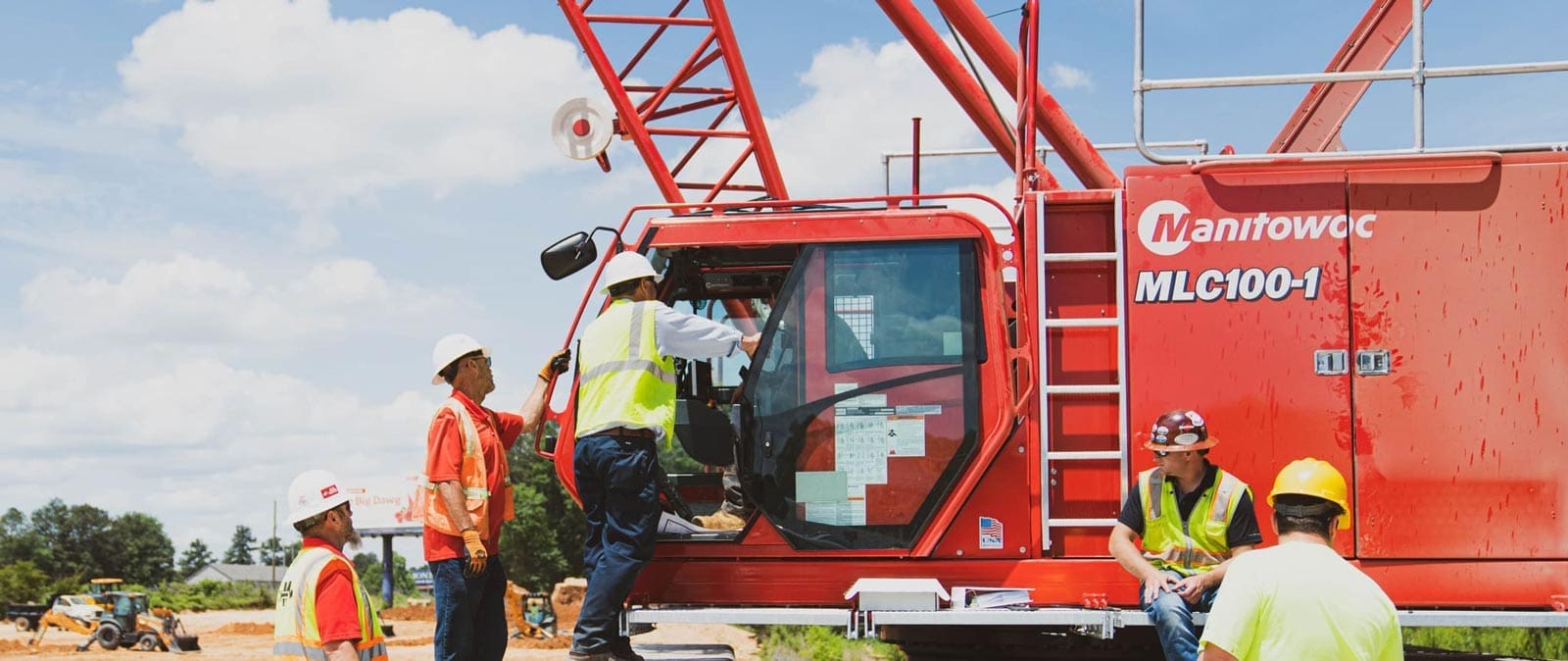
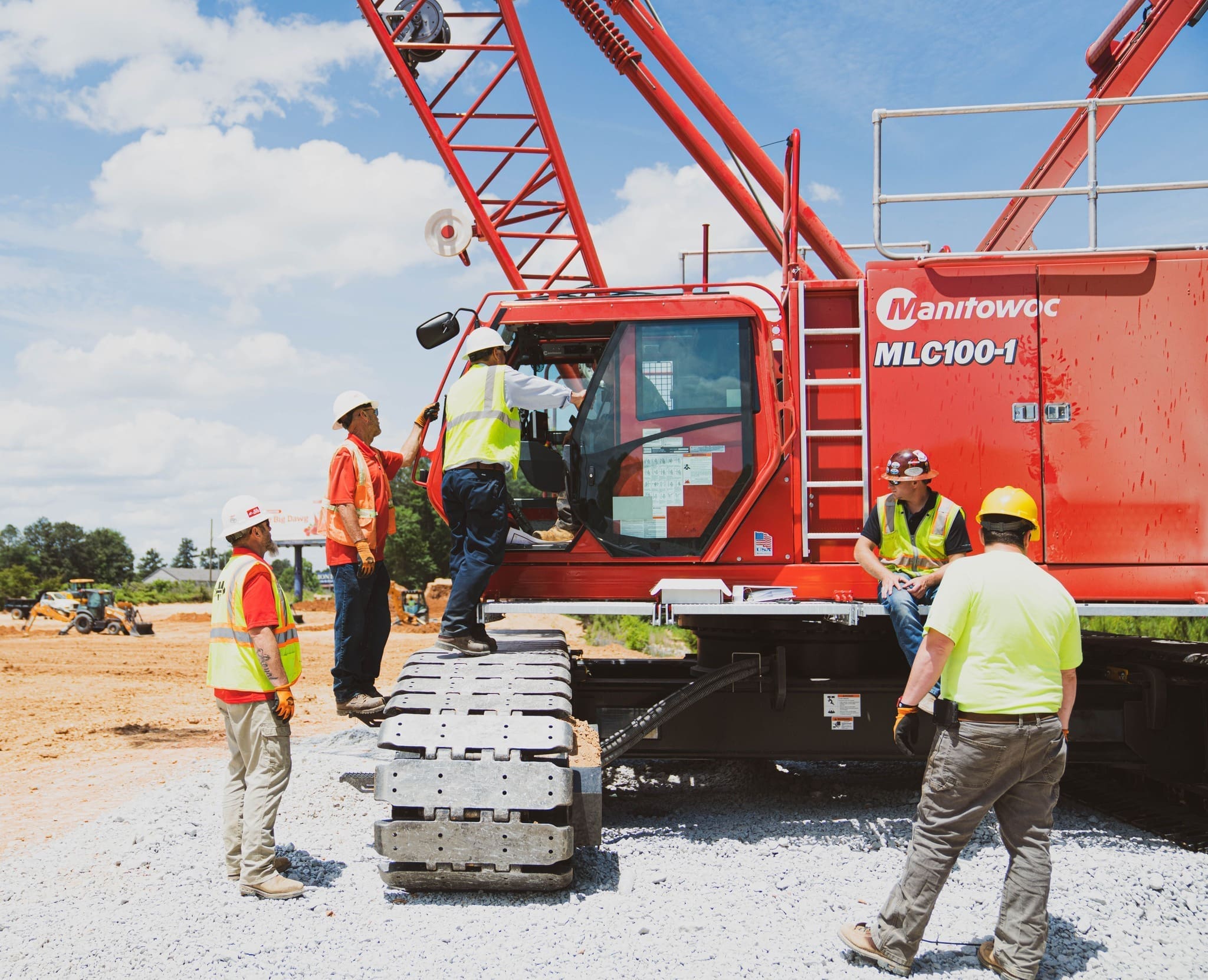
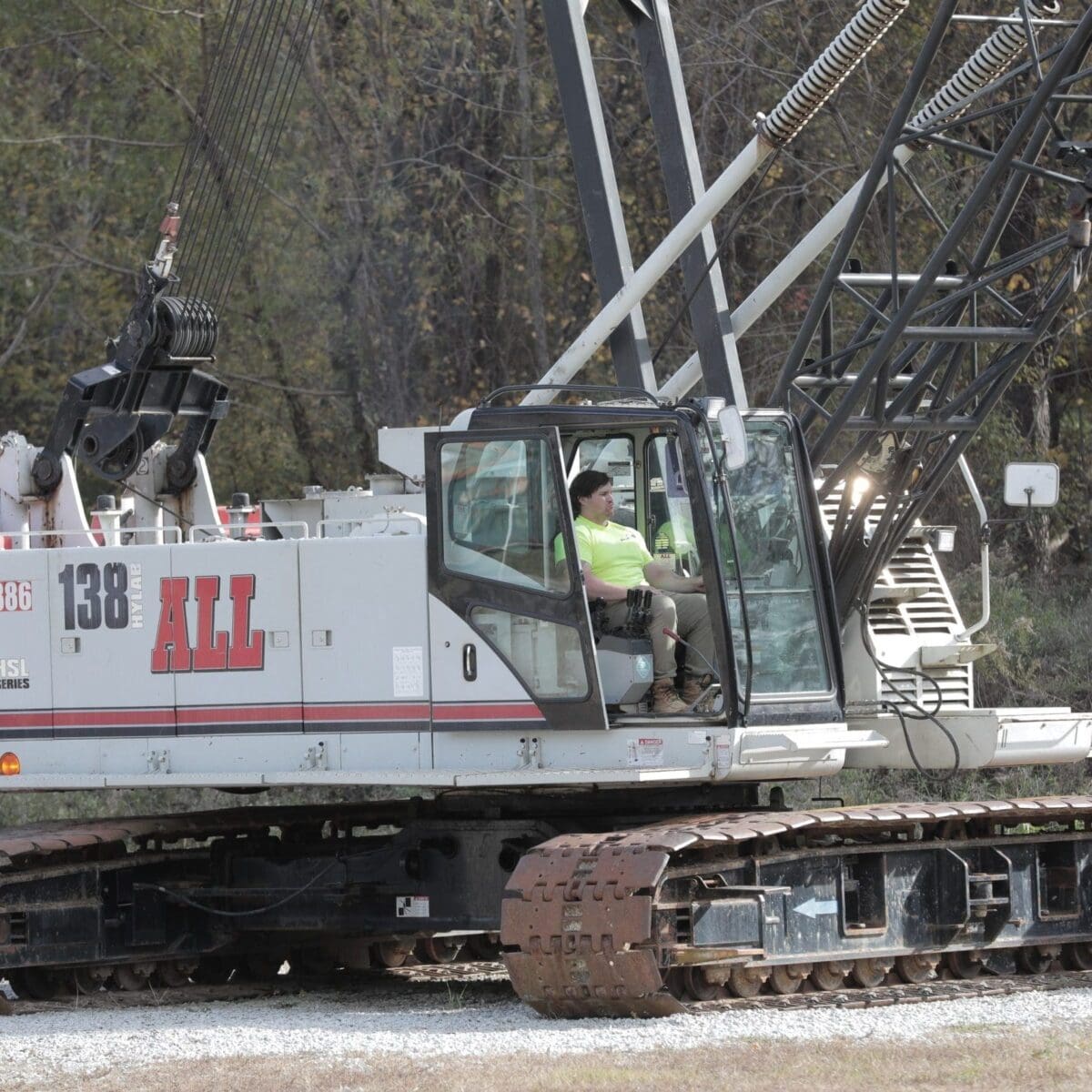
In the classroom and with hands-on field training, students will learn the advanced operation principles of swing crane operation while specializing in Lattice Boom cranes, including: crane set-up, load dynamics, lift planning, rigging and signaling, and pin-point accuracy. The course prepares students not only to safely operate the crane, but also to take the NCCCO Crane Operator Certification Exam. The objective of this program is to provide the fundamental skills and knowledge applicable to lattice boom crane operation and rigging and to obtain employment in the excavation and/or construction industries as a novice crane operator and entry level lattice boom operator.
Making decisions about what, when, and where to study can have an impact on the rest of your life. It is not surprising that many students find themselves hesitating before committing. After all, individuals want a job that will provide them reliable work to support themselves throughout their lifetime.
Our schools continually strive to design the most effective curriculum possible for our students. The programs we offer are crafted to aid students in learning a wide variety of skills. At our locations, you have the advantage of receiving hands-on experience while also gaining the valuable information found in textbooks and classroom discussions. Our programs are designed to give you both practical experience and classroom interaction when it comes to the fundamentals of crane operation.
Our experienced staff members will help you acquire the experience, knowledge and skills necessary to succeed in lattice boom crane operation.
Credential awarded. Certificate of Completion.
What sets this Program apart
You’re not here to sit on the sidelines – you’re here to get your hands dirty and the job done right. With real-world training, you can step up to the challenge of operating one of the most commanding machines on any jobsite: the lattice boom crawler crane. This hands-on program teaches crane set-up, lift planning, rigging, signaling, and load dynamics – building the confidence and precision needed to operate with purpose and power.
Our goal is to provide students with the very best in training education. Making the decision to enroll in a program at one of our campuses helps you make an investment in your future. Some of the specific benefits that you can expect to gain from our Certificate of Heavy Equipment Operations – Lattice Boom Crawler Crane program include:
In this program, we focus on giving our students the hands-on training and practical field experience to help them prepare for future work.
At HEC, we recognize that not everyone can afford to dedicate years of their busy lives to the pursuit of higher education. You can complete this program in as quickly as three weeks.
The National Commission for the Certification of Crane Operators (NCCCO) program utilizes an outcome-based assessment approach. This provides an objective evaluation that meets industry and regulatory standards and accurately measures knowledge and abilities. NCCCO aims to enhance lifting equipment safety, reduce workplace risk, improve performance records, stimulate training, and give due recognition to the professionals who work in, with, and around cranes. Getting a certification at HEC prepares students with the entry-level skills that employers are looking for.
Certification. The National Commission for the Certification of Crane Operators (NCCCO) program utilizes an outcome-based assessment approach. ...
The Oklahoma City campus. At our Oklahoma City campus, we don’t just talk about hard work, we train for it. From heavy equipment and crane operations to HVAC, our programs are built for those ready to power industries and take control of their future. Every inch of our learning environment is crafted to help students gain the hands-on experience, technical skills, and confidence they need to step into the essential trades with purpose. Because the future doesn’t hand itself over – you earn it.
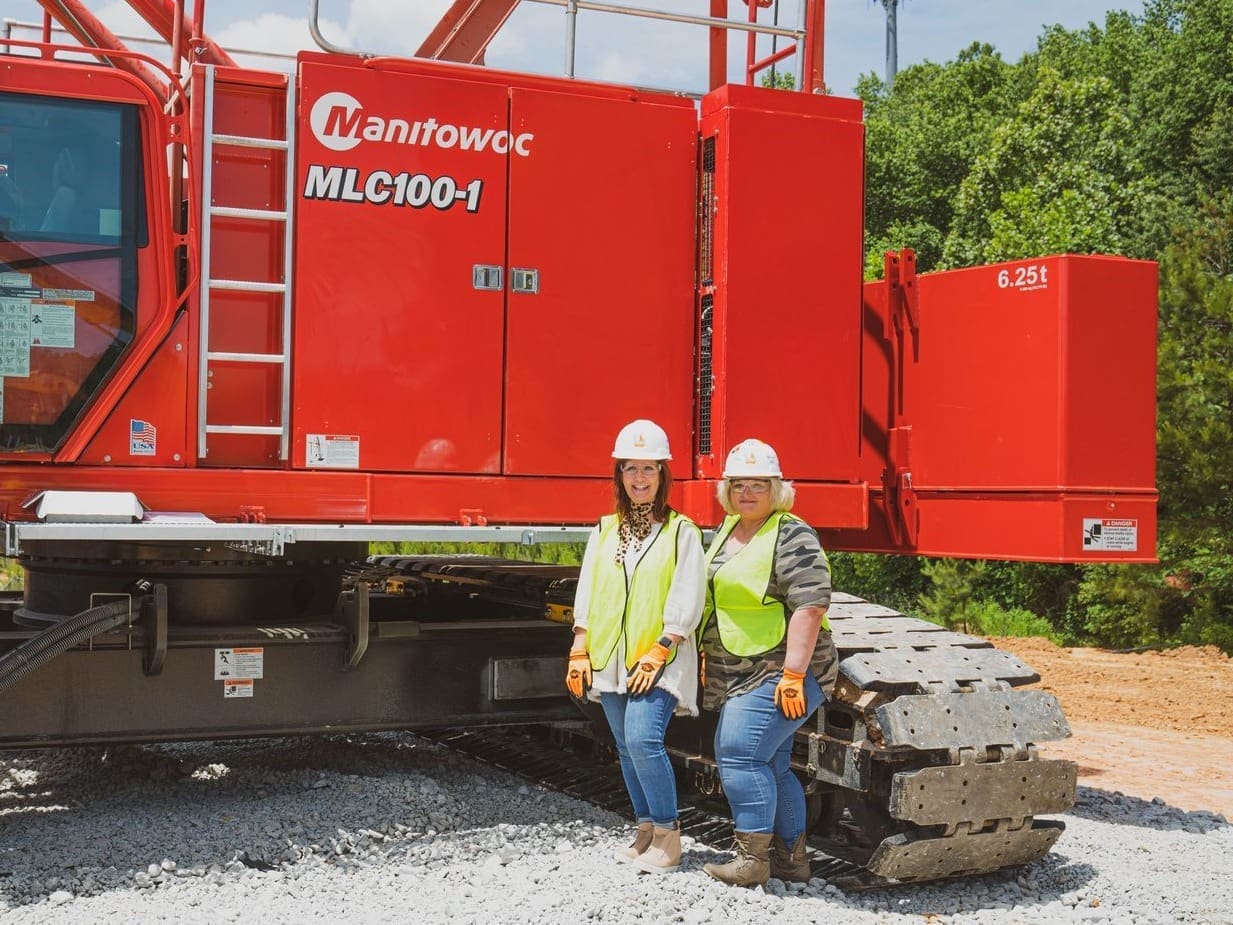
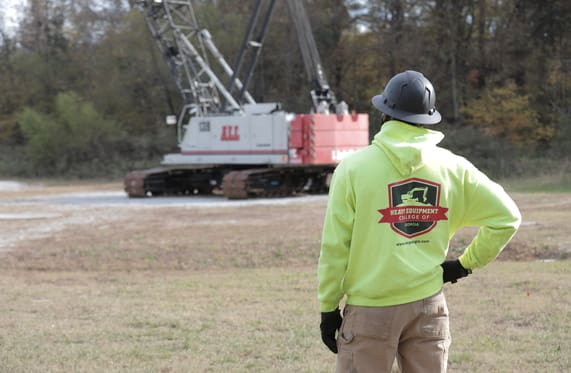
Facility. The college’s main campus is located at 6101 W. Reno Avenue, Suite 1000, Oklahoma City, OK 73127. A field site (satellite location) is located 2 ½ miles from the main campus at 8125 SW 15th St. Oklahoma City, OK 73128. The field site consists of 9.5 acres of varied terrain in an industrial area south of the North Canadian River. On our field site, heavy equipment and crane operator programs utilize a variety of equipment including backhoe, bulldozer, front-end loader, excavator, mobile crane, and a lattice boom crawler crane for equipment operation and field instruction. Equipment ratios are 2:1 for heavy equipment and 12:1 for cranes.
School Information
Campus Location
Why Accreditation Is Important
Heavy Equipment Colleges of America in Oklahoma City, Oklahoma is accredited by the Accrediting Commission of Career Schools and Colleges (ACCSC). This institution is licensed by the Oklahoma Board of Private Vocational Schools (OBPVS) and authorized to operate in Oklahoma by the Oklahoma State Regents for Higher Education (OSRHE). Licensed by the Texas Workforce Commission (TWC). Approved for VA Education.
- A reliable indicator of quality
- Approved program of study
- Qualified instructors
- Recognition by employers nationwide
Accreditations

Admission Requirements and Process
To qualify for enrollment, applicants must be able to read and write the English language and be at least 18 years of age. Applicants must possess a high school diploma or equivalent. Most employers require a drug test; therefore, it is recommended that students are able to pass a drug screening test.
Certain criteria may disqualify an applicant because they may prevent a graduate from obtaining employment; admission may still be granted if the Institution determines the applicant is capable of obtaining employment upon graduation. The Institution will make this determination on a case-by-case basis.
General Requirements
- At least 18 years of ageApplicants must be at least 18 years of age and able to read and write the English language.
- High school diploma or equivalentAccepted equivalents include, but are not limited to, a GED; DD214 that indicates high school equivalency; or a college degree transcript issued to the student that indicates the high school graduation, or a copy of a high school diploma.
- Proof of identityValid driver’s license, social security card, military identification or birth certificate.
- Physically and mentally able to operate equipmentApplicants must be physically/mentally capable of safely operating all equipment in order to successfully complete the program without endangering themselves or others.
- Drug screening recommendedMost employers require a drug test; therefore, it is recommended that students are able to pass a drug screening test.
- Possible disqualifiers (case-by-case)Any history of epileptic seizures; use of medication that may interfere with one’s ability to operate equipment; invalid driver’s license; felony conviction.
- Physical exam for NCCCO testingMobile Crane students will be required to pass a physical examination in order to apply for the NCCCO written or practical examinations.
Application Process
- 1Submit your applicationSubmit a completed Enrollment Application to enroll for classes and provide proof of your identity (valid driver’s license, social security card, military identification or birth certificate).
- 2Provide proof of your educationApplicants must provide proof of high school graduation or GED certificate. If you do not have a GED or a high school diploma, you may still be able to complete the application process. Reach out to the campus where you hope to study and talk to them about your options.
- 3Meet basic physical criteriaApplicants must meet basic physical criteria. Our locations do not discriminate based on mental or physical disabilities. We just have to ensure that you are physically and mentally capable of safely operating all equipment to successfully complete the program without endangering yourself or others.
- 4Arrange payment or fundingPayment is due on the first day of class; HEC works with several sources of funding, and institution representative(s) may assist students in applying for these funds.
Program Schedule
Length. Full Time – 3 Weeks; 120 total instructional clock hours. A clock hour is defined as 50 minutes of instruction in a 60-minute period.
Training hours. Training hours range from: Monday through Saturday 7:00am – 5:00pm. Training times may be adjusted to accommodate seasonal weather conditions, holidays and other unforeseen circumstances. However, all program hours will be offered. Fridays and Saturdays are reserved for additional training time with instructors and for students to make-up any missed coursework.
Class size. The number of students per class range from one to thirty students. Maximum student to instructor ratios is as follows: Classroom Instruction - 30:1, and field instruction - 12:1. The normal training day runs approximately ten hours with a lunch break.
Upcoming start dates. 10/5/2026, 10/26/2026, 11/16/2026, 12/7/2026, 1/4/2027, 1/25/2027, 2/15/2027, 3/8/2027, 3/29/2027, 4/19/2027, 5/10/2027, 5/31/2027.
- October 05th, 2026
- October 26th, 2026
- November 16th, 2026
- December 07th, 2026
- January 04th, 2027
- January 25th, 2027
- February 15th, 2027
- March 08th, 2027
- March 29th, 2027
- April 19th, 2027
- May 10th, 2027
- May 31st, 2027
Curriculum
| Course | Title | Lecture Hours | Lab Hours | Clock Hours |
|---|---|---|---|---|
| 21303 | Advanced Operational Techniques | 3 | 9 | 12 |
| 21307 | Emergency Procedures | 1 | 9 | 10 |
| 21308 | Transporting Equipment | 1 | 9 | 10 |
| 38201 | Intermediate Rigging | 5 | 9 | 14 |
| 10001 | Weights & Calculations | 4 | 9 | 13 |
| 10015 | Lattice Load Charts | 0 | 20 | 20 |
| 21305 | Personnel Lifting | 2 | 9 | 11 |
| LAB0063 | Operation Flagging and Rigging | 0 | 30 | 30 |
| Total | 120 |
21303: Advanced Operational Techniques. This course addresses operational techniques beyond simple lifts. These include more advanced lifting operations, such as multiple-crane lifts, and the use of different lifting devices, such as personnel lifts. Demolition is discussed, as well as cold weather operation.
21307: Emergency Procedures. This course gives an overview of accident situations that could possibly occur on the job site, and the steps that need to be taken to ensure the safety of equipment and personnel.
21308: Transporting Equipment. Knowledge of the appropriate handling guidelines, safety guidelines, and Department of Transportation (DOT) regulations for interstate and intrastate travel is essential for safely transporting crane components to the job site in an undamaged condition.
38201: Intermediate Rigging. This class describes some of the more complex rigging situations such as larger loads, multiple crane lifts, personnel lifts, lateral positioning of loads with equipment such as tuggers, skids, and rollers.
10001: Weights & Calculations. This course introduces basic math concepts for weight calculations and conversions when determining lift loads for crane operators.
10015: Lattice Load Charts. In depth look at load/ capacity charts including crane and boom configurations, crane base configurations, and quadrants of operations. Students will be given exercises to solve the many situations and variations from basic chart information. Students will be introduced to several load charts of the lattice crane models. Students will be shown load calculations and be given exercises to complete.
21305: Personnel Lifting. This class covers in-depth guidelines of both the federal regulations and the consensus standard for hoisting personnel.
Cost of Attendance and Financial Aid Information
| Charge | Amount |
|---|---|
| Tuition | $15,322 |
| Padfolio | $33 |
| Hardhat | $15 |
| Safety Vest | $10 |
| Safety Glasses | $10 |
| Ear Plugs | $2 |
| Work Gloves | $5 |
| LBT Student Guide | $20.13 |
| LBC Student Guide | $20.13 |
| LB Core Review | $24.74 |
| Total – No Housing | $15,462 |
Housing. Available but not required: $570 – double-occupancy.
Financial aid. Heavy Equipment Colleges of America does not participate in Title IV federal funding. HEC works with several sources of funding, including, but not limited to: Approved for VA Education; Vocational Rehabilitation; Federal Trade Adjustment Assistance Program; Workforce Innovations and Opportunity Act; In-house financing; Bureau of Indian Affairs; Students may also pay cash; Other financing options for those who qualify. HEC does accept WIOA funds provided an agreement between the Agency and HEC can be reached.
Career Outcomes
According to the Bureau of Labor Statistics (BLS), the field of heavy equipment operation will grow as much as 4% from 2025 to 2035. That means that when you complete your training program(s) at HEC, you can become part of a growing field with a variety of job opportunities around the country.
Career services. The Institution's job placement service is available to assist graduates with finding employment. Students will undergo a job placement entrance interview/orientation with HEC. HEC will then begin contacting employers within the same geographical area as the students’ zip code, including those zip codes of out-of-state students, post job openings and assist the student in contacting prospective employers. Upon a student's successful completion of the program, the Institution will give each graduate a list of employers who have hired graduates or requested to be on the Institution's list. The Institution does not guarantee any of its graduates that they will become employed as a result of the training.
What to expect as a Heavy Equipment Colleges of America student
Training material. Required books and supplies are provided to students. A training book containing the program curriculum is checked-out to students upon enrollment and students return the training book at program completion.
Training environment. Training may take place in a variety of academic environments including but not limited to lecture, hands-on, field, site, and lab. Field training is structured where students are organized in groups.
Licensing. Heavy equipment operators are not required to have any state issued license in Oklahoma. Heavy Equipment Operators do not need a Commercial Driver’s License (CDL) prior to employment.
Testimonials
Videos
Frequently Asked Questions
School Information
Campus Location
Why Accreditation Is Important
Heavy Equipment Colleges of America in Oklahoma City, Oklahoma is accredited by the Accrediting Commission of Career Schools and Colleges (ACCSC). This institution is licensed by the Oklahoma Board of Private Vocational Schools (OBPVS) and authorized to operate in Oklahoma by the Oklahoma State Regents for Higher Education (OSRHE). Licensed by the Texas Workforce Commission (TWC). Approved for VA Education.
- A reliable indicator of quality
- Approved program of study
- Qualified instructors
- Recognition by employers nationwide