Heavy Equipment Operations – Level I is a Certificate program offered by Heavy Equipment Colleges of America in Oklahoma City, OK. The program takes 3 weeks to complete, with a total tuition of $12,197.
Program Overview
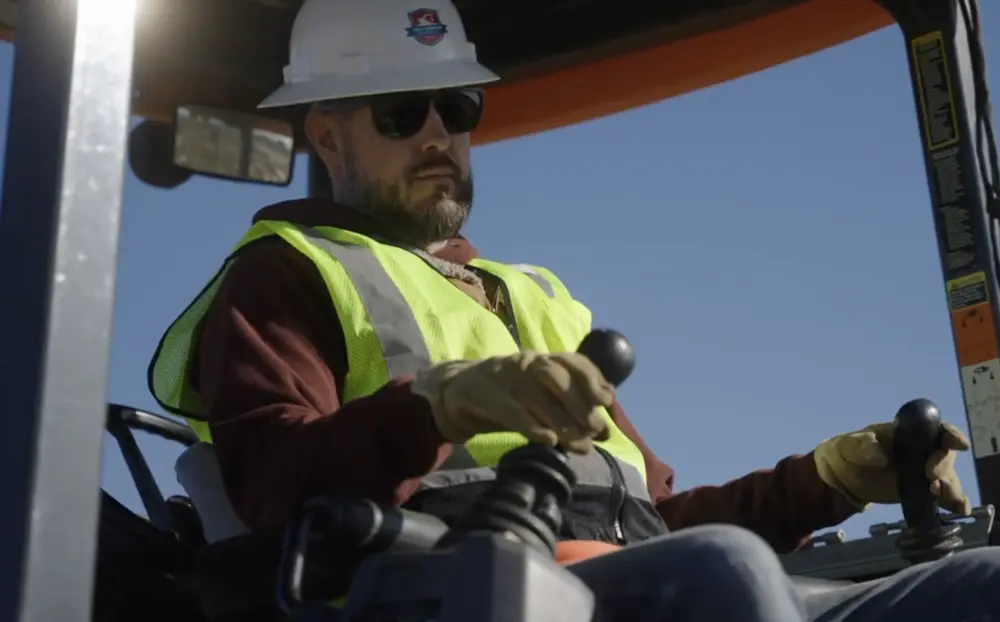
This three-week course is designed to provide even the most novice student a practical understanding of basic heavy equipment operation. Students will learn the essential skills of earthmoving, including digging, trenching, and loading, in addition to heavy equipment safety, preventive maintenance, and construction site fundamentals such as grades and elevations. At the end of the course, students will have the training and skills necessary for an entry level position to work on projects such as utility and underground excavation, construction site preparation, sand and gravel transport, landscaping, and mining operations. The program’s objective is to provide the fundamental skills and knowledge applicable to wheel loader, and backhoe, to obtain employment in the heavy equipment industry as an entry-level operator.
Certificate of Heavy Equipment Operations Level I is a three-week course designed to help students at every level. Whether you’re just breaking into the workforce or looking to level up your skills, Heavy Equipment Colleges of America can help.
The Level I Heavy Equipment Operator program teaches earthmoving, including digging, trenching, and loading, in addition to heavy equipment safety, preventive maintenance, and construction site fundamentals.
Choosing a career can be a daunting task. The right postsecondary education can make a new career more attainable and more rewarding. Skilled trades are as important as they ever have been and demand for well-trained workers is on the rise. Heavy equipment operators enjoy job stability, competitive pay, and clear advancement opportunities.
Credential awarded. Certificate of Completion.
What sets this Program apart
From backhoe, skid steer, and wheel loader operation to safety, maintenance, and construction site fundamentals, this program equips you with what you need to dig into your future with confidence. In as little as three weeks, you can lay the groundwork for a future in heavy equipment operation through a powerful mix of hands-on training and classroom instruction.
HEC offers the curriculum and valuable combination of hands-on experience and classroom instruction that lead to well-rounded and capable entry-level professionals. We believe learning should be a great experience. That is why we are proud to offer courses that have been carefully constructed to give our students the opportunity to excel in their field.
In this program, you will learn the basics of working as a heavy equipment operator. This generally includes the basics of backhoes and wheel loaders, depending on location. This program gives you a solid foundation upon which to build your career.
We understand you have a busy life and you can’t afford to spend months, even years, to complete a training program. To help get you out of the classroom and into a position, this program can be finished in three weeks.
Earning the Certificate of Heavy Equipment Operations – Level I training will qualify you for the ADEPT (Adaptable Equipment Proficiency Testing) exam, a nationally-recognized heavy equipment operations certification.
Certification. Earning the Certificate of Heavy Equipment Operations – Level I training will qualify you for the ADEPT (Adaptable Equipment Proficiency Testing) exam, a nationally-recognized heavy equipment operations certification.
The Oklahoma City campus. At our Oklahoma City campus, we don’t just talk about hard work, we train for it. From heavy equipment and crane operations to HVAC, our programs are built for those ready to power industries and take control of their future. Every inch of our learning environment is crafted to help students gain the hands-on experience, technical skills, and confidence they need to step into the essential trades with purpose. Because the future doesn’t hand itself over – you earn it.
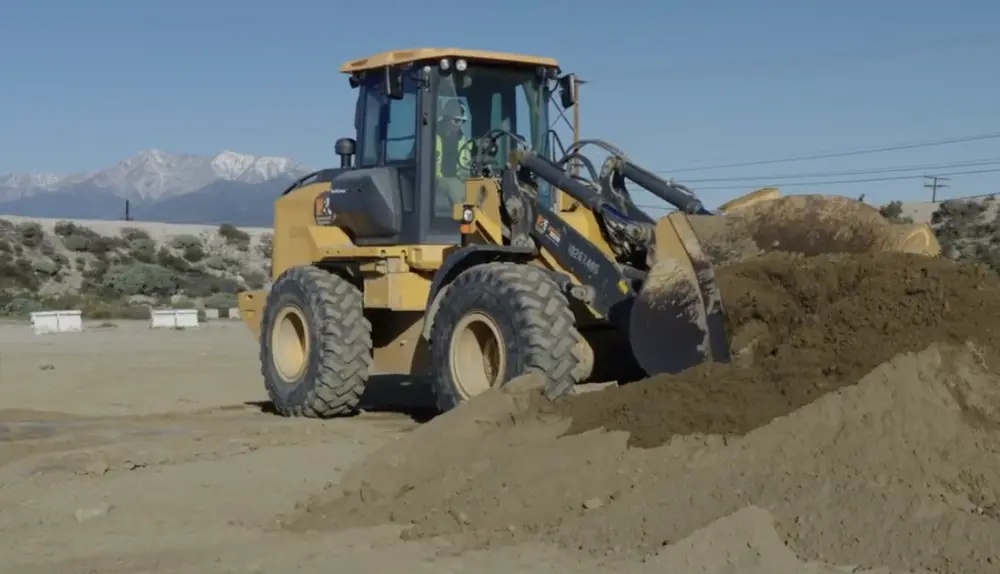
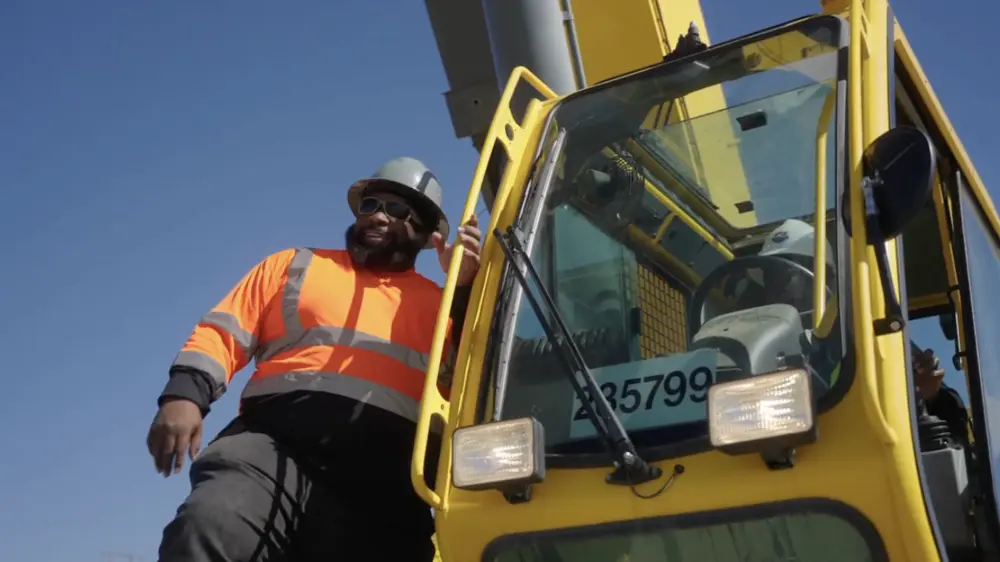
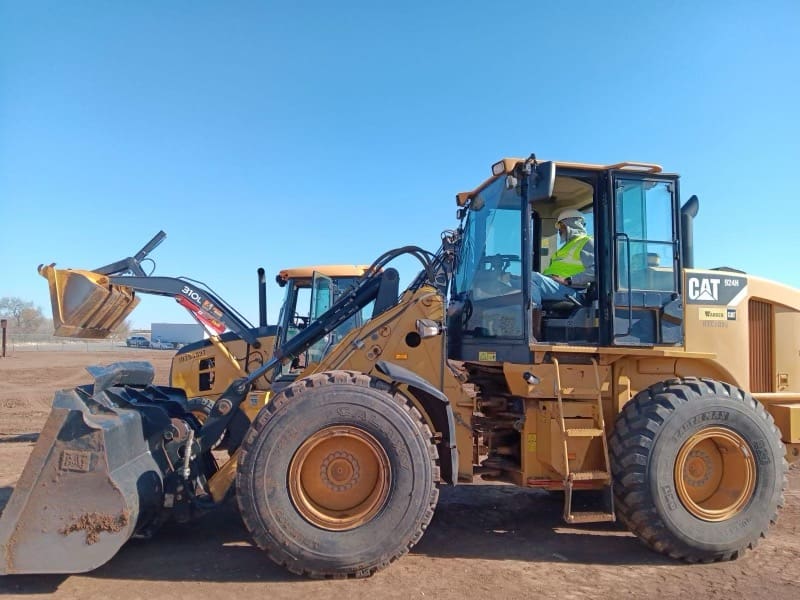
Facility. The college’s main campus is located at 6101 W. Reno Avenue, Suite 1000, Oklahoma City, OK 73127. A field site (satellite location) is located 2 ½ miles from the main campus at 8125 SW 15th St. Oklahoma City, OK 73128. The field site consists of 9.5 acres of varied terrain in an industrial area south of the North Canadian River. On our field site, heavy equipment and crane operator programs utilize a variety of equipment including backhoe, bulldozer, front-end loader, excavator, mobile crane, and a lattice boom crawler crane for equipment operation and field instruction. Equipment ratios are 2:1 for heavy equipment and 12:1 for cranes.
School Information
Campus Location
Why Accreditation Is Important
Heavy Equipment Colleges of America in Oklahoma City, Oklahoma is accredited by the Accrediting Commission of Career Schools and Colleges (ACCSC). This institution is licensed by the Oklahoma Board of Private Vocational Schools (OBPVS) and authorized to operate in Oklahoma by the Oklahoma State Regents for Higher Education (OSRHE). Licensed by the Texas Workforce Commission (TWC). Approved for VA Education.
- A reliable indicator of quality
- Approved program of study
- Qualified instructors
- Recognition by employers nationwide
Accreditations

Admission Requirements and Process
To qualify for enrollment, applicants must be able to read and write the English language and be at least 18 years of age. Applicants must possess a high school diploma or equivalent. Most employers require a drug test; therefore, it is recommended that students are able to pass a drug screening test.
Certain criteria may disqualify an applicant because they may prevent a graduate from obtaining employment; admission may still be granted if the Institution determines the applicant is capable of obtaining employment upon graduation. The Institution will make this determination on a case-by-case basis.
General Requirements
- At least 18 years of ageApplicants must be at least 18 years of age and able to read and write the English language.
- High school diploma or equivalentAccepted equivalents include, but are not limited to, a GED; DD214 that indicates high school equivalency; or a college degree transcript issued to the student that indicates the high school graduation, or a copy of a high school diploma.
- Proof of identityValid driver’s license, social security card, military identification or birth certificate.
- Physically and mentally able to operate equipmentApplicants must be physically/mentally capable of safely operating all equipment in order to successfully complete the program without endangering themselves or others.
- Drug screening recommendedMost employers require a drug test; therefore, it is recommended that students are able to pass a drug screening test.
- Possible disqualifiers (case-by-case)Any history of epileptic seizures; use of medication that may interfere with one’s ability to operate equipment; invalid driver’s license; felony conviction.
Application Process
- 1Submit your applicationSubmit a completed Enrollment Application to enroll for classes and provide proof of your identity (valid driver’s license, social security card, military identification or birth certificate).
- 2Provide proof of your educationApplicants must provide proof of high school graduation or GED certificate. If you do not have a GED or a high school diploma, you may still be able to complete the application process. Reach out to the campus where you hope to study and talk to them about your options.
- 3Meet basic physical criteriaApplicants must meet basic physical criteria. Our locations do not discriminate based on mental or physical disabilities. We just have to ensure that you are physically and mentally capable of safely operating all equipment to successfully complete the program without endangering yourself or others.
- 4Arrange payment or fundingPayment is due on the first day of class; HEC works with several sources of funding, and institution representative(s) may assist students in applying for these funds.
Program Schedule
Length. Full Time – 3 Weeks; 120 total instructional clock hours. A clock hour is defined as 50 minutes of instruction in a 60-minute period.
Training hours. Training hours range from: Monday through Saturday 7:00am – 5:00pm. Training times may be adjusted to accommodate seasonal weather conditions, holidays and other unforeseen circumstances. However, all program hours will be offered. Fridays and Saturdays are reserved for additional training time with instructors and for students to make-up any missed coursework.
Class size. The number of students per class range from one to thirty students. Maximum student to instructor ratios is as follows: Classroom Instruction - 30:1, and field instruction - 12:1. The normal training day runs approximately ten hours with a lunch break.
Upcoming start dates. 10/5/2026, 10/26/2026, 11/16/2026, 12/7/2026, 1/4/2027, 1/25/2027, 2/15/2027, 3/8/2027, 3/29/2027, 4/19/2027, 5/10/2027, 5/31/2027.
- October 05th, 2026
- October 26th, 2026
- November 16th, 2026
- December 07th, 2026
- January 04th, 2027
- January 25th, 2027
- February 15th, 2027
- March 08th, 2027
- March 29th, 2027
- April 19th, 2027
- May 10th, 2027
- May 31st, 2027
Curriculum
| Course | Title | Lecture Hours | Lab Hours | Clock Hours |
|---|---|---|---|---|
| 22101 | Introduction to the Trade | 8 | 2 | 10 |
| 22102 | Heavy Equipment Safety | 4 | 12 | 16 |
| 22103 | Identification of Heavy Equipment | 4 | 8 | 12 |
| 22106 | Grades Part I | 4 | 8 | 12 |
| 22205 | Loaders | 4 | 10 | 14 |
| 22303 | Backhoes | 4 | 10 | 14 |
| 22104 | Basic Operational Techniques | 6 | 2 | 8 |
| LAB00011 | Equipment Operation and Maintenance | 8 | 8 | 16 |
| LAB00012 | Project Site Layout | 6 | 12 | 18 |
| Total | 120 |
22101: Introduction to the Trade. Provides an overview of heavy equipment operation, operator responsibilities, and career opportunities. Covers basic principles of safety and engine operations.
22102: Heavy Equipment Safety. Provides a comprehensive overview of safety requirements on job sites, with emphasis on OSHA and NIOSH requirements. Presents basic requirements, for personal protections, safely driving equipment, and HAZCOM.
22103: Identification of Heavy Equipment. This course introduces the ten most used pieces of heavy equipment such as dump trucks, backhoes, and bulldozers. It describes the functional operation and uses for each piece of equipment.
22106: Grades Part I. This course introduces the concept of preparing graded surfaces using heavy equipment. It covers identification of construction stakes and interpretation of marks on each type of stake and describes process for grading slopes.
22205: Loaders. This course presents an introduction to the use and maintenance of the loader, periodic maintenances, and SAFE operations. The different types of loaders are described along with the various attachments that loaders may utilize.
22303: Backhoes. This course presents types and designs of backhoe excavators, safe operating techniques of the backhoe and front bucket tractor and use of the backhoe for trenching and digging foundations. Setting up the backhoe safely is emphasized.
22104: Basic Operational Techniques. This module introduces basic principles and practices of safe operations and prestart activities for heavy equipment machinery. Students will be able to properly start, operate, and shut down heavy equipment upon completion of this module.
LAB00011: Equipment Operation and Maintenance. This lab is designed for the trainee to put into action what they have learned in the classroom. The trainee will rotate between various pieces of equipment including the backhoe, front-end loader. The trainee will perform tasks with each of the machines enhancing their skills and better preparing them for employment as an entry level equipment operator. The trainee will also perform the necessary preventative maintenance required by these machines to keep them functioning properly.
LAB00012: Project Site Layout. This lab is constructed to introduce the trainee to simple site work layouts at first, and then become progressively more complex. The trainee will interpret simple civil drawings, figure areas and volumes, then layout the project using grade stakes. After laying out the project the trainee will calculate existing grade, then compute cuts and fills. The trainee will then use this information to estimate the amount of material needed for that project. e complex operations and will provide you with the advanced and dozer. l skills and knowledge applicable to loader, backhoe, dozer, heavy equipment industry as a loader, backhoe, dozer, or the ADEPT (Adaptable Equipment Proficiency Testing) exam, ation.
Cost of Attendance and Financial Aid Information
| Charge | Amount |
|---|---|
| Tuition | $12,197 |
| Padfolio | $33 |
| Hardhat | $15 |
| Safety Vest | $10 |
| Safety Glasses | $10 |
| Ear Plugs | $2 |
| Work Gloves | $5 |
| Total – No Housing | $12,272 |
Housing. Available but not required: $570 – double-occupancy.
Financial aid. Heavy Equipment Colleges of America does not participate in Title IV federal funding. HEC works with several sources of funding, including, but not limited to: Approved for VA Education; Vocational Rehabilitation; Federal Trade Adjustment Assistance Program; Workforce Innovations and Opportunity Act; In-house financing; Bureau of Indian Affairs; Students may also pay cash; Other financing options for those who qualify. HEC does accept WIOA funds provided an agreement between the Agency and HEC can be reached.
Career Outcomes
The demand for knowledgeable and skilled heavy equipment operators is expected to continue to increase over the next ten years. According to the Bureau of Labor Statistics, the field of heavy equipment operation stands to grow as much as 4% from 2025 to 2035.
Career services. The Institution's job placement service is available to assist graduates with finding employment. Students will undergo a job placement entrance interview/orientation with HEC. HEC will then begin contacting employers within the same geographical area as the students’ zip code, including those zip codes of out-of-state students, post job openings and assist the student in contacting prospective employers. Upon a student's successful completion of the program, the Institution will give each graduate a list of employers who have hired graduates or requested to be on the Institution's list. The Institution does not guarantee any of its graduates that they will become employed as a result of the training.
What to expect as a Heavy Equipment Colleges of America student
Training material. Required books and supplies are provided to students. A training book containing the program curriculum is checked-out to students upon enrollment and students return the training book at program completion.
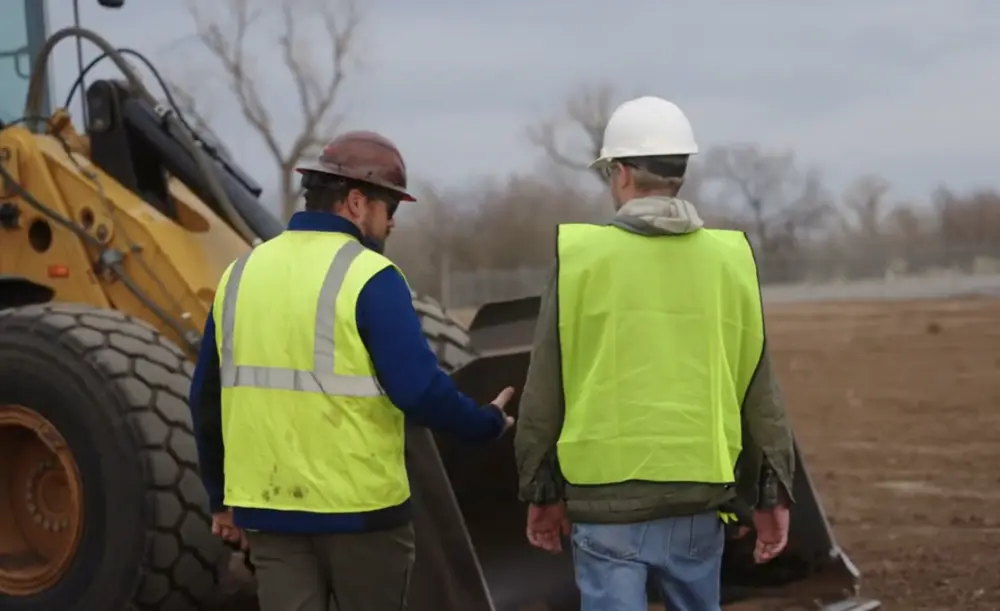
Training environment. Training may take place in a variety of academic environments including but not limited to lecture, hands-on, field, site, and lab. Field training is structured where students are organized in groups.
Licensing. Heavy equipment operators are not required to have any state issued license in Oklahoma. Heavy Equipment Operators do not need a Commercial Driver’s License (CDL) prior to employment.
Testimonials


Videos
Frequently Asked Questions
School Information
Campus Location
Why Accreditation Is Important
Heavy Equipment Colleges of America in Oklahoma City, Oklahoma is accredited by the Accrediting Commission of Career Schools and Colleges (ACCSC). This institution is licensed by the Oklahoma Board of Private Vocational Schools (OBPVS) and authorized to operate in Oklahoma by the Oklahoma State Regents for Higher Education (OSRHE). Licensed by the Texas Workforce Commission (TWC). Approved for VA Education.
- A reliable indicator of quality
- Approved program of study
- Qualified instructors
- Recognition by employers nationwide