Heavy Equipment Operations – Level II is a Certificate program offered by Heavy Equipment Colleges of America in San Bernardino, CA. The program takes 3 weeks to complete, with a total tuition of $12,222.
Program Overview
| This program’s objectives are to provide the advanced fundamental skills and knowledge applicable | to skid-steer, bulldozer, excavator, wheel loader and backhoe operating and to prepare students for employment in the | excavation industry as an entry level operator. | United State Department of Labors Standard Occupational Classification Codes: | 47-2073 – Operating engineers and other construction equipment operators | 47-5022 – Excavating and loading machines and dragline operators, surface mining | Weeks to Complete: | Full Time – 3 Weeks | Total Instructional Hours: 120 Hours | Credential Awarded: | Certificate of Completion | Course Number | Course Title | Lecture | Lab | Clock | Hours | Hours | Hours | 22104L2 | Equipment Preventative Maintenance | 5 | 0 | 5 | 22201 | Introduction to Earth Moving | 4 | 0 | 4 | 22207 | Excavation Math | 4 | 0 | 4 | 22208 | Grade Part II | 6 | 2 | 8 | 22209 | Civil Blueprint Reading | 4 | 0 | 4 Heavy Equipment Colleges of America Catalog: January 1, 2026 – December 31, 2027 | 8 | 22306 | Advanced Operational Technique | 4 | 0 | 4 | 22307 | Finishing and Grading | 4 | 0 | 4 | 22308 | Soils | 4 | 0 | 4 | LAB00021 | Equipment Operation and Maintenance/Project Site | 0 | 83 | 83 | Layout | Total | 35 | 85 | 120 | Books | Grade 2 Guide | AGC Guide | Construction Math | Dozer Guide | Excavator Guide | Tuition | $12,222.00 | **Supplies (Non-refundable upon receipt) | $20.00 | STRF (Student Tuition Recovery Fund) | $30.00 | Housing (available but not required) | $570.00 – Double-Occupancy | Total | $12,272.00 – No Housing | $12,842.00 – Double-Occupancy | **Supplies include: Work Gloves, Hard Hat, Safety Vest, Safety Glasses. |
Certificate of Heavy Equipment Operations – Level II is training to advance earlier skills you learned in our Certificate of Heavy Equipment Operations – Level I. In this course, you will receive the additional training and experience that will help qualify you for more in-depth and complex roles in the heavy equipment industry.
Choosing a career in heavy equipment operations is a decision that puts you in control of your future. Every road, bridge, and building we rely on exists because the right operator was trained to run the machines that made it possible.
Credential awarded. Certificate of Completion.
What sets this Program apart
You’ve laid the groundwork, now get the advanced heavy equipment operator training to help you level up. This hands-on program is designed for those who are ready to take their heavy equipment skills to the next level. Available at multiple Heavy Equipment Colleges of America campus locations throughout the U.S., the Certificate of Heavy Equipment Operations – Level II training program teaches important skills operators use on the job every day. You’ll train on dozers and excavators, tackle site layouts, sharpen your civil blueprint reading, and cover grading and excavation techniques that set you apart on the jobsite.
We offer a curriculum comprised of both hands-on experience and textbook learning that leads to well-rounded and capable professionals. We believe learning is an experience–but even more than that, we believe learning should be a great experience. That is why we are proud to offer courses that have been carefully constructed to give our students the best chance of success as possible.
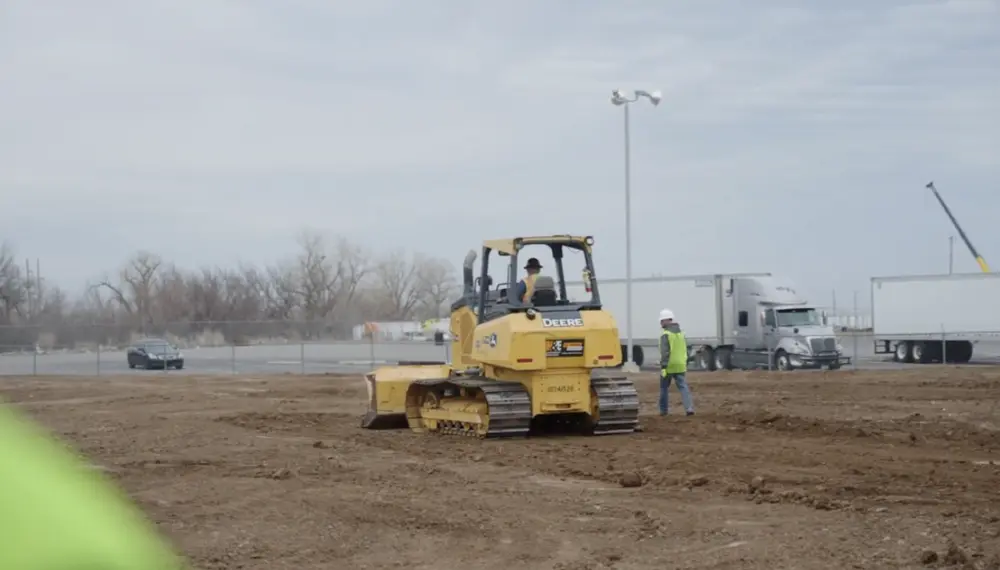
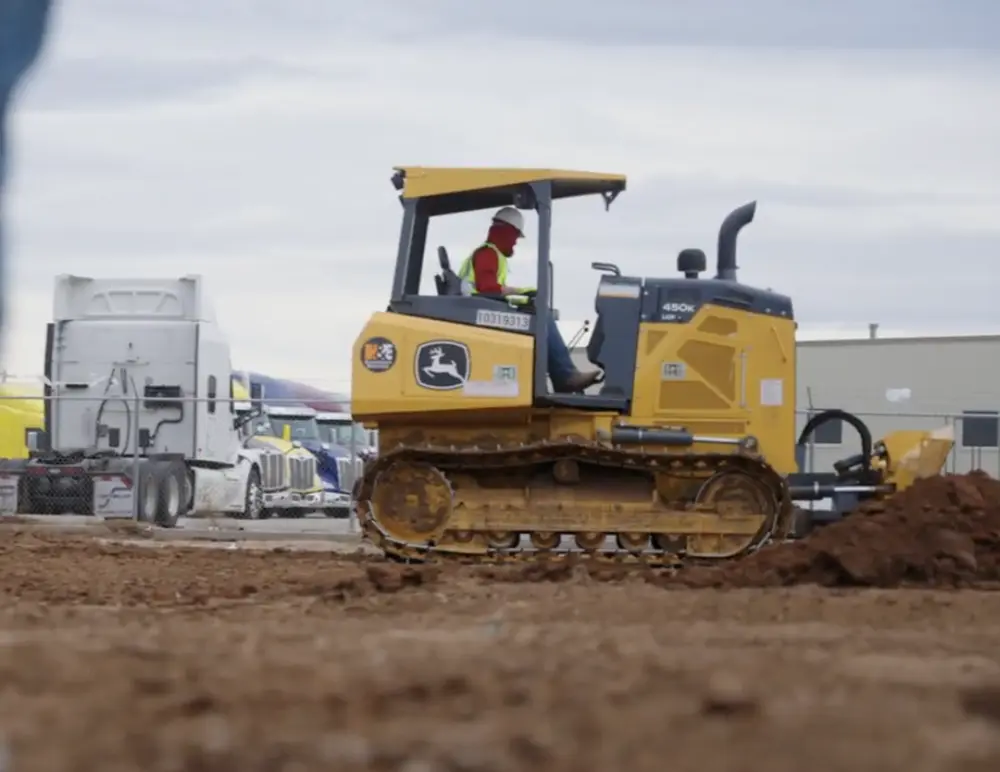
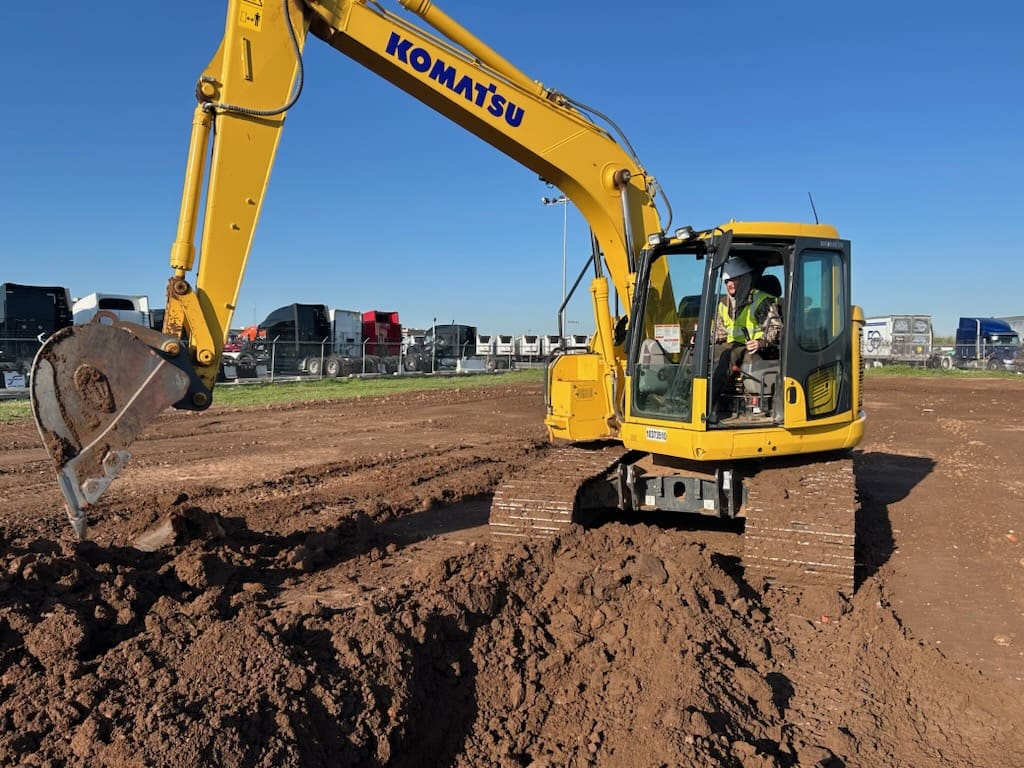
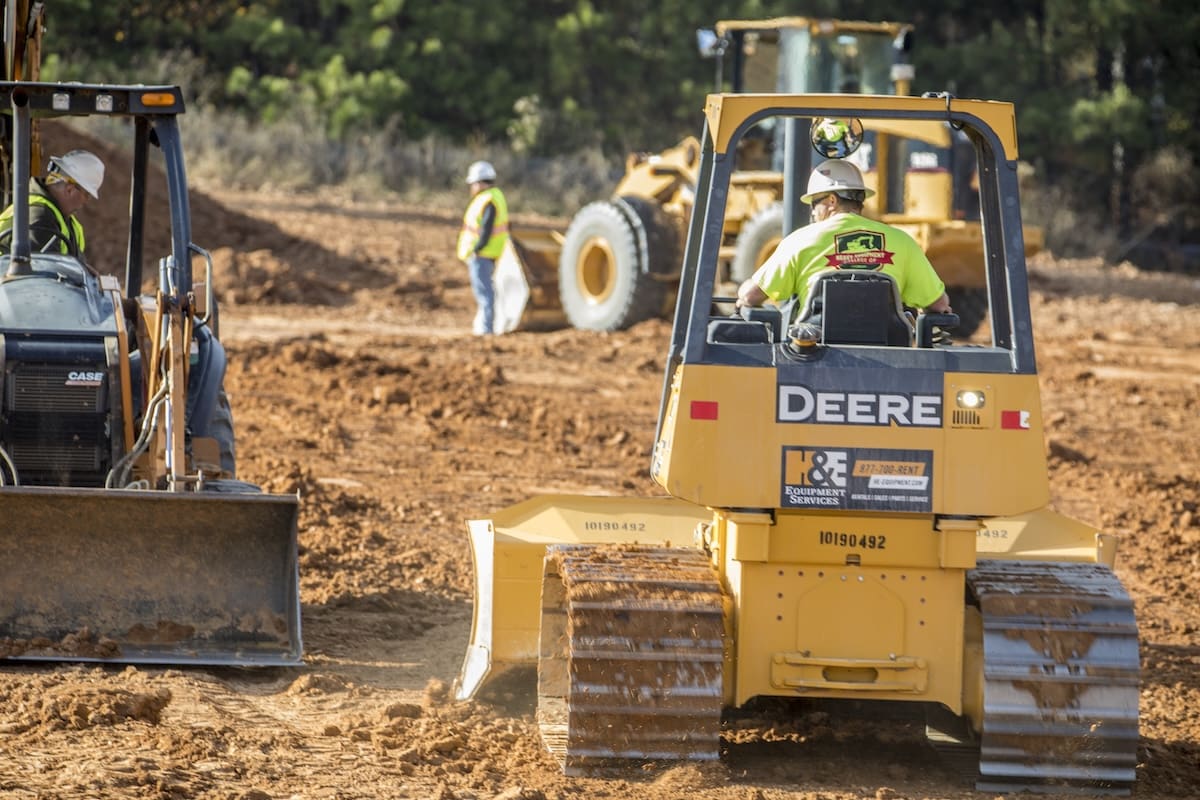
At HEC, students get to work on real equipment; this is the biggest benefit of our training. We will continue to focus on providing our students with important hands-on training that helps prepare them for their future work. This includes learning more about complex operations that grant you the knowledge and skills needed to help you stand out from the other candidates.
Life is busy and not everyone has the time to devote years of their life to higher education. This is especially true of the skilled trades, where you want to find an entry-level job as quickly as possible and continue any specialized training as mandated by your employer. To help get you out of the classroom and into a position, we offer this program so you can finish in as little as three weeks.
Certificate of Heavy Equipment Operations – Level II training will qualify you for the ADEPT (Adaptable Equipment Proficiency Testing) exam and certification, a nationally-recognized heavy equipment operations certification valued by employers across the country.
Certification. Certificate of Heavy Equipment Operations – Level II training will qualify you for the ADEPT (Adaptable Equipment Proficiency Testing) exam and certification, a nationally-recognized heavy equipment operations certification valued by employers across the country.
The San Bernardino campus. We’re here to do more than just teach skills – we’re helping you launch your career in the essential trades. As a National Commission for the Certification of Crane Operators (NCCCO) training and testing site and National Center for Construction and Education Research (NCCER) approved assessment center, our San Bernardino, California, campus gives students the chance to step into the trades with purpose, grit, and real-world training. Whether you’re just getting started or ready to take the next step, this is where you can turn potential into progress. Because your future isn’t handed to you – it’s earned right here.
Facility. Heavy Equipment Colleges of America’s main campus and field site are located at 1955 West 9th Street, San Bernardino, CA 92411 with an approved satellite classroom located at 1584 West Base Line Street, Ste. 106, San Bernardino, CA 92411. HEC’s programs utilize a variety of equipment including backhoe, bulldozer, excavator, wheel loader, skid steer, and mobile hydraulic cranes.
School Information
Campus Location
Why Accreditation Is Important
Heavy Equipment Colleges of America in San Bernardino, CA is accredited by the Accrediting Commission of Career Schools and Colleges (ACCSC). This institution is a private institution approved to operate by the California Bureau for Private Postsecondary Education (BPPE). HEC is an approved Training Unit of the National Commission for the Certification of Crane Operators (NCCCO).
- A reliable indicator of quality
- Approved program of study
- Qualified instructors
- Recognition by employers nationwide
Accreditations

Admission Requirements and Process
To qualify for enrollment, applicants must be able to read and write the English language and be at least 18 years of age. Applicants must possess a high school diploma or equivalent. Most employers require a drug test; therefore, it is recommended that students are able to pass a drug screening test.
Certain criteria may disqualify an applicant because they may prevent a graduate from obtaining employment; admission may still be granted if the Institution determines the applicant is capable of obtaining employment upon graduation. The Institution will make this determination on a case-by-case basis.
General Requirements
- At least 18 years of ageApplicants must be at least 18 years of age and able to read and write the English language. All programs are conducted in English language and no language services are offered.
- High school diploma or equivalentAccepted equivalents include, but are not limited to, a GED; DD214 that indicates high school equivalency; or a college degree transcript issued to the student that indicates the high school graduation, or a copy of a high school diploma.
- Proof of identityValid driver’s license, social security card, military identification or birth certificate.
- Physically and mentally able to operate equipmentApplicants must be physically/mentally capable of safely operating all equipment in order to successfully complete the program without endangering themselves or others.
- Drug screening recommendedMost employers require a drug test; therefore, it is recommended that students are able to pass a drug screening test.
- Possible disqualifiers (case-by-case)Any history of epileptic seizures; use of medication that may interfere with one’s ability to operate equipment; invalid driver’s license; felony conviction.
Application Process
- 1Submit your applicationSubmit a completed Enrollment Application to enroll for classes and provide proof of your identity (valid driver’s license, social security card, military identification or birth certificate).
- 2Provide proof of your educationApplicants must provide proof of high school graduation or GED certificate. If you do not have a GED or a high school diploma, you may still be able to complete the application process. Reach out to the campus where you hope to study and talk to them about your options.
- 3Meet basic physical criteriaApplicants must meet basic physical criteria. Our locations do not discriminate based on mental or physical disabilities. We just have to ensure that you are physically and mentally capable of safely operating all equipment to successfully complete the program without endangering yourself or others.
- 4Arrange payment or fundingFor a program designed to be longer than four months, the institution shall provide a payment installment plan.
Program Schedule
Length. Full Time – 3 Weeks; 120 total instructional clock hours. A clock hour is defined as 50 minutes of instruction in a 60-minute period.
Training hours. 6:30 AM to 5:00 PM Monday – Thursday (Training Hours), weather and holidays permitted. All training hours will be offered but may be adjusted to accommodate weather conditions, holidays and other unforeseeable circumstances.
Class size. The number of students per class range from one to thirty students. Maximum student to instructor ratios is as follows: Classroom Instruction - 30:1, and field instruction - 12:1. The normal training day runs approximately ten hours with a lunch break.
Upcoming start dates. 10/5/2026, 10/26/2026, 11/16/2026, 12/7/2026, 1/4/2027, 1/25/2027, 2/15/2027, 3/8/2027, 3/29/2027, 4/19/2027, 5/10/2027, 5/31/2027.
- October 05th, 2026
- October 26th, 2026
- November 16th, 2026
- December 07th, 2026
- January 04th, 2027
- January 25th, 2027
- February 15th, 2027
- March 08th, 2027
- March 29th, 2027
- April 19th, 2027
- May 10th, 2027
- May 31st, 2027
Curriculum
| Course | Title | Lecture Hours | Lab Hours | Clock Hours |
|---|---|---|---|---|
| 22201 | Introduction to Earth Moving | 4 | 0 | 4 |
| 22207 | Excavation Math | 4 | 0 | 4 |
| 22208 | Grade Part II | 6 | 2 | 8 |
| 22209 | Civil Blueprint Reading | 4 | 0 | 4 |
| 22306 | Advanced Operational Technique | 4 | 0 | 4 |
| 22307 | Finishing and Grading | 4 | 0 | 4 |
| 22308 | Soils | 4 | 0 | 4 |
| LAB00021 | Equipment Operation and Maintenance/Project Site Layout | 0 | 83 | 83 |
| Total | 120 |
22201: Introduction to Earth Moving. This course provides a broad introduction to the process of planning and executing earth moving activities on various types of construction projects. The uses of heavy equipment such as bulldozers, scrapers, excavators, and loaders are explained.
22207: Excavation Math. This course covers formulas and methods used to compute cut and fill requirement on a job and illustrates techniques used to quickly estimate excavations. It also provides a brief overview of software used to compute excavation requirements.
22208: Grade Part II. This course presents proper practices for setting grades of benchmarks and describes methods for setting grades using various types of levels. The trainee is taught how to read and interpret construction plans to determine grading requirements and a review of grading operations.
22209: Civil Blueprint Reading. This course explains how to read site plans to obtain cut and fill information. It also identifies safety and legal issues, such as underground utilities and property lines that are of concern for heavy equipment operators.
22306: Advanced Operational Technique. – December 31, 2027 18 This course describes the elements of a safety program and the safety inspection process, focusing on the safety issues associated with trenching work. It includes coverage of equipment transporting and the procedures associated with working in or near water. The course describes machine cycles and their relationship to project cost and productivity.
22307: Finishing and Grading. This course describes the use of various types of heavy equipment to finish and trim grades and slopes of roads, pads, ditches, and other structures; and specifications used for grading, and procedures for checking the final grade.
22308: Soils. This course addresses problems associated with bridged areas and breakthroughs, as well as soil stabilization, presents the proper use of geotextile materials, reviews soil compaction requirements, and specific procedures for running moisture-density tests, and describes methods of fixing compaction problems.
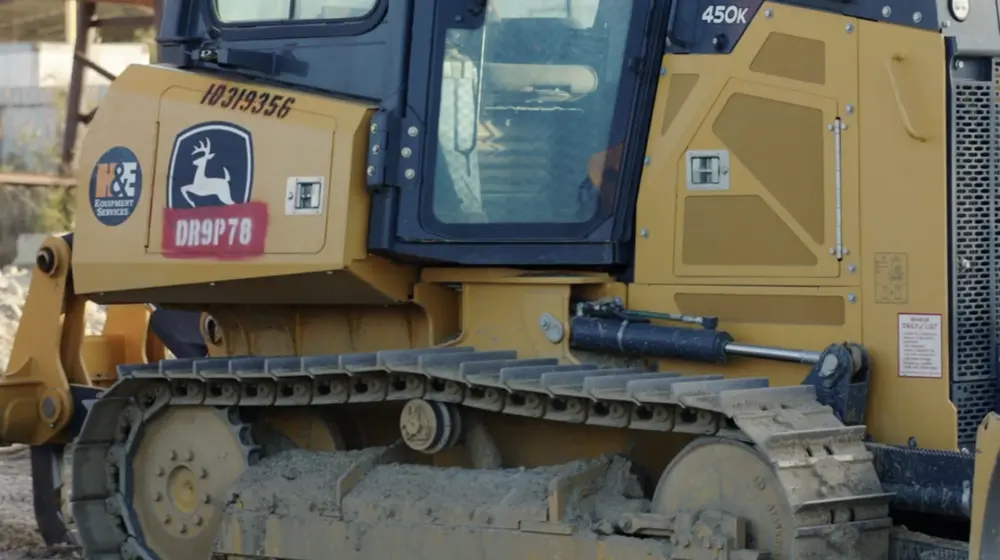
LAB00021: Equipment Operation and Maintenance/Project Site Layout. Maintenance/Project Site Layout This lab is designed for trainees to put into action what they have learned in the classroom. Trainees will rotate between various pieces of equipment including the skid-steer, bulldozer, backhoe, excavator, and wheel loader. Trainees will perform tasks with each of these machines, enhancing their skills and better preparing them for employment as entry level equipment operators. Trainees will also perform the necessary preventive maintenance required by these machines to keep them functioning properly. Trainees will be introduced to more complex layouts with additional field time. Trainees will interpret simple civil drawings, figure areas and volumes, and then lay out the project using grade stakes. After laying out the project, trainees will calculate existing grade and then compute cuts and fills. Trainees will then use this information to estimate the amount of material needed for that project. Building on what they have learned, trainees will, in their 2nd week, lay out a class project and then build the project with the machines available. Trainees will also check grade for their machine to gauge the progress of the project.
Cost of Attendance and Financial Aid Information
| Charge | Amount |
|---|---|
| Tuition | $12,222 |
| Supplies (non-refundable upon receipt): work gloves, hard hat, safety vest, safety glasses | $20 |
| STRF (Student Tuition Recovery Fund) | $0 |
| Total – No Housing | $12,242 |
Housing. Available but not required: $570 – double-occupancy.
Financial aid. Heavy Equipment Colleges of America does not participate in Title IV federal funding. HEC works with several sources of funding, including, but not limited to: Approved for VA Education; Vocational Rehabilitation; Federal Trade Adjustment Assistance Program; Workforce Innovations and Opportunity Act; In-house financing; Bureau of Indian Affairs; Students may also pay cash; Other financing options for those who qualify. HEC does accept WIOA funds provided an agreement between the Agency and HEC can be reached.
Career Outcomes
The demand for knowledgeable and skilled heavy equipment operators is projected to continue to grow over the next ten years. The Bureau of Labor Statistics (BLS) projects that the field of heavy equipment operation stands to grow as much as 4% from 2025 to 2035. When you complete your training, you will be able to join a growing field with a variety of job opportunities around the country.
Career services. The Institution's job placement service is available to assist graduates with finding employment. Students will undergo a job placement entrance interview/orientation with HEC. HEC will then begin contacting employers within the same geographical area as the students’ zip code, including those zip codes of out-of-state students, post job openings and assist the student in contacting prospective employers. Upon a student's successful completion of the program, the Institution will give each graduate a list of employers who have hired graduates or requested to be on the Institution's list. The Institution does not guarantee any of its graduates that they will become employed as a result of the training.
Outcomes (California School Performance Fact Sheet). On-time completion rate, calendar years 2023 / 2024: 98% / 99%. Job placement rate, 2023 / 2024: 79% / 77%.
What to expect as a Heavy Equipment Colleges of America student
Training material. Required books and supplies are provided to students. A training book containing the program curriculum is checked-out to students upon enrollment and students return the training book at program completion.
Training environment. Training may take place in a variety of academic environments including but not limited to lecture, hands-on, field, site, and lab. Field training is structured where students are organized in groups.
Testimonials

Videos
Frequently Asked Questions
School Information
Campus Location
Why Accreditation Is Important
Heavy Equipment Colleges of America in San Bernardino, CA is accredited by the Accrediting Commission of Career Schools and Colleges (ACCSC). This institution is a private institution approved to operate by the California Bureau for Private Postsecondary Education (BPPE). HEC is an approved Training Unit of the National Commission for the Certification of Crane Operators (NCCCO).
- A reliable indicator of quality
- Approved program of study
- Qualified instructors
- Recognition by employers nationwide