Heavy Equipment Operations – Mobile Crane is a Certificate program offered by Heavy Equipment Colleges of America in San Bernardino, CA. The program takes 3 weeks to complete, with a total tuition of $12,167.
Program Overview
| This program’s objectives are to provide the fundamental skills and knowledge applicable to operating mobile hydraulic | crane and rigging to prepare students for employment in the construction industry as an entry-level operator. | United State Department of Labors Standard Occupational Classification Codes: | 53-7021 – Crane and Tower Operators | Weeks to Complete: | Full Time – 3 Weeks | Total Instructional Hours: 120 Hours | Credential Awarded: | Certificate of Completion | Course Number | Course Title | Lecture | Lab | Clock | Hours | Hours | Hours | 21102 | Basic Principles of Crane | 4 | 0 | 4 | 21103 | Rigging Practices | 4 | 0 | 4 | 21104 | Crane Safety | 4 | 0 | 4 | 21105 | Operating a Crane | 2 | 0 | 2 | 21203 | Preventative Maintenance | 2 | 0 | 2 | 21204 | Wire Rope | 4 | 0 | 4 | 21206 | Load Dynamics | 4 | 0 | 4 Heavy Equipment Colleges of America Catalog: January 1, 2026 – December 31, 2027 | 9 | 21207 | On Site Equipment Movement | 2 | 0 | 2 | 21301 | Load Charts | 4 | 0 | 4 | 21303 | Advanced Operational Techniques | 2 | 0 | 2 | 21304 | Lift Planning | 2 | 0 | 2 | 21305 | Hoisting Personnel | 2 | 0 | 2 | 21306 | Lattice Boom | 2 | 0 | 2 | 21307 | Emergency Procedures | 2 | 0 | 2 | LAB00041 | Crane Operation and Maintenance | 0 | 38 | 38 | LAB00042 | Communication and Rigging | 0 | 42 | 0 | Total | 40 | 80 | 120 | Books | ETS Books | NCCCO Candidate Handbook | ANSI and OSHA Standardize Handle Signals | Tuition | $12,167.00 | **Supplies (Non-refundable upon receipt) | $75.00 | STRF (Student Tuition Recovery Fund) | $30.00 | Housing (available but not required) | $570.00 – Double-Occupancy | Total | $12,272.00 – No Housing | $12,842.00 – Double-Occupancy | **Supplies include: Work Gloves, Hard Hat, Safety Vest, Safety Glasses. |
At Heavy Equipment Colleges of America, we believe that the future still lies within skilled trades. That’s not just an idle guess, either, but one that is backed up by information obtained from the Bureau of Labor Statistics (BLS)*. Crane operators are projected to play an increasingly important role in society throughout the coming years.
We strive to build the best curriculum for our students. Our programs are designed to help students learn a wide variety of skills through both practical experience and textbook information. At our locations, you get the advantage of hands-on experience without losing the valuable information that textbooks and classroom discussions can bring.
Our Certificate of Heavy Equipment Operations – Mobile Crane program is designed to give you both practical experience and classroom interaction when it comes to the fundamentals of crane operation. This includes learning about things like crane set-up, lift planning, rigging and signaling, and load dynamics. Our experienced instructors will help ensure that you have the experience, knowledge, and skills necessary to succeed in this particular area.
Credential awarded. Certificate of Completion.
What sets this Program apart
Cranes power the world’s most ambitious projects, and skilled crane operators make it happen. In this program, you’ll get real-world training and classroom fundamentals in crane set-up, lift planning, rigging, signaling, and load dynamics. With guidance from experienced instructors, you can gain the confidence to step into the driver’s seat and take on the kind of work that keeps cities rising and industries moving.
We work hard to make sure you receive an education that combines practical experience and supplementary knowledge to help create capable and well-rounded professionals who succeed. Our staff believes learning should be a great experience, tailored to students’ needs in order to give them the best chance of success possible – and it is with this in mind that we teach every program.
Making the decision to attend class at one of our locations means making the decision to invest in your future. Some of the valuable experience and specific benefits that you can expect to gain from our Certificate of Heavy Equipment Operations – Mobile Crane program include:
In this program, we will focus on providing our students with the kind of hands-on training and field experience necessary to help prepare them for future work.
Life is, in general, a busy time for many individuals. At Heavy Equipment Colleges of America, we recognize that not everyone can easily devote years of their life to pursuing higher education. Our programs are accelerated and can be completed in as quickly as three weeks.
The NCCCO program utilizes an outcome-based assessment approach. This provides an objective evaluation that meets industry and regulatory standards and accurately measures knowledge and abilities. NCCCO aims to enhance lifting equipment safety, reduce workplace risk, improve performance records, stimulate training, and give due recognition to the professionals who work in, with, and around cranes. Getting a certification at HEC prepares students with the entry-level skills that employers are looking for.
Certification. The NCCCO program utilizes an outcome-based assessment approach. ... Getting a certification at HEC prepares students with the entry-level skills that employers are looking for. (Admissions page: "Mobile Crane students will be required to pass a physical examination in order to apply for the NCCCO written or practical examinations.")
The San Bernardino campus. We’re here to do more than just teach skills – we’re helping you launch your career in the essential trades. As a National Commission for the Certification of Crane Operators (NCCCO) training and testing site and National Center for Construction and Education Research (NCCER) approved assessment center, our San Bernardino, California, campus gives students the chance to step into the trades with purpose, grit, and real-world training. Whether you’re just getting started or ready to take the next step, this is where you can turn potential into progress. Because your future isn’t handed to you – it’s earned right here.
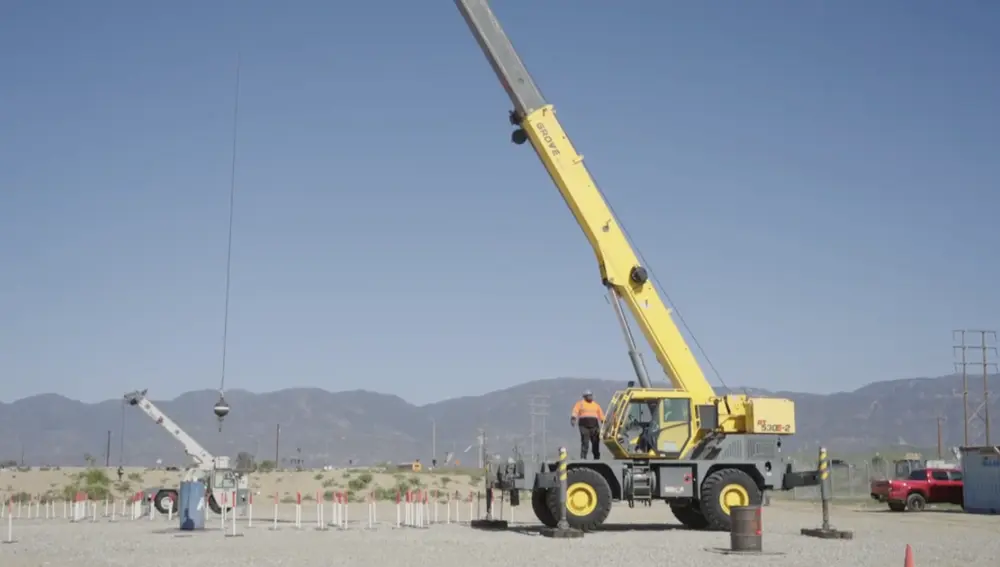
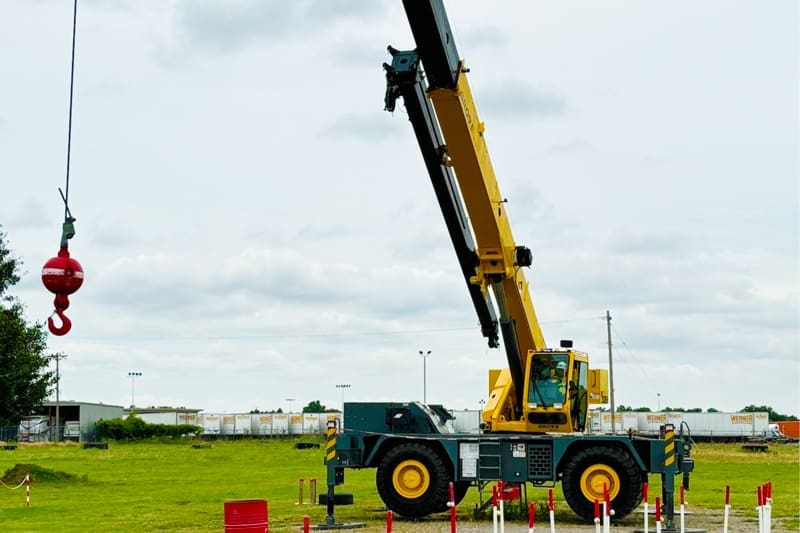
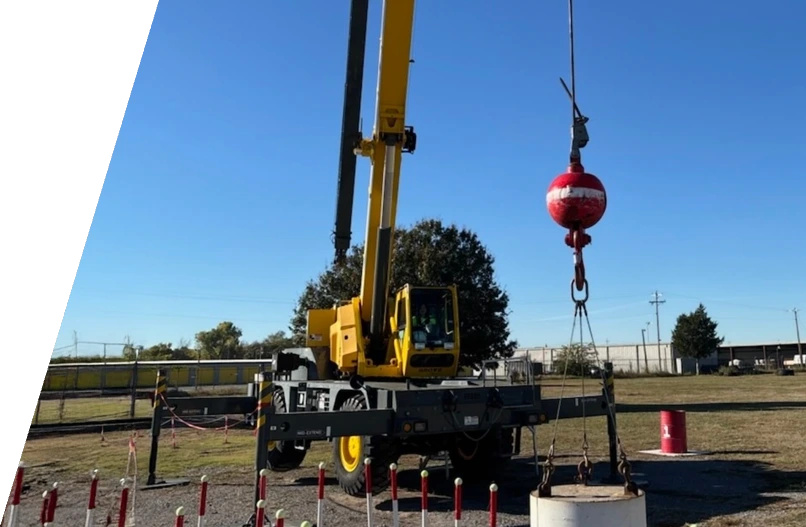
Facility. Heavy Equipment Colleges of America’s main campus and field site are located at 1955 West 9th Street, San Bernardino, CA 92411 with an approved satellite classroom located at 1584 West Base Line Street, Ste. 106, San Bernardino, CA 92411. HEC’s programs utilize a variety of equipment including backhoe, bulldozer, excavator, wheel loader, skid steer, and mobile hydraulic cranes.
School Information
Campus Location
Why Accreditation Is Important
Heavy Equipment Colleges of America in San Bernardino, CA is accredited by the Accrediting Commission of Career Schools and Colleges (ACCSC). This institution is a private institution approved to operate by the California Bureau for Private Postsecondary Education (BPPE). HEC is an approved Training Unit of the National Commission for the Certification of Crane Operators (NCCCO).
- A reliable indicator of quality
- Approved program of study
- Qualified instructors
- Recognition by employers nationwide
Accreditations

Admission Requirements and Process
To qualify for enrollment, applicants must be able to read and write the English language and be at least 18 years of age. Applicants must possess a high school diploma or equivalent. Most employers require a drug test; therefore, it is recommended that students are able to pass a drug screening test.
Certain criteria may disqualify an applicant because they may prevent a graduate from obtaining employment; admission may still be granted if the Institution determines the applicant is capable of obtaining employment upon graduation. The Institution will make this determination on a case-by-case basis.
General Requirements
- At least 18 years of ageApplicants must be at least 18 years of age and able to read and write the English language. All programs are conducted in English language and no language services are offered.
- High school diploma or equivalentAccepted equivalents include, but are not limited to, a GED; DD214 that indicates high school equivalency; or a college degree transcript issued to the student that indicates the high school graduation, or a copy of a high school diploma.
- Proof of identityValid driver’s license, social security card, military identification or birth certificate.
- Physically and mentally able to operate equipmentApplicants must be physically/mentally capable of safely operating all equipment in order to successfully complete the program without endangering themselves or others.
- Drug screening recommendedMost employers require a drug test; therefore, it is recommended that students are able to pass a drug screening test.
- Possible disqualifiers (case-by-case)Any history of epileptic seizures; use of medication that may interfere with one’s ability to operate equipment; invalid driver’s license; felony conviction.
- Physical exam for NCCCO testingMobile Crane students will be required to pass a physical examination in order to apply for the NCCCO written or practical examinations.
Application Process
- 1Submit your applicationSubmit a completed Enrollment Application to enroll for classes and provide proof of your identity (valid driver’s license, social security card, military identification or birth certificate).
- 2Provide proof of your educationApplicants must provide proof of high school graduation or GED certificate. If you do not have a GED or a high school diploma, you may still be able to complete the application process. Reach out to the campus where you hope to study and talk to them about your options.
- 3Meet basic physical criteriaApplicants must meet basic physical criteria. Our locations do not discriminate based on mental or physical disabilities. We just have to ensure that you are physically and mentally capable of safely operating all equipment to successfully complete the program without endangering yourself or others.
- 4Arrange payment or fundingFor a program designed to be longer than four months, the institution shall provide a payment installment plan.
Program Schedule
Length. Full Time – 3 Weeks; 120 total instructional clock hours. A clock hour is defined as 50 minutes of instruction in a 60-minute period.
Training hours. 6:30 AM to 5:00 PM Monday – Thursday (Training Hours), weather and holidays permitted. All training hours will be offered but may be adjusted to accommodate weather conditions, holidays and other unforeseeable circumstances.
Class size. The number of students per class range from one to thirty students. Maximum student to instructor ratios is as follows: Classroom Instruction - 30:1, and field instruction - 12:1. The normal training day runs approximately ten hours with a lunch break.
Upcoming start dates. 10/5/2026, 10/26/2026, 11/16/2026, 12/7/2026, 1/4/2027, 1/25/2027, 2/15/2027, 3/8/2027, 3/29/2027, 4/19/2027, 5/10/2027, 5/31/2027.
- October 05th, 2026
- October 26th, 2026
- November 16th, 2026
- December 07th, 2026
- January 04th, 2027
- January 25th, 2027
- February 15th, 2027
- March 08th, 2027
- March 29th, 2027
- April 19th, 2027
- May 10th, 2027
- May 31st, 2027
Curriculum
| Course | Title | Lecture Hours | Lab Hours | Clock Hours |
|---|---|---|---|---|
| 21102 | Basic Principles of Crane | 4 | 0 | 4 |
| 21103 | Rigging Practices | 4 | 0 | 4 |
| 21104 | Crane Safety | 4 | 0 | 4 |
| 21105 | Operating a Crane | 2 | 0 | 2 |
| 21203 | Preventative Maintenance | 2 | 0 | 2 |
| 21204 | Wire Rope | 4 | 0 | 4 |
| 21206 | Load Dynamics | 4 | 0 | 4 |
| 21207 | On Site Equipment Movement | 2 | 0 | 2 |
| 21301 | Load Charts | 4 | 0 | 4 |
| 21303 | Advanced Operational Techniques | 2 | 0 | 2 |
| 21304 | Lift Planning | 2 | 0 | 2 |
| 21305 | Hoisting Personnel | 2 | 0 | 2 |
| 21306 | Lattice Boom | 2 | 0 | 2 |
| 21307 | Emergency Procedures | 2 | 0 | 2 |
| LAB00041 | Crane Operation and Maintenance | 0 | 38 | 38 |
| LAB00042 | Communication and Rigging | 0 | 42 | 0 |
| Total | 120 |
21102: Basic Principles of Crane. This course offers students an introduction to mobile crane equipment with an in-depth discussion of terminology. It explains the basic scientific principles associated with mobile crane operations.
21103: Rigging Practices. This course offers the student an in-depth understanding of the fundamentals of rigging. It discusses a variety of rigging gear, components and configurations, and their applications within the mobile crane industry. Students get hands on practice rigging loads to be lifted.
21104: Crane Safety. This course introduces the student to various safety aspects of mobile crane operation, including equipment inspection, site hazard identification, and required personal protective equipment. The course discusses how to work with site plans and specifications.
21105: Operating a Crane. This course describes the basic functions of a crane as well as standard procedure for starting up and shutting down a crane. It provides the student with the opportunity to become familiar with the actual operation of a crane and the functions of its controls.
21203: Preventative Maintenance. This course covers preventative maintenance and compliance inspections on a crane. The trainee will gain an understanding of the safety considerations, procedures, and the equipment/materials required for these inspections
21204: Wire Rope. This course covers the components of wire rope and inspection requirements and procedures for wire rope, load blocks, and sheaves. It explains proper installation of wire rope, maintenance guidelines, and end terminations and preparations.
21206: Load Dynamics. This course covers leverage and stability, operational quadrants, submerged lifts, non-centered lifts, and other factors that affect stability.
21207: On Site Equipment Movement. – December 31, 2027 16 This course covers site hazards and restrictions that could hinder on-site crane movement, safety considerations involved in crane movement over unlevel ground, pick-and-carry operations, and power line contact. It addresses flotation capacity.
21301: Load Charts. This course will discuss the importance of load charts and charts that apply to different configurations. It includes on- rubber, on-outrigger, jib, and deduction charts as well as range diagrams and operational notes. This course also covers parts of line and capacity calculations.
21303: Advanced Operational Techniques. This course covers multi-crane lifts, critical lifts, blind lifts and demolition. It also includes sections on how to use magnet and vacuum lifting devices and how to operate a mobile crane in cold weather.
21304: Lift Planning. This course gives an in-depth discussion of lift plan implementation. It includes reference information, calculations, single and multiple-crane lifting, critical lifts, and engineering considerations.
21305: Hoisting Personnel. This course discusses ASME B30.23 and 29 CFR 1926.550(g) requirements while presenting advanced operation techniques for hoisting personnel.
21306: Lattice Boom. In this course students are provided a step-by-step look at short- and long-lattice boom assembly and disassembly.
21307: Emergency Procedures. This course includes information on accident prevention and investigation, the hazards of power line contact, and various failures that may occur during lifting operations.
LAB00041: Crane Operation and Maintenance. This lab is designed for trainees to put into action what they have learned in the classroom. Trainees will perform several basic lifts with the rough terrain crane. They will move and set up the unit in a stable area. Trainees will also perform the necessary preventive maintenance required by this machine to keep it functioning properly. Upon completion of this lab, students will be able to: 1) correctly perform pre- operational checks and preventive maintenance on the rough terrain crane; 2) properly start and warm up the rough terrain crane; 3) perform basic operations with the rough terrain crane; 4) properly cool down and shut down the rough terrain crane; 5) perform proper post-operation preventive maintenance on the rough terrain crane.
LAB00042: Communication and Rigging. – December 31, 2027 19 This course offers students an introduction to mobile crane equipment with an in-depth discussion of terminology. It explains the basic scientific principles associated with mobile crane operations.
Cost of Attendance and Financial Aid Information
| Charge | Amount |
|---|---|
| Tuition | $12,167 |
| Supplies (non-refundable upon receipt): work gloves, hard hat, safety vest, safety glasses | $75 |
| STRF (Student Tuition Recovery Fund) | $0 |
| Total – No Housing | $12,242 |
Housing. Available but not required: $570 – double-occupancy.
Additional fees, if applicable. National Commission for the Certification of Crane Operators (NCCCO) Exam Fees (nccco.org).
Financial aid. Heavy Equipment Colleges of America does not participate in Title IV federal funding. HEC works with several sources of funding, including, but not limited to: Approved for VA Education; Vocational Rehabilitation; Federal Trade Adjustment Assistance Program; Workforce Innovations and Opportunity Act; In-house financing; Bureau of Indian Affairs; Students may also pay cash; Other financing options for those who qualify. HEC does accept WIOA funds provided an agreement between the Agency and HEC can be reached.
Career Outcomes
The demand for skilled and knowledgeable crane operators is projected to continue to grow over the next ten years. According to the BLS as mentioned above, the field of crane operation stands to grow as much as 4% from 2025 to 2035. When you complete your training at HEC, you will be ready to join a growing field with a variety of job opportunities around the country.
Career services. The Institution's job placement service is available to assist graduates with finding employment. Students will undergo a job placement entrance interview/orientation with HEC. HEC will then begin contacting employers within the same geographical area as the students’ zip code, including those zip codes of out-of-state students, post job openings and assist the student in contacting prospective employers. Upon a student's successful completion of the program, the Institution will give each graduate a list of employers who have hired graduates or requested to be on the Institution's list. The Institution does not guarantee any of its graduates that they will become employed as a result of the training.
Outcomes (California School Performance Fact Sheet). On-time completion rate, calendar years 2023 / 2024: 93% / 100%. Job placement rate, 2023 / 2024: 76% / 73%.
What to expect as a Heavy Equipment Colleges of America student
Training material. Required books and supplies are provided to students. A training book containing the program curriculum is checked-out to students upon enrollment and students return the training book at program completion.
Training environment. Training may take place in a variety of academic environments including but not limited to lecture, hands-on, field, site, and lab. Field training is structured where students are organized in groups.
Testimonials
Videos
Frequently Asked Questions
School Information
Campus Location
Why Accreditation Is Important
Heavy Equipment Colleges of America in San Bernardino, CA is accredited by the Accrediting Commission of Career Schools and Colleges (ACCSC). This institution is a private institution approved to operate by the California Bureau for Private Postsecondary Education (BPPE). HEC is an approved Training Unit of the National Commission for the Certification of Crane Operators (NCCCO).
- A reliable indicator of quality
- Approved program of study
- Qualified instructors
- Recognition by employers nationwide