Structural Plate Welding (AWS D1.1) is a Diploma program offered by HoHoKus School of Trade and Technical Sciences in Paterson, NJ. The program takes 24 weeks to complete, with a total tuition of $16,710.
Program Overview
Start an exciting career in welding.
- Study close to home at our campus in Paterson
- Training in the core fundamentals of welding will allow you to find employment in a wide range of industries.
- Graduates are eligible for AWS (American Welding Society) Structural Standards (D1.1) and American Welding Society (Plate)
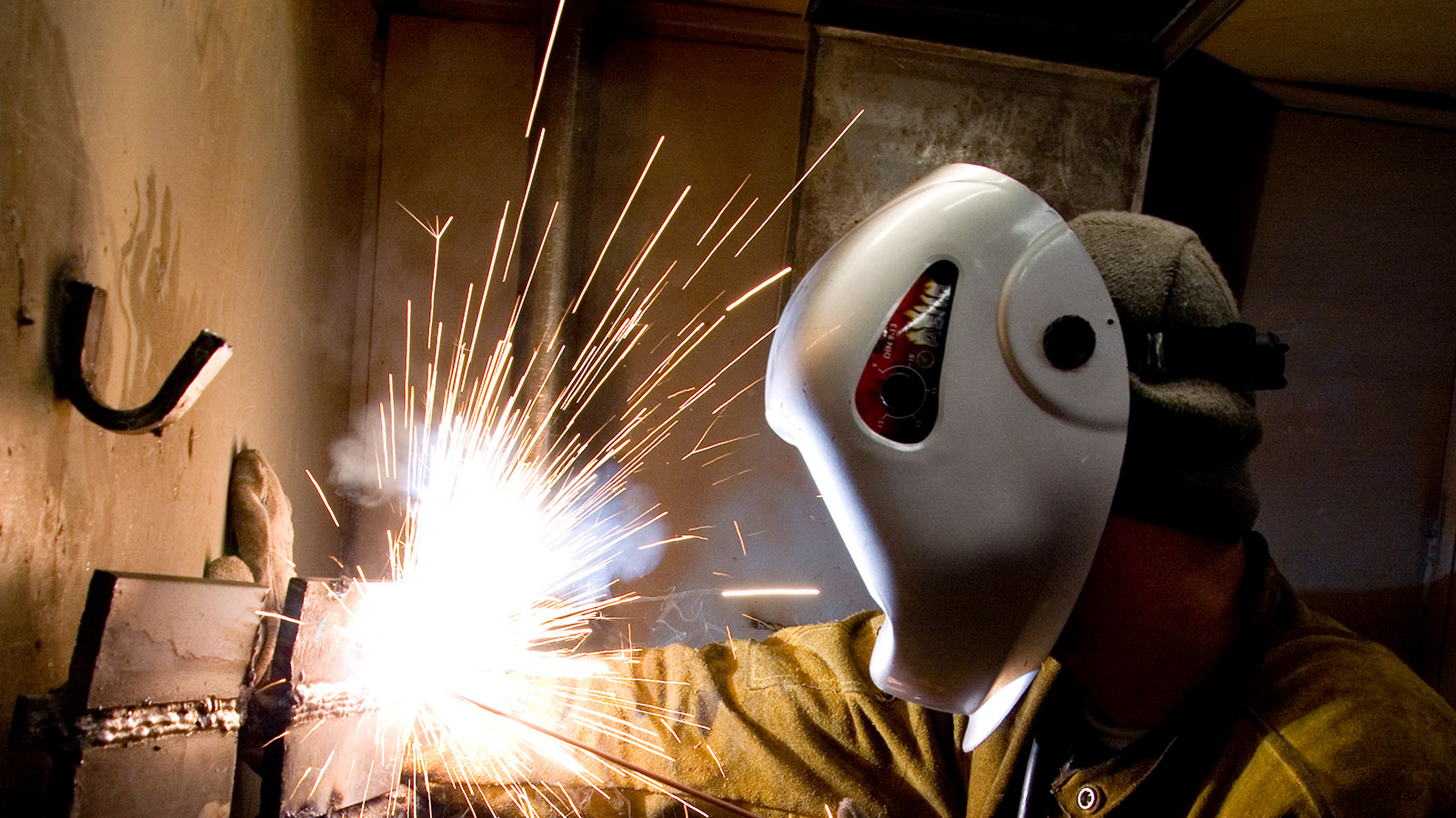
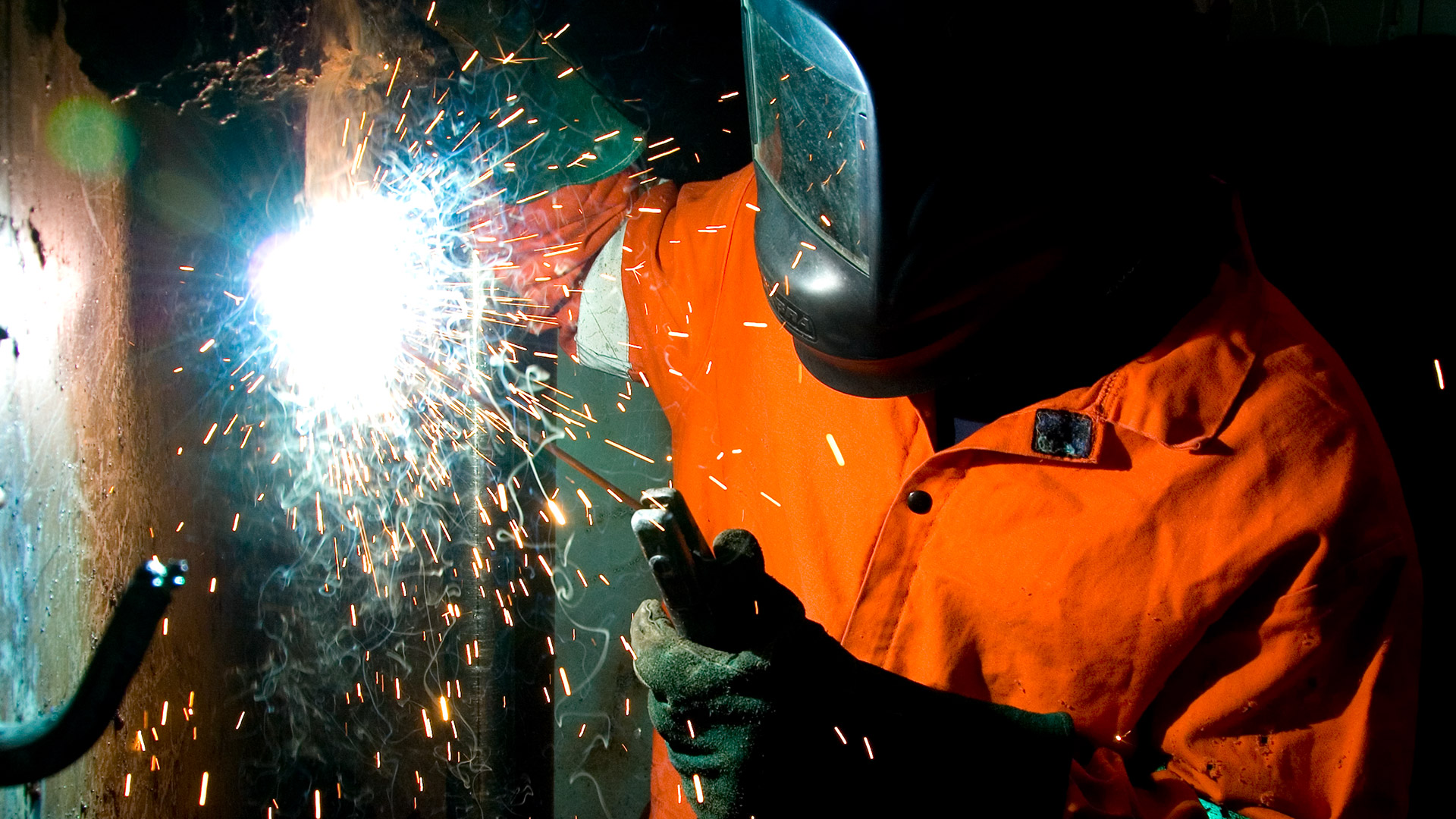
Welding is more than just joining two pieces of metal together. It’s considered an art by those in the field and is an important part of any major construction project. You’ll train in all phases of combination welding and code certification requirements, including electric arc, TIG, MIG, metal theory, oxy-fuel practice, and mild steel and plasma arc cutting.
This program is specifically designed to meet the industry requirements on all phases of combination welding and code certification. Training includes welding in various positions with good manipulative skills and blueprint reading ability.
Upon successful completion of the program, the HoHoKus School of Trade and Technical Sciences will award the student a Diploma in Structural Plate Welding (AWS D1.1).
Student learning outcomes. Upon successful completion of the program, students will be able to:
- Apply basic math concepts as they relate to welding
- Use computer hardware and software in relation to the trades and welding applications
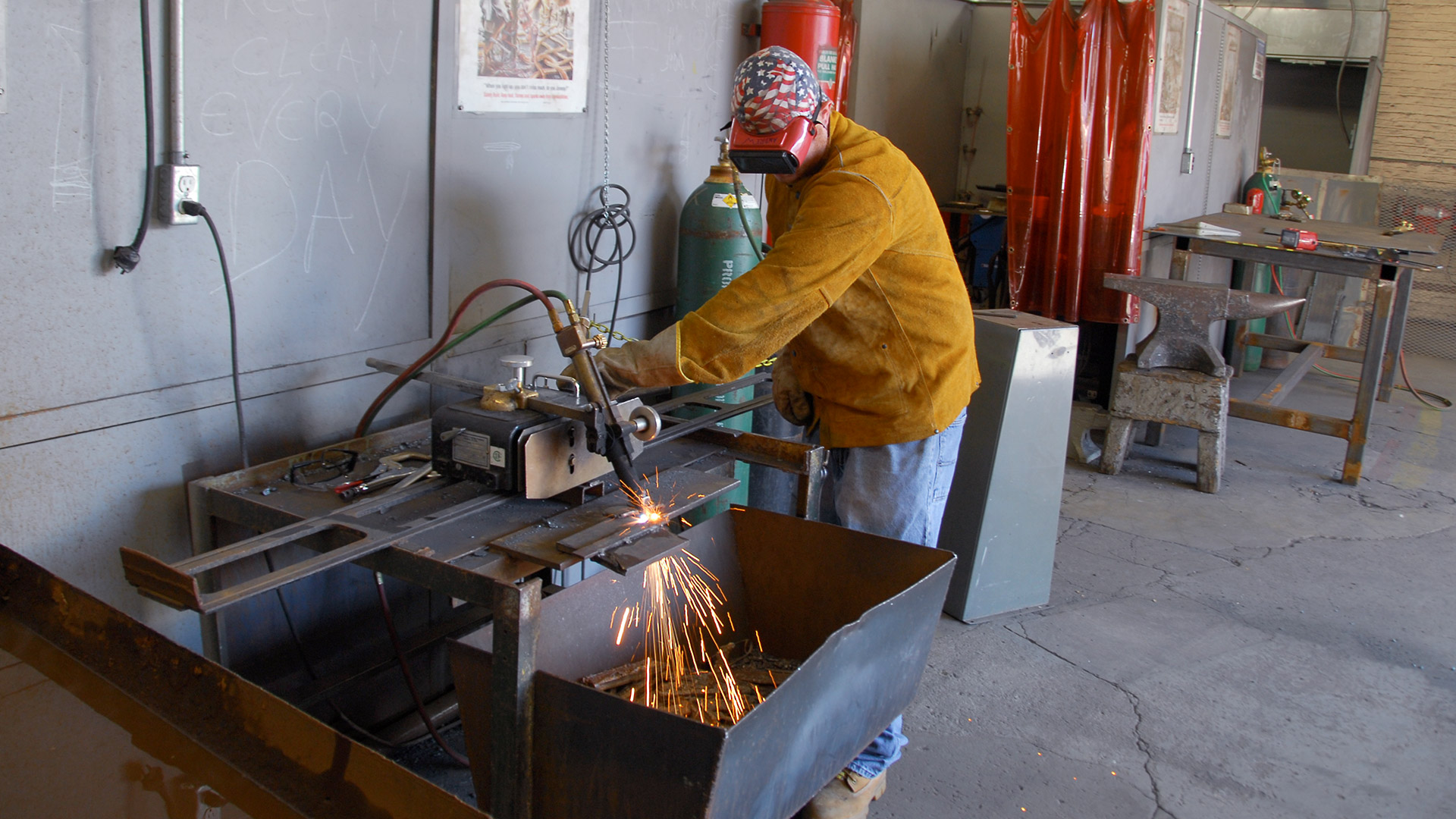
- Use a variety of cutting techniques in shop applications
- Interpret blueprints in a variety of construction settings
- Perform MIG and TIG welding following industry standards
- Perform advanced methods of electric arc welding following industry standards
- Practice all techniques learned in the program following OSHA standards for safety
- Develop a job search portfolio and display a professional conduct and appearance at job interviews
What sets this Program apart
- Personal attention and personalized education—HoHoKus School of Trades and Technical Sciences ensures that its class sizes are kept manageable so that there is always a clear line of communication and guidance between student and instructor.
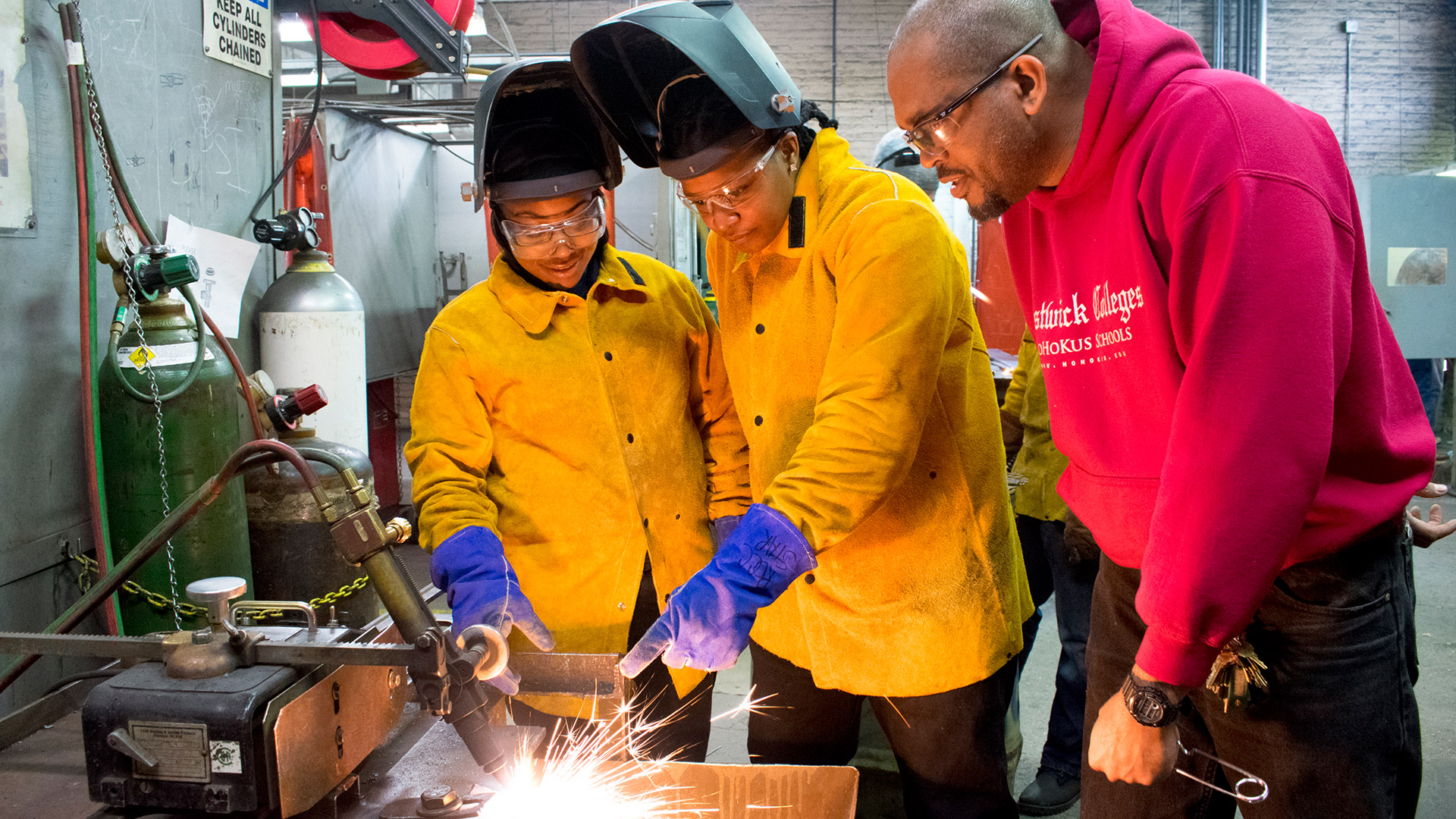
- Hands-on training—featuring a variety of modern welding and machine shops, HoHoKus School of Trades and Technical Sciences provides students with the real world training needed to succeed on the job, not just lessons from a textbook.
- An accelerated route to graduation—our programs can often be completed in as little as 6 months, allowing you to receive quality training and start a job in your chosen career as quickly as possible.
- Courses that you can take with you—a variety of certifications are available through our programs, offered by some of the top names in the trades industries such as the American Welding Society, American Petroleum Institute, U.S. Navy Welding Code Specifications, the U.S. Coast Guard – Merchant Marine Transports and Facilities, and the American Society of Mechanical Engineers.
- Small classes and free tutoring are just two things that set us apart from other schools. The HoHoKus School charges no placement fees to either graduate or employer.
Admission Requirements and Process
Prospective students must interview with an admissions representative, submit proof of high school completion or GED equivalency, complete an entrance exam, and meet all other requirements disclosed in the Admissions section of this catalog.
For admission to the HoHoKus School of Trade and Technical Sciences, students submit a completed Application for Admission or call for a priority appointment to visit the school and receive a tour of its facilities. All applicants are required to complete a personal interview with an admissions representative, submit proof of high school completion or GED equivalency, or the award of an associate’s or bachelor’s degree. Parents and spouses are encouraged to attend. The school follows an open-entry system. Individuals may apply up to one year in advance of a scheduled class start.
General Requirements
- Personal interviewAll applicants are required to complete a personal interview with an admissions representative; parents and spouses are encouraged to attend.
- High school completionApplicants must submit proof of high school completion or GED equivalency, or the award of an associate’s or bachelor’s degree.
- Entrance examProspective students must complete an entrance exam (admission evaluation) for consideration.
- Application for AdmissionStudents submit a completed Application for Admission, and individuals may apply up to one year in advance of a scheduled class start.
- Transfer credit (if applicable)Students requesting transfer credit must have an official transcript mailed directly to the school and submit a Transfer Credit Request form before the enrollment agreement is…
- New student orientationOrientation for new students is held prior to each start date, where class schedules are distributed and school regulations are reviewed.
Application Process
- 1Submit an Application for AdmissionSubmit a completed Application for Admission to the HoHoKus School of Trade and Technical Sciences.
- 2Schedule a visit and tourCall for a priority appointment to visit the school and receive a tour of its facilities.
- 3Complete a personal interviewComplete a personal interview with an admissions representative, which gives you an opportunity to see the school’s equipment and facilities and ask questions about HoHoKus’ programs and career objectives.
- 4Take the entrance exam and provide proof of educationComplete the entrance exam and submit proof of high school completion or GED equivalency.
- 5Meet with a financial aid officerEach student who enrolls should meet with a financial aid officer to discuss the application process and the grants and loans available; complete the FAFSA (school code 008494).
- 6Receive the admission decision and attend orientationOnce the application process is complete, the school reviews the information and informs the applicant of its decision; orientation is held prior to each start date.
Program Schedule
Program length: 24 weeks (day); 48 weeks (evening); 600 clock hours; 35.5 quarter credits.
Program duration (school website): 6 Months (Day) – 12 Months (Evening).
The school is open between 8:00 AM to 10:10 PM Monday through Thursday and Friday between 8:00 AM and 4:00 PM.
The school follows an open-entry system. Individuals may apply up to one year in advance of a scheduled class start. The catalog refers start dates to its Catalog Addendum, which is not published online; contact admissions for the next start date.
HoHoKus limits class sizes: 12 students per instructor in the welding shop, 15 in the building, plumbing and electrical shops, and 30 in classroom didactic instruction.
Cost of Attendance and Financial Aid Information
Program cost. Tuition: $16,710. Books: $445. Tools: $345. Application fee: $25. Registration fee: $100. Total cost: $17,625 (Tuition Schedule, effective as of September 30, 2022; catalog says "See addendum for updates" but no addendum is published).
The school’s Tuition Price Table lists the tuition cost per quarter hour as $477.43.
Cost of attendance. Direct costs are the costs directly incurred at the institution. They include tuition, books, supplies, and fees. Cost of attendance budgets include tuition and fees (actual), books and equipment fees (actual), and a transportation/home maintenance and personal expense allowance. The school furnishes all tools, equipment, and required materials to complete our program offerings.
Payment plan. HoHoKus Payment Plan: Monthly payments for the duration of the program. Payments are accepted in cash, checks, and money orders. American Express, Discover, Visa, and Mastercard charges are also accepted.
Federal aid. The school is an eligible institution under the Federal Pell Grant, Federal SEOG Grant, and the Direct Loan programs. To apply for Title IV aid, a student must complete the Free Application for Federal Student Aid (FAFSA); the HoHoKus federal school code is 008494. For the 2025 – 2026 award year, the maximum Pell Grant is $7,395. Federal Direct Subsidized and Unsubsidized Loans and Parent PLUS loans are available to those who qualify.
Other funding. NJ Class: If qualified, HoHoKus students may borrow at low interest up to the full cost of the program (less their financial aid received). HoHoKus Trades Grant: HoHoKus offers an institutional grant to offset the cost of books and/or tools, applied by the financial aid office upon enrollment to the accounts of students who meet all admission requirements. Eligible HoHoKus students may apply for scholarships available through the Eastwick Foundation.
Veterans. Approved by the New Jersey Department of Education to train eligible veterans under Title 38, US Code. While payment from the VA (Post 9/11 G.I. Bill® Ch. 33 or Vocational Rehabilitation and Employment Ch. 31) is pending, HoHoKus will not prevent the student’s enrollment, assess a late penalty fee, require alternative funding, or deny access to school resources.
The cost of tuition does not include the cost of transportation to and from school. Tuition charges are subject to change. Please contact the admissions department for updated program costs.
Curriculum
The Structural Plate Welding (AWS D1.1) curriculum totals 600 clock hours and 35.5 quarter credits. One quarter credit hour equals 30 units: one clock hour in a didactic learning environment = 2 units; one clock hour in a supervised laboratory (shop) setting = 1.5 units; one hour of externship = 1 unit.
Required Courses
| Subject # | Name | Credits |
|---|---|---|
Career Outcomes
Students will be prepared for entry- and mid-level jobs (if certified successfully) as construction, repair, fabrication, and manufacturing welders. Code certification is not a requirement of graduation from this program and will depend on individual performance.
Student achievement (ACCSC 2025 Annual Report, updated September 25, 2025).
- Day session (cohort 07.01.2023 – 06.01.2024): 14 students in cohort; graduation rate 100%; employment rate 77%
- Evening session (cohort 10.01.2022 – 09.01.2023): 13 students in cohort; graduation rate 100%; employment rate 75%
Upon graduation, HoHoKus will help you find the job that is right for you. Unlike many other institutions, HoHoKus does not charge a placement fee to either employer or graduate. The HoHoKus School of Trade and Technical Sciences, like all other schools, does not guarantee placement.
The following States do not have licensure requirements for this profession: New Jersey. (Gainful Employment Disclosures – 2019)
What to expect as a HoHoKus School of Trade and Technical Sciences student
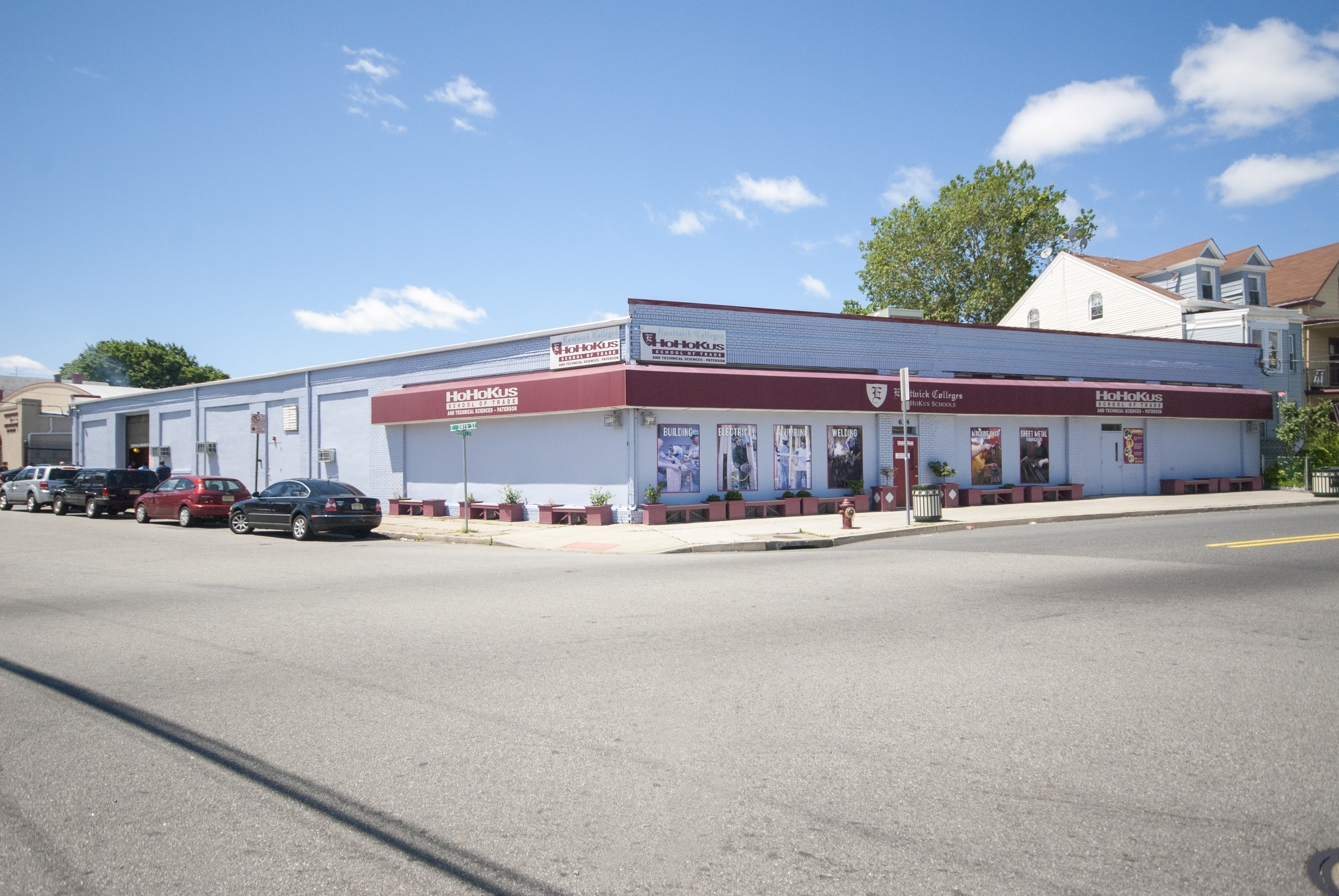
The HoHoKus School of Trade and Technical Sciences occupies over 23,550 sq. feet with ample space for instruction and training in all phases of welding, fabrication, plumbing, electrical and building maintenance trades. The facilities include classrooms; a variety of different welding, trade and machine shops complete with the most modern equipment; and a student lounge and a new resource center. The school furnishes all tools, equipment, and required materials to complete our program offerings.
There are additional shop and classroom facilities at 887 East 25th Street (within walking distance of the main building). The train station is within walking distance and the #712 bus stops in front of the school. Street parking is available. HoHoKus is a commuting school; there is no boarding at the school.
Students needing help with course work are given personal assistance and peer tutoring (at no additional cost) when necessary and available. A resource library is available to all students.
Campus Address
Why Accreditation Is Important
The HoHoKus School of Trade and Technical Sciences is accredited by the Accrediting Commission of Career Schools & Colleges (ACCSC), and is approved by the New Jersey Department of Education/Department of Labor and Workforce Development under the standards for approval of private schools. Member of the American Welding Society.
- A reliable indicator of quality
- Approved program of study
- Qualified instructors
- Recognition by employers nationwide
Accreditations
Student Demographics
These are demographics for all students at the Paterson Campus (IPEDS, 2024).
Images