Keiser University

Nurse Anesthesia Practice (Entry into Practice)

Online (FL Residents Only)
Doctoral Degree
Nurse Anesthesia Practice (Entry into Practice)
Keiser University is accredited by the Southern Association of Colleges and Schools Commission on Colleges (SACSCOC). This program is also accredited by the Council on Accreditation of Nurse Anesthesia Educational Programs (COA).
Keiser University lists this program as Hybrid.
$13,584 per semester. This program spans 8 semesters at full-time enrollment.
To receive a Doctor of Nurse Anesthesia Practice degree, students must earn 90 graduate semester credit hours including didactic courses (63 Credits), DNAP Capstone courses (12 credits), and clinical practice courses (15 credit hours). Courses in the DNAP: Entry into Practice program are 16 weeks in length and scheduled two to five courses concurrently. The length of this program is approximately 36 months.
A one-time $55 application fee applies on enrollment (subject to annual review).
Keiser University participates in federal Title IV financial aid. Grants are not available at the graduate level, but federal student loans and scholarships are available to those who qualify.

Nurse Anesthesia Practice (Entry into Practice) is a Doctoral Degree program (Hybrid) offered by Keiser University in Fort Lauderdale, FL. The program takes 36 Months to complete, with tuition of $13,584 per semester.

Program Overview

The Doctor of Nurse Anesthesia Practice program graduate will possess advanced competencies for nurse anesthesia practice, faculty, and leadership roles in nurse anesthesia. The program curriculum consists of didactic and the clinical components. The program integrates research, pathophysiology, pharmacology, health assessment, general principles of anesthesia, and anesthesia for surgical procedures for application in the clinical setting.

During the program of study, students will have the opportunity to apply evidence-based practices through the development of anesthesia care plans and hands-on experience in the operating room. Additionally, students will complete a capstone project that culminates with the completion of a scholarly work that demonstrates the ability to translate findings into practice, research, education, and/or administration applicable to nurse anesthesia practice. The curriculum focuses on preparing registered nurses with a bachelor’s degree to become Certified Registered Nurse Anesthetists (CRNA).

Upon completion of the DNAP: Entry into Practice program, graduates who fulfill all program requirements will be eligible to sit for the National Certification Exam through the National Board of Certification and Recertification for Nurse Anesthetists (NBCRNA) and upon passing the exam, will become a CRNA.

Program Mission

The Doctor of Nurse Anesthesia Practice program incorporates a practitioner-scholar model to prepare students as expert clinicians in the full scope of nurse anesthesia practice.

Program Goals

  • Clinical Competency: (COA Standard II-E, III-B)
  • Critical Thinking and Evidence-Based Practice: (COA Standard II-F, III-D)
  • Professionalism, Ethics, and Leadership: (COA Standard II-H, IV-A)

What sets this Program apart

Gain Job-Ready Skills for a Nurse Anesthesia Career

  • Advanced physiology and pathophysiology across the lifespan
  • Pharmacology principles specific to anesthesia practice
  • Airway management and crisis management techniques
  • Regional anesthesia and pain management approaches
  • Evidence-based practice and scholarly research application
  • Clinical decision making across the perioperative continuum
  • Healthcare policy, patient safety, and quality improvement
  • Leadership in advanced practice nursing and anesthesia services

Keiser University offers career-focused degree programs designed to support working adults, traditional students, and career changers. With on-campus, online, and hybrid learning options, experienced faculty, and comprehensive student support, Keiser helps learners achieve their personal and professional goals at all levels.

Admission Requirements and Process

Applicants desiring to enter Keiser University must submit an application to the Admissions Office well in advance of the start date. This permits proper scheduling and ensures availability of classroom space. Applications for Winter, Spring, Summer, or Fall semesters should be made as early as possible, as these entry dates are normally the time of greatest enrollment.

Credit for courses or degrees completed at another institution is subject to approval by the Dean of Academic Affairs. These courses or degrees must be similar in content and duration to those offered in the program for which an applicant has applied. The Dean of Academic Affairs makes the final decision of accepted transfer credits from the received transcript. However, only courses listed on official transcripts receive permanent official transfer credit. To grant such credit, Keiser University must receive official transcript directly from the previous institution by the end of a student’s first semester. Keiser University requires that, at a minimum, a student complete at least one third of the credit hours required for any graduate or post-baccalaureate professional degree through instruction offered by Keiser University. Active duty, reservists, and National Guard service members who are students can complete at a minimum one third of a program at any time through the University. Transfer students are informed in writing of any credits accepted as transferable. Preliminary notification is presented, in most cases, prior to enrollment but in no case later than the end of a transfer student's first semester. Students are responsible for having official transcripts sent to Keiser University from all former institution(s). It may be necessary for students to forfeit some previously earned credit in the transfer process since college philosophies, objectives and programs may vary and change from year to year. Keiser University does not make any blanket assurances or guarantees regarding the acceptance or transferability of credits from other institutions. Each credit evaluation is conducted on a caseby-case basis in accordance with university policy.

Keiser University may accept transfer credits from a college or university recognized by the by the U.S. Department of Education (USDE). Coursework must be equivalent in content, level, and credit hours to the corresponding Keiser University course/s.

Qualified, accepted doctoral degree seeking students may transfer a maximum of 18 graduate level credits, but no more than two-thirds of the total credit hours (whichever is less), required for the program unless otherwise specified by a programmatic accreditor.

Acceptable courses will be equivalent to a B grade or higher unless otherwise specified by programmatic requirements. Courses represented with a Pass or Satisfactory grade may be transferable at the discretion of the program chair and/or appropriate program Dean.

General Requirements

  • Limited, Competitive Admission
    Program admission is limited and very competitive as the number of applicants typically surpasses the number of students who are accepted for each start.
  • Complete Application Required
    Each applicant is responsible for compiling and submitting the completed application and required documentation. Incomplete applications will not be accepted.
  • Graduate School Admission Requirements
    Applicants must meet Keiser University Graduate School Admission and English Proficiency requirements, as well as requirements for admission to the program major as listed below.
  • Registered Nurse
    Doctor of Nurse Anesthesia Applicants must be a Registered Nurse with:
  • BSN Degree
    BSN from an accredited nursing program.
  • Non-Nursing Baccalaureate
    Non-nursing baccalaureate degrees considered case-by-case.
  • Cumulative GPA Above 3.0
    Cumulative GPA >3.0 (4.0 scale), with emphasis on science coursework. A graduate degree from an institutionally accredited institution has its GPA included in review.
  • Nursing CAS Application
    Completed Nursing CAS application.
  • Three Recommendation Letters
    Three signed, dated recommendation letters: a. One from your current ICU clinical supervisor, on the KU form. b. One preferred attesting to academic work. c. One assessing…
  • Current Resume
    Current resume.
  • 40+ Shadowing Hours
    40+ shadowing hours with an anesthesia provider, preferably a CRNA. Employment hours do not count; hours must be obtained in the US.
  • Personal Statement
    Personal statement (three pages, AMA format, excluding cover and references) addressing: a. Your goals and expectations for the program. b. Your understanding of the CRNA role. c.…
  • Unrestricted RN License
    Current, unrestricted RN license in a US state or protectorate, with eligibility for Florida RN licensure (required before admission).
  • Undergraduate Transcripts
    Completed undergraduate coursework with official transcripts from all institutions. Science prerequisites over 5 years old should be refreshed. Science GPA of 3.0 preferred.
  • Prerequisite Courses (B or Better)
    These courses completed with a B or better: a. Statistics. b. Undergraduate Health Assessment. c. Two Anatomy and Physiology courses. d. General Chemistry I and II. e. One…
  • TOEFL for Non-English Speakers
    Applicants from non-English-speaking countries, or without a US-accredited bachelor’s degree, must submit a minimum TOEFL of 550 (paper) or 213 (computer).
  • Degree Equivalency Evaluation
    US evaluation-service confirmation that the bachelor’s degree is equivalent to that required for admission.
  • Critical Care RN Experience
    One+ year as an RN in critical care, currently full-time. Preferred: Medical, Trauma, Neuro ICU, and CVRU. NICU/PICU is not accepted without adult critical care. Orientation does…
  • BLS and ACLS Certification
    Maintain current BLS and ACLS (American Heart Association only); recertify both twice during the program. PALS required at a later program stage.
  • Unrestricted Driver’s License
    Current, unrestricted US driver’s license.
  • Background Check and Drug Screen
    Acceptable background check and drug screen. Applicants must affirm good health and integrity, freedom from addiction, no Board of Nursing restriction or investigation, and…
  • Criminal Background Check
    Criminal background checks are conducted before, during, and after matriculation. The university may deny an application. Students whose clearance is later compromised will be…
  • Health and Technical Standards
    Candidates must possess the physical, sensory, motor, cognitive, and behavioral capabilities to perform safely, with or without reasonable accommodation, across observation and…
  • Accident & Health Insurance
    Keiser University requires that all students enrolled in the Doctor of Nurse Anesthesia Practice program participate in the university-sponsored accident & health insurance…
  • Required Interview
    Applicants who meet all requirements and clear initial screening may be invited to interview. The interview is required.
  • Official Transcript Deadline
    Failure to provide an official transcript by the end of the first semester of attendance will lead to dismissal from the program and Graduate School.

Application Process

  1. 1
    Contact an Admissions Counselor
    Contact one of Keiser University’s friendly admissions counselors.
  2. 2
    Attend an Open House or Campus Visit
    Attend an Open House or plan a campus visit.
  3. 3
    Meet With Your Admissions Counselor
    Schedule a convenient time to meet with your admissions counselor to determine if Keiser University is right for you.
  4. 4
    Submit an Application
    Submit an application and complete your enrollment profile and application.
    Apply Now
  5. 5
    Review Program Requirements
    Review the Graduate School admission requirements for your program.
  6. 6
    Upload Your Admission Documents
    In the Student Enrollment Portal, click on “My Documents” and upload the corresponding documents to fulfil the admission requirements. Then submit the Letter of Recommendation Form and your Personal Statement.
  7. 7
    Schedule Your Financial Aid Appointment
    Your admissions counselor will connect you to your dedicated Financial Aid Officer to schedule your appointment and receive assistance completing the FAFSA. Keiser University’s FAFSA school code is 015159.
  8. 8
    Class Registration
    Once you have accepted your financial aid funding plan, the registrars will schedule your courses throughout your entire degree plan from start to completion.
  9. 9
    Order Books
    Your admissions counselor will assist you in ordering your books through the online bookstore. Standard receipt is 3–5 business days unless you order priority.
  10. 10
    Attend Orientation
    Online programs offer a self-paced orientation through Blackboard, or a scheduled live session before each class start date. For campus programs, speak with your admissions counselor about orientation requirements at your location.
  11. 11
    Begin Classes
    The class week runs Monday through Sunday, midnight EST. You must log in by Wednesday of week one to confirm attendance, and participate a minimum of three logins per week in the Blackboard classroom for each course.

Program Schedule

Courses in the DNAP: Entry into Practice program are 16 weeks in length and scheduled two to five courses concurrently. The length of this program is approximately 36 months.
New cohorts start regularly throughout the year. Our start dates are as follows:
  • October 26th, 2026
  • January 11th, 2027
  • March 08th, 2027
  • May 10th, 2027
  • July 05th, 2027

Cost of Attendance and Financial Aid Information

Per Semester Tuition
≈ $13,584
FAFSA Code
Net Price Calculator

Keiser University charges tuition and fees by the semester for the scheduled credit hours. Each semester is 16 weeks. The rates below are the university’s published Tuition and Fee Disclosure for the Nurse Anesthesia Program, effective Fall Semester 2026, and are subject to annual review and modification.

Semester credit loadTuition per semester
Doctor of Nurse Anesthesia Practice (Entry into Practice), per semester$13,584.00

Required fees

  • Application fee — $55.00, one-time
  • Registration fee — $145.00, one-time
  • Deposit — $1,500.00, non-refundable, applied towards tuition
  • Education fee — $575.00 per semester, DNAP (Entry into Practice or Completion), for comprehensive programmatic participation and facilities resources
  • Required textbooks, laptop, webcam and microphone — $3,450.00

Other fees for the Entry into Practice track, per occurrence: recertification of ACLS, BLS and PALS $1,000.00; AANA associate membership $200.00, non-refundable; clinical site name badge replacement $75.00; annual health insurance $2,169.00; education conferences (optional) $4,400.00; CAS $70.00; scrubs $60.00; lab coat $50.00. Student ID replacement $15.00, re-entry fee $150.00, late payment fee $250.00, returned check fee $40.00; transcripts variable.

Financial aid

Keiser University participates in federal Title IV financial aid. Grants are not available at the graduate level, but federal student loans and scholarships are available to those who qualify. Students seeking aid complete the FAFSA using the university’s federal school code, 015159.

Curriculum

Keiser University’s Doctor of Nurse Anesthesia Practice: Entry-Into-Practice program prepares registered nurses with a bachelor’s degree to become board-certified, licensed Certified Registered Nurse Anesthetists. This doctoral-level DNAP program covers the full scope of nurse anesthesia practice through rigorous didactic instruction, advanced physiology, advanced pharmacology, regional anesthesia, airway management, and structured clinical training. Students apply evidence-based practice principles throughout their clinical rotations, developing the critical thinking and clinical decision-making skills that future nurse anesthetists need.

To receive a Doctor of Nurse Anesthesia Practice degree, students must earn 90 graduate semester credit hours including didactic courses (63 Credits), DNAP Capstone courses (12 credits), and clinical practice courses (15 credit hours). Courses in the DNAP: Entry into Practice program are 16 weeks in length and scheduled two to five courses concurrently. The length of this program is approximately 36 months.

Required Courses

Subject #NameCredits
NGR701Chemistry, Biochemistry, and Physics for Anesthesia3
NGR703Advanced Principles of Physiology and Human Anatomy3
NGR704CAnesthesia Equipment, Instrumentation, and Technology: Application and Evaluation3
NGR705Advanced Pharmacology3
NGR706Scientific Foundations for Evidence-Based Practice3
NGR715Advanced Pharmacology for Anesthesia3
NGR714CGeneral Principles of Anesthesia3
NGR713Advanced Pathophysiology Across the Lifespan I3
NGR717Advanced Health Assessment for Diverse Populations3
NGR723Advanced Pathophysiology Across the Lifespan II3
NGR724CAnesthesia for Surgical Procedures I3
NGR728CNurse Anesthesia Care for Co-Existing Disease and Injury I3
NGR762Healthcare Informatics Applications3
NGR729CRegional Anesthesia3
NGR831Anesthesia for Special Populations3
NGR834CAnesthesia for Surgical Procedures II3
NGR838CNurse Anesthesia Care for Co-Existing Disease and Injury II3
NGR707Business Management Applications in EvidenceBased Practice3
NGR830Nurse Anesthesia Roles3
NGR844Nurse Anesthesia Clinical Practicum I3
NGR840Leadership in Advanced Practice Nursing: Influencing Policy and Improving Patient Outcomes3
NGR842Capstone I: Topic & Literature Review3
NGR854Nurse Anesthesia Clinical Practicum II3
NGR852Capstone II: Methodology & IRB Submission3
NGR965Nurse Anesthesia Clinical Practicum III3
NGR962Capstone III: Implementation3
NGR975Nurse Anesthesia Clinical Practicum IV3
NGR972Capstone IV: Evaluation of Outcomes & Dissemination3
NGR980Synthesis Seminar3
NGR985Nurse Anesthesia Clinical Practicum V3

Career Outcomes

Career Pathways in Nurse Anesthesia

Graduates of Keiser University’s DNAP program earn the credentials and clinical experience needed to step into the full scope of nurse anesthesia practice across a wide range of health care facilities. From community hospitals and surgical centers to academic medical centers and military service roles, the DNAP degree supports both direct anesthesia care and leadership in nurse anesthesia education, anesthesia services coordination, and healthcare policy. Registered nurses who complete this program gain board certification eligibility through the NBCRNA and open the door to some of the most respected roles in advanced practice nursing.

  • Certified Registered Nurse Anesthetist
  • Clinical Nurse Anesthetist in hospital or surgical center settings
  • Lead CRNA and anesthesia team supervisor
  • Anesthesia department director
  • Nurse anesthesia educator and faculty member
  • Program director for DNAP or nurse anesthesia programs
  • Regional anesthesia specialist
  • Perioperative care specialist
  • Nurse anesthesiology researcher and scholarly project lead

While Keiser University provides employment placement assistance, it cannot promise or guarantee employment.

What to expect as a Keiser University student

Keiser University’s Doctor of Nurse Anesthesia Practice: Entry-Into-Practice program serves registered nurses ready to commit to one of the most advanced and respected roles in health sciences. With structured clinical training, a COA-accredited curriculum, and a faculty of experienced nurse anesthesia educators, this DNAP program gives students everything needed to pursue board certification, deliver exceptional anesthesia care, and build a meaningful career in nurse anesthesia practice.

Campus Address

Online (FL Residents Only)
1900 W. Commercial Blvd
Suite 100
Fort Lauderdale, FL 33309

Why Accreditation Is Important

Keiser University is accredited by the Southern Association of Colleges and Schools Commission on Colleges (SACSCOC) to award associate, baccalaureate, masters, educational specialist, and doctorate degrees.

The Keiser University Nurse Anesthesia Program is accredited by the Council on Accreditation of Nurse Anesthesia Educational Programs (COA), 10275 West Higgins Road, Suite 906, Rosemont, Illinois 60018-5603 (224) 275-9130.

View State Licensure Disclosure Information

  • Eligible for federal Title IV financial aid
  • Credits earned toward a respected credential

Images
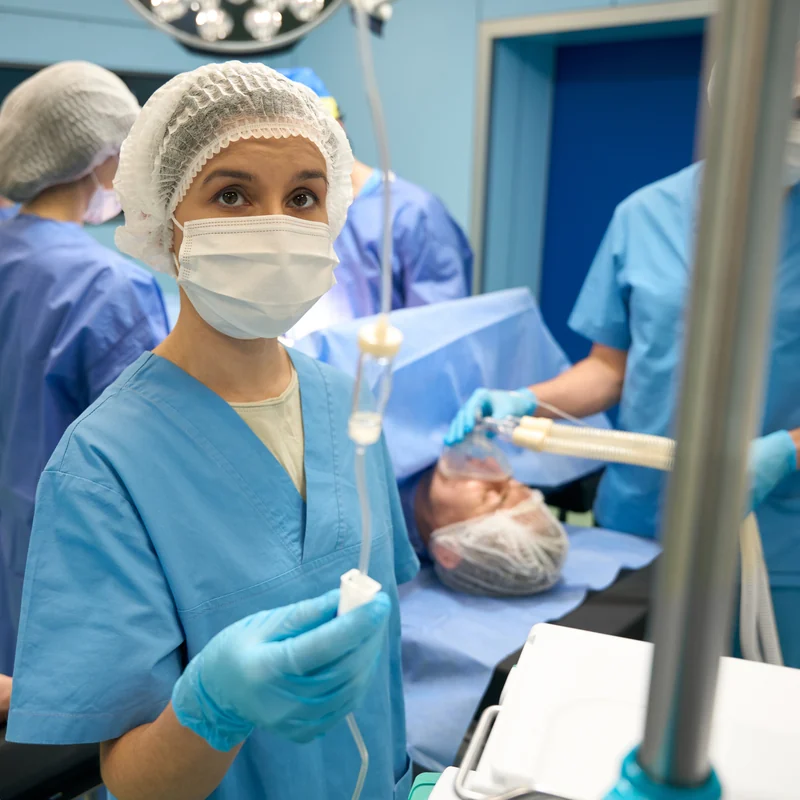
Nurse Anesthesia Practice (Entry into Practice) — image 1
Doctor of Nurse Anesthesia EIP

Frequently Asked Questions

What makes the DNAP: Entry-Into-Practice different from a completion degree?
The Entry-Into-Practice program represents the complete doctor of nurse anesthesia pathway, taking registered nurses from their bachelor’s degree through all 90 credit hours of doctoral nurse anesthesia education over 36 months. The DNAP Completion degree, by contrast, builds on an existing master’s degree in nurse anesthesia and requires 30 additional credit hours for practicing CRNAs who already hold national certification. The Entry-Into-Practice program includes the full clinical practicum sequence, didactic curriculum, and national certification examination eligibility.
What careers can I pursue with a Doctor of Nurse Anesthesia Practice?
DNAP graduates at Keiser University earn eligibility to sit for the national board examination and become licensed Certified Registered Nurse Anesthetists. Career paths include clinical practice as a CRNA in hospitals and surgical centers, leadership roles in anesthesia services, nurse anesthesia education and faculty positions, health sciences research, advanced education roles such as program director, and roles in healthcare policy, pain management, and perioperative care across diverse practice settings.
Can I transfer credits from another institution?
Keiser University’s Graduate School welcomes transfer credits from accredited institutions, subject to evaluation and approval. Key transfer credit policies include: Credit transfer benefits: students who have earned credits at other institutions may be able to apply them toward their degree, helping reduce overall tuition costs and time to completion. Credit transfer is subject to evaluation and approval. For full details, refer to the Graduate School transfer of credit FAQ and Transfer Credits Policy - Master’s degree students may transfer up to 12 graduate-level credits (master’s or doctoral level) from an accredited college or university, provided the courses are equivalent to relevant Keiser University courses. - Doctoral degree students may transfer up to 18 graduate-level credits (master’s or doctoral level) with evaluation and approval. - Undergraduate credits are not transferable to graduate-level programs. - Credits from non-accredited institutions that are substantially equivalent in content may be granted on a course-by-course basis. - Transfer credits from non-U.S. institutions are evaluated through an approved educational evaluator service confirming equivalency to coursework at a U.S. accredited institution. - Acceptable courses must be equivalent to a grade of B or higher; courses with a Pass or Satisfactory grade may be considered at the discretion of the Dean.
Is financial aid available for DNAP students?
Yes. Students in the DNAP: Entry-Into-Practice program may qualify for federal financial aid programs and scholarships. Contact a dedicated financial aid counselor to review all available options before classes begin.
Is the DNAP program accredited?
Yes. The Doctor of Nurse Anesthesia Practice program at Keiser University is accredited by the Council on Accreditation of Nurse Anesthesia Educational Programs (COA), 10275 West Higgins Road, Suite 906, Rosemont, Illinois 60018-5603 (224) 275-9130. The program’s next review by the COA is scheduled for Spring 2033.
How long does it take to complete the DNAP: Entry-Into-Practice program?
The Doctor of Nurse Anesthesia Practice: Entry-Into-Practice program at Keiser University takes 36 months to complete. Degree completion time represents an estimate, not intended as a guarantee, and is dependent on transfer credits accepted and courses completed each term. All transfer credits are subject to approval by the Dean of Academic Affairs; please contact the campus for additional information on the transfer credit policy.
How many students enroll in the DNAP program?
We offer two cohorts every year, one in the Fall (September) and the other in Winter (January) of every year, both remain open until the cohort is filled. The program takes 36 months to complete: 16 months of front‑loaded didactic coursework followed by 20 months of clinicals. As a hybrid program, students will attend live virtual classes three days per week during the didactic period and come to our Naples, Florida campus every eight weeks for in‑person labs and program‑related activities. We require a multistage application process for the DNAP program. First, you must review the program requirements and confirm that you meet them. Then you will need to submit all required documents through NursingCAS. After NursingCAS verifies your materials and we determine that you qualify, our Admissions team will contact you to complete the Keiser University application.
What does the application process and interview process look like?
The application process for the DNAP: Entry-Into-Practice program follows a two-step sequence. Prospective students first complete a pre-application through NursingCAS, the Centralized Application Service for Nursing. Successful completion of this step serves as a requirement before moving forward with the university application and interview process. The interview process allows program faculty and admissions staff to evaluate candidates for clinical readiness, academic background, and professional fit. Applicants should review all prerequisite requirements and gather official transcripts before beginning the NursingCAS pre-application. When will an interview be offered? Applicants who have met all admission requirements and have completed applications with clear background checks will be considered for an interview.
What does the interview process involve?
Applicants who have been prequalified and have completed and cleared a background check will be invited to interview. DNAP-EIP interviews assess core competency in foundational sciences such as chemistry, anatomy, physiology, pharmacology, and critical care nursing. It typically includes scenario-based questions to evaluate clinical reasoning and problem-solving.
What clinical sites are available for students?
Choosing a nurse anesthesia program based solely on clinical training site affiliations can be uncertain because clinical sites often change and may become unavailable for various reasons. Keiser University’s program has been established for many years. It has developed strong and lasting clinical partnerships throughout Florida, including Tampa Bay, Orlando, Miami, Fort Lauderdale, Naples, and Jacksonville sites. The program also looks to expand clinical training opportunities into Ohio and a few other states. Despite these long-standing relationships and ongoing growth, the program cannot guarantee placement at a specific clinical site or even ensure that a particular site will remain available during clinical training. However, every effort is made to connect students with clinical sites in their preferred practice areas, especially when they have relevant work history or live near those locations.
How much does it cost to earn this degree?
The cost per credit hour at Keiser University is the same for both online and on-campus courses. Total program costs vary based on the number of credit hours required and applicable educational fees. Keiser University offers financial aid, military and veteran benefits, scholarships, and employer tuition reimbursement for students who qualify. Use the Tuition Calculator to estimate your costs, or speak with an admissions advisor who can walk you through tuition, fees, and available financial assistance options.
What courses are required in the DNAP program?
Completion of required undergraduate coursework and official transcripts from all academic institutions attended. If prerequisite science coursework is more than 5 years old, repeating or supplementing with a refresher course at the undergraduate level is highly recommended. An overall science GPA of 3.0 is preferred. Completion of the following courses with a B or better: - Statistics course - Undergraduate Health Assessment course - Two Anatomy and Physiology courses - General Chemistry I and General Chemistry II - One of the chemistries must have a laboratory component. At least one Chemistry course must have been taken within five years of the program’s start. Introduction to Chemistry, Survey of Chemistry, and Chemistry for Health Sciences are not accepted. The syllabi of equivalents will be reviewed on a case-by-case basis.
What is a CRNA, and what is the history of Keiser University’s Nurse Anesthesia Program?
The Keiser University Doctor of Nurse Anesthesia Practice (DNAP) program boasts over 20 years of history and experience, having been originally established in 2004 as part of Wolford College before transitioning to Keiser University in 2018. Since that transition, the program has continued to expand its healthcare education portfolio and is fully accredited to award the DNAP degree. It serves both entry-into-practice providers and post-master’s certified registered nurse anesthetists (CRNAs) seeking to enhance their scholarship, leadership, and entrepreneurship. CRNAs are board-certified advanced practice nurses who administer anesthesia and provide critical care before, during, and after surgical, therapeutic, diagnostic, and obstetrical procedures. Keiser University’s Nurse Anesthesia program prepares nurses to become CRNAs who deliver expert anesthesia care across diverse clinical settings. Building strong community partnerships has enabled students to gain enriching experiences beyond traditional operating room settings, including medical mission trips to Honduras and the Dominican Republic. In 2022, the program became one of the first in the nation to offer the didactic curriculum in a flexible online and hybrid format, complemented by on-campus, high-fidelity simulation workshops each semester. Keiser University’s Nurse Anesthesia program currently offers access to more than 60 clinical training sites across various specialties and practice settings. The program prepares graduates with advanced knowledge, critical thinking skills, and leadership capabilities that enable them to provide enhanced anesthesia care and act as leaders to improve healthcare quality. Watch the DNAP Program Overview Video What degrees are offered through the DNAP program? DNAP-EIP (Entry-into-Practice) is designed for bachelor’s-prepared registered nurses seeking initial certification as CRNAs. This pathway provides comprehensive education and clinical training necessary for initial certification and entry into practice. DNAP-C (Completion) is designed for practicing CRNAs with a master’s degree in nurse anesthesia. This pathway focuses on advanced clinical practice, leadership development, and scholarly work to enhance expertise and career growth. How does a DNAP degree differ from a PhD in nursing? The DNAP degree is a clinical doctorate that prepares expert clinicians and leaders who apply evidence-based practice to improve patient care. The PhD is a research doctorate emphasizing original scientific research and academic scholarship. DNAP graduates typically work in clinical and leadership roles, while PhD graduates often pursue research and academic careers. What is the research or scholarly project requirement for the DNAP program? All DNAP students complete a Capstone Project, the program’s major scholarly and practical work. Instead of traditional research involving original data collection, the Capstone Project focuses on utilizing existing evidence and advanced knowledge to address a real-world issue or enhance clinical practice in nurse anesthesia. The project unfolds over four courses across the later semesters of the program. Students start by selecting a meaningful topic related to anesthesia practice, education, or leadership. They then thoroughly review the current scientific literature to understand best practices and identify areas that need improvement. Based on this research, students develop an evidence-based solution such as a clinical protocol, educational module, or simulation training. Instead of direct patient research, the project involves simulated implementation or expert evaluation. Finally, students prepare professional materials, including manuscripts, posters, and presentations, to share their findings with healthcare and academic audiences. Throughout this process, the Capstone Project chair guides students, providing mentorship and scholarly oversight to ensure the project meets rigorous academic standards and aligns with accreditation requirements. This role includes helping with topic refinement, reviewing project designs, and supporting dissemination efforts. The Capstone Project cultivates critical thinking, leadership, and evidence-based practice skills, equipping graduates to enhance anesthesia care and healthcare systems. What are the admissions requirements? DNAP-EIP (Entry-into-Practice): What GPAs are reviewed for acceptance into the program? Three GPAs will be reviewed: overall, highest degree, and science GPA. All applicants must have a 3.0 or higher GPA to be considered for an interview. What are the chemistry requirements for admission to the program? General Chemistry I and General Chemistry II, one with a lab component, with grades of a B or higher, are required. One must have been taken within the last five years. I am currently taking the last class that is required for the program. May I submit my application before completing the class? You can begin your application at any time, but all admission requirements must be met before an applicant can be considered for an interview. Final grades of all required classes are a part of those admission requirements. Are the DNAP courses online or on campus? The DNAP program is delivered in a hybrid format, comprising primarily online didactic instruction with synchronous class sessions, as well as in-person mandatory sessions at the Naples Campus. Students are expected to attend in-person sessions, actively participate, and remain visible on camera during online sessions. When are students required to be on campus? DNAP-EIP students must attend orientation during the first week and participate in intensive sessions during Weeks 8 and 15 each semester, including clinical semesters. These sessions provide essential hands-on training and immersive learning experiences. When must DNAP-EIP students relocate to Florida (or the applicable state)? DNAP-EIP students must relocate to Florida (or the applicable state) before Semester 5 to participate in full-time clinical placements to ensure access to clinical sites and hands-on training. How does the program prepare students for the National Certification Examination (NCE)? The curriculum is designed to support students thoroughly in preparing for the NCE. Students engage with core content multiple times through didactic coursework, clinical practice, and review modules. Integrated resources such as Prodigy Anesthesia and Apex Anesthesia Review supplement preparation with focused exam-style questions and practice. Is the GRE required to apply? The GRE is not required. Applicants who have taken the GRE may submit scores, which can strengthen their application, but this is not mandatory. Is the CCRN certification required? No. CCRN certification is not required, though equivalent critical care competency and experience are expected and assessed as part of the admissions process. What types of critical care experience count toward admissions? Accepted critical care experience includes adult medical, surgical, cardiovascular, trauma, cardiothoracic, and neurosurgical intensive care units. Experience in the emergency department, post-anesthesia care unit, operating room, pediatric or neonatal intensive care units, and flight nursing is not accepted for meeting clinical experience requirements Does the program offer tutoring? Students have multiple resources to support their learning and success. These include access to Tutor.com for on-demand tutoring, as well as clinical and virtual simulation tools, such as an Anatomage table, a state-of-the-art, life-sized 3D anatomy visualization tool that allows students to virtually dissect and explore real human cadavers. Additionally, students have access to Keiser Evolve, KU Labster, and ShadowHealth. Comprehensive anesthesia textbooks and student resources are also provided by publishers such as McGraw-Hill and Pearson. Students are encouraged to use faculty office hours and connect with their faculty advisors for additional guidance and support. Informal peer collaboration is welcomed. What should students study before starting the program? Before beginning the DNAP program, students should review foundational subjects such as anatomy, physiology, pathophysiology, and pharmacology, emphasizing receptor theory and cell signaling pathways. Developing effective learning strategies and understanding personal study preferences is more valuable than trying to learn anesthesia-specific content prematurely. Students should also be comfortable with basic healthcare-related calculations, including: Mastering these skills before entering the program will help students prepare for the rigorous mathematical and scientific demands of nurse anesthesia education. Avoid studying anesthesia concepts on your own to prevent misunderstandings. Instead, identify your learning style and create a routine suited for adult learning; this is more important than reviewing material in advance. What happens if I have a prior arrest or background issue? Applicants must fully disclose any history of legal issues, including arrests, charges, convictions, or any other encounters with law enforcement, regardless of how minor or long ago they occurred. This includes matters that may have been dismissed, expunged, or sealed. The admissions committee reviews all background information on a case-by-case basis to determine eligibility for admission. Failure to disclose such information may result in denial of admission or rescission of acceptance if discovered later. Complete transparency is essential to ensuring compliance with clinical site requirements and professional licensing standards, as well as verifying eligibility for certification. How many clinical cases will DNAP-EIP students complete before graduation? DNAP-EIP students typically complete over 900 anesthesia cases during their clinical training, ensuring extensive hands-on experience across various patient populations and clinical scenarios. What student support services are available to DNAP students? Keiser University offers a comprehensive range of student services to support your academic and professional journey: These services are designed to enhance your educational experience and help you succeed both academically and professionally. What should I know about online learning for the DNAP program? What technology do I need, and who is this type of learning suitable for? The DNAP program is mostly online, with live classes you attend on set schedules. To do well, it helps to maintain a regular study routine, stay engaged in discussions and group work, and stay motivated to complete assignments. To participate fully in live sessions, you will need reliable internet access, a computer with updated software, and an external webcam and microphone. This program is best suited for students who are organized, communicate effectively, can adapt to new technology, and enjoy guided independent learning. Online learning offers valuable flexibility, but to fully benefit from this format and succeed in the DNAP program, it is crucial to manage time effectively and stay on track with coursework and deadlines. Without strong self-discipline and organization, the advantages of online learning can quickly become challenges, so it’s important to actively plan a study schedule and stay accountable throughout each term. Can I work while enrolled in the DNAP program? Employment During the Didactic Phase The didactic phase of the DNAP program involves intensive coursework that requires significant time and cognitive engagement. While acceptance into the program does not explicitly forbid employment during this phase, given the curriculum’s demands, it is strongly discouraged. To ensure success, students must dedicate substantial time to studying, attending lectures, and engaging in other academic activities. Employment During the Clinical Education Phase The clinical education phase introduces additional complexities. During this time, it is discouraged for a DNAP student to be employed. Clinical schedules are variable, and students are required to be available for shifts that may extend beyond regular working hours and on short notice. Above all, there are legal limitations on the amount of downtime required before starting a shift, which can vary depending on state regulations and institutional policies. All of these factors make balancing employment with clinical responsibilities impractical and potentially detrimental to both patient care and student well-being. - Applicants must hold a current, unrestricted Registered Nursing license and provide proof of it. - Applicants must have no prior negative disciplinary actions, sanctions, or professional conduct violations in Florida or any other state. - Complete all prerequisite coursework with a minimum grade specified by the program. - Have at least one year of adult ICU experience, working at least 36 hours per week. - Orientation periods do not count toward this experience. - Submit a complete application including transcripts, letters of recommendation, a personal statement, and other required documentation. - Successfully pass a competency-based interview assessing knowledge in chemistry, anatomy, physiology, pharmacology, and critical care. - Complete successful background and health screenings as per university policy. - Dosage calculations (mg/kg, mcg/min) - Intravenous flow rates and drip rates - Unit conversions (e.g., milligrams to grams, milliliters to liters) - Dilution and concentration calculations - Basic algebra for solving equations with unknown variables - Interpretation of numerical laboratory values - Career development includes assistance with CV writing, interview preparation, job search strategies, and access to job postings through the online career center. - A student services portal provides access to academic calendars, event schedules, grades, and other essential resources. - Financial aid counseling offers guidance on scholarships, grants, loans, and other financial resources. - Accessibility services support students with disabilities to ensure equal access to educational opportunities. - Health and wellness resources help maintain your well-being during your studies.
Ready to get started?
Apply to Nurse Anesthesia Practice (Entry into Practice) at Online (FL Residents Only).
Nurse Anesthesia Practice (Entry into Practice)