

Forensic Investigations (Science Concentration) is a Bachelor Degree program offered by Keiser University in Port St. Lucie, FL. The program takes 34 months to complete, with a total tuition of $99,264.
Program Overview
Keiser University's Bachelor of Science in Forensic Investigations (Science Concentration) provides students with a strong scientific foundation for the analysis of physical evidence. The program emphasizes rigorous coursework in chemistry, physics, and biology combined with specialized training in forensic science applications, teaching students to recognize, collect, and preserve evidence while developing the analytical skills and laboratory techniques routinely applied in crime and forensic laboratories.
Because it is built around scientific analysis rather than field investigation alone, this concentration prepares graduates to formulate concise, defensible reports of laboratory findings and to practice within established legal and ethical frameworks. Students complete extensive hands-on laboratory work and gain experience through internships and research opportunities.
Graduates are prepared for entry-level roles in analytical, research, and crime laboratories, and the curriculum also completes the prerequisites needed to pursue graduate study in forensic science and related scientific specializations.
What sets this Program apart
- Combines rigorous science coursework (chemistry, biology, and physics) with practical forensic science applications
- Offered with on-campus and hybrid learning options
- Extensive laboratory work in chemistry, biology, and physics
- Specialized courses in forensic photography, crime scene processing, evidence analysis, and criminalistics
- Hands-on experience through internships and research opportunities
- Prepares students for careers in forensic laboratories and crime scene investigation units, and for graduate study in the forensic sciences
Admission Requirements and Process
Admission includes Keiser University's general requirements plus any program-specific requirements listed below, followed by the university's monthly-start application process.
General Requirements
- High school diploma or GED; foreign credentials must be evaluated by a NACES member organization
- Minimum Wonderlic score (or comparable) of 21 or above for entrance into the BS Forensic Investigations (Science Concentration) program
- Level 2 criminal background check
- Personal interview with the campus BS-FI Program Director
- All lower- and upper-division courses must be completed with a grade of "C" or better
- Minimum 2.5 cumulative GPA (4.0 scale) required to graduate
- Completed FAFSA (to be considered for federal and state financial aid)
- Payment of the one-time $55 application fee and $145 registration fee upon enrollment
School Information
Location
Why Accreditation Is Important
Attending an accredited institution means your education has met rigorous, independently reviewed quality standards designed to protect students.
This program: Keiser University is institutionally accredited by the Southern Association of Colleges and Schools Commission on Colleges (SACSCOC).
- A reliable indicator of educational quality
- Eligible for federal Title IV financial aid
- Recognized by employers nationwide
- Credits earned toward a respected credential
Application Process
- 1Submit ApplicationComplete the online application form with your personal information and educational background.Apply Now
- 2Submit TranscriptsProvide official high school transcripts or GED certificate. Some programs may require additional documentation.
- 3Financial AidComplete the FAFSA to determine eligibility for federal financial aid. Meet with a financial aid advisor to review your options.FAFSA Code for Port St. Lucie Campus: 015159Complete FAFSA Application
- 4EnrollmentOnce accepted, complete enrollment paperwork, register for classes, and attend orientation.
Program Schedule
Students take one class at a time in four-week terms, with new classes starting every month and small class sizes averaging about 14 students per instructor. The program totals 120 credit hours and takes approximately 34 months to complete for a full-time student with no transfer credits; length varies if credits transfer in (up to 12 transfer credits are accepted).
The degree is offered on campus and in a hybrid format, with day and evening options at select campuses. Because of the extensive laboratory requirements in chemistry, biology, and physics, the program is not offered fully online. Students must complete all lower- and upper-division courses with a grade of "C" or better and maintain progress toward the 2.5 minimum GPA required for graduation.
- September 28th, 2026
- October 26th, 2026
- November 23rd, 2026
- January 11th, 2027
- February 08th, 2027
- March 08th, 2027
- April 05th, 2027
- May 10th, 2027
- June 07th, 2027
- July 05th, 2027
- August 02nd, 2027
Curriculum
The curriculum blends lower- and upper-division science courses (general, advanced, and organic chemistry; general physics; biology; biochemistry) with forensic-specific coursework in forensic photography, evidence procedures, criminalistics, forensic biology and chemistry, and medico-legal death investigation, plus general education requirements. The full course sequence is listed below.
Required Courses
| Name | Credits |
|---|---|
| Lower Division Forensic Investigation (Science Concentration) Major Courses (39.0 credit hours) | |
| General Chemistry | 3.0 |
| General Chemistry Laboratory | 1.0 |
| Advanced Chemistry | 3.0 |
| Advanced Chemistry Laboratory | 1.0 |
| Organic Chemistry I | 3.0 |
| Organic Chemistry I Laboratory | 1.0 |
| Organic Chemistry II | 3.0 |
| Organic Chemistry II Laboratory | 1.0 |
| General Physics I | 3.0 |
| General Physics I Laboratory | 1.0 |
| General Physics II | 3.0 |
| General Physics II Laboratory | 1.0 |
| Forensic Photography | 4.0 |
| Introduction to Forensic Science Technology | 4.0 |
| Field Investigative Procedures and Presentation of Evidence | 4.0 |
| Forensic Legal Concepts | 3.0 |
| General Education Courses (35 credit hours) | |
| Introduction to Psychology | 3.0 |
| Sociology | 3.0 |
| Communications (3.0 credit hours) | |
| Speech Communications | 3.0 |
| Computers (3.0 credit hours) | |
| Introduction to Computers | 3.0 |
| English (6.0 credit hours) | |
| English Composition I | 3.0 |
| English Composition II | 3.0 |
| Humanities/Fine Arts (3.0 credit hours) | |
| American Literature | 3.0 |
| English Literature | 3.0 |
| Mathematics (6.0 credit hours) | |
| College Algebra | 3.0 |
| Statistics | 3.0 |
| Calculus and Analytic Geometry I | 5.0 |
| Natural Science (20.0 credit hours) | |
| Biology I | 3.0 |
| Biology I Laboratory | 1.0 |
| Biology II | 3.0 |
| Biology II Laboratory | 1.0 |
| General Chemistry | 3.0 |
| General Chemistry Laboratory | 1.0 |
| Advanced Chemistry | 3.0 |
| Advanced Chemistry Laboratory | 1.0 |
| General Physics | 3.0 |
| General Physics Laboratory | 1.0 |
| Upper Division Forensic Investigation (Science Concentration) Major Courses (42.0 credit hours) | |
| Fundamentals of Forensic Anthropology | 4.0 |
| Biochemistry I | 4.0 |
| Biochemistry II | 4.0 |
| Forensic Biology | 4.0 |
| Forensic Chemistry | 4.0 |
| Medico-Legal Death Investigation | 4.0 |
| Advanced Evidence Documentation | 4.0 |
| Advanced Topics in Forensic Science | 4.0 |
| Microbiology | 3.0 |
| Microbiology Laboratory | 3.0 |
| Microbiology Laboratory | 3.0 |
| Microbiology Laboratory | 3.0 |
| Genetics | 3.0 |
| Genetics Laboratory | 3.0 |
| Molecular Biology I | 3.0 |
| Molecular Biology I Laboratory | 3.0 |
| Upper Division Externships or Optional Courses (4.0 credit hours) | |
| Forensic Investigations Externship I | 2.0 |
| Forensic Investigations Externship II | 2.0 |
| Forensic Investigations Capstone Course I** | 2.0 |
| Forensic Investigations Capstone Course II** | 2.0 |
Cost of Attendance and Financial Aid Information
Tuition at Keiser University is charged per 16-week semester by scheduled credit hours. Full-time enrollment (12–17.99 credit hours) is approximately $12,408 per semester per Keiser's Undergraduate Tuition & Fee Disclosure (subject to annual review). At a typical full-time pace, the estimated tuition to complete the 120-credit-hour program is roughly $99,000; the actual total depends on credit load per term, transfer credits, and any annual rate changes.
This program carries required and/or optional program fees (for example, laboratory and course resource fees) in addition to tuition; specific amounts are defined in the university catalog/supplement and appear on the student's billing statement. There is a one-time $55 application fee and a one-time $145 registration fee at enrollment.
Eligible students may qualify for federal aid (Pell Grant, FSEOG, Direct Subsidized/Unsubsidized Loans, Direct PLUS Loans, and Federal Work-Study), Florida state aid (FSAG and EASE), institutional scholarships, and veterans/military benefits including the GI Bill®. Keiser's FAFSA School Code is 015159; the FAFSA must be completed each year. Estimate your net cost with Keiser's Net Price Calculator at https://www.keiseruniversity.edu/NPC-index.html.
Estimated total program tuition of about $99,264 (full-time semesters at ~$12,408/semester); actual cost varies with pace and transfer credit.
Career Outcomes
Graduates are prepared for entry-level positions in analytical and research laboratories, crime laboratories, and forensic science units. Typical roles include forensic laboratory technician, forensic science analyst, crime scene investigation/technician support, and evidence analysis roles that apply scientific methods to physical evidence.
Because the concentration completes the scientific prerequisites for advanced study, graduates are also positioned to pursue master's and doctoral programs in forensic science and related life and physical sciences. This program does not itself confer a professional license; specific laboratory or agency positions may have their own hiring, certification, and background requirements.
What to expect as a Keiser University student
Expect a science-intensive schedule: students move through general, advanced, and organic chemistry; general physics; and biology sequences alongside forensic-focused courses such as forensic photography, crime scene processing, criminalistics, forensic biology and chemistry, and medico-legal death investigation. The one-class-per-month format lets you focus on a single subject at a time, but the lab-heavy load rewards consistent study habits.
You will spend substantial time in the laboratory learning to analyze physical evidence, document crime scenes, and present findings within legal and ethical frameworks. Hands-on internships and research opportunities are part of the experience. Applicants should be prepared for a Level 2 criminal background check and a personal interview with the program director, and to maintain a "C" or better in every major and general education course.
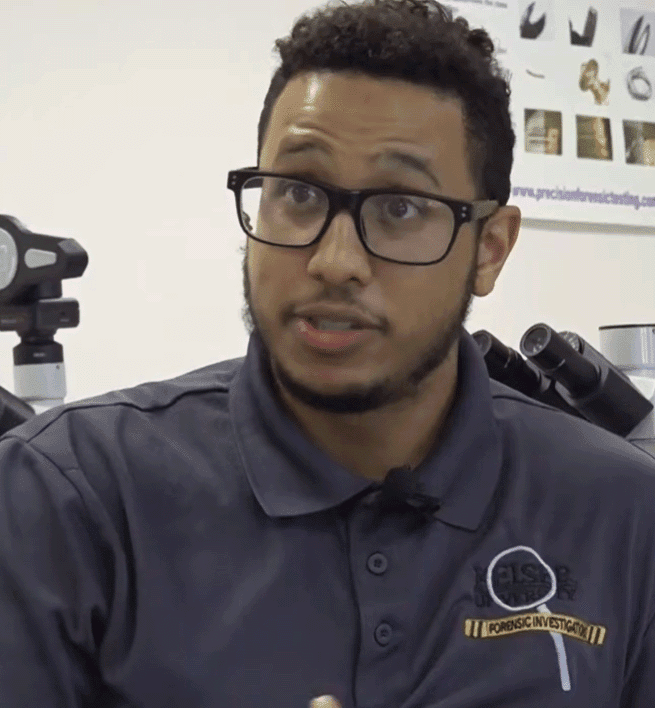
Testimonials

Frequently Asked Questions
School Information
Location
Why Accreditation Is Important
Attending an accredited institution means your education has met rigorous, independently reviewed quality standards designed to protect students.
This program: Keiser University is institutionally accredited by the Southern Association of Colleges and Schools Commission on Colleges (SACSCOC).
- A reliable indicator of educational quality
- Eligible for federal Title IV financial aid
- Recognized by employers nationwide
- Credits earned toward a respected credential