Louisiana Culinary Institute

Hospitality and Culinary Management

Baton Rouge
Baton Rouge, LA
Associate Of Occupational Studies · Hybrid
Hospitality and Culinary Management
Accredited by the Council on Occupational Education (COE) and licensed by the Louisiana State Board of Regents.
Hybrid: in-person kitchen classes at the Baton Rouge campus plus online coursework in Canvas; the fourth-semester management courses are taken online.
Tuition is $27,350; with the $75 registration fee, $2,500 fee package and $1,875 laboratory food, total tuition and fees are $31,800.
This program takes about 16 months to complete. 4 semesters; 1,215 clock hours / 65 semester credit hours.
A $25 non-refundable application fee is charged, plus a $75 registration fee upon acceptance and enrollment.
Title IV aid (Pell Grants, Direct and PLUS Loans) is available to those who qualify (FAFSA code 041123); VA benefits, Vocational Rehabilitation and TOPS are accepted.

Hospitality and Culinary Management is an Associate Of Occupational Studies program (Hybrid) offered by Louisiana Culinary Institute in Baton Rouge, LA. The program takes 16 months to complete, with a total tuition of $27,350.

Program Overview

Culinary school provides the resources, skills, and lessons that you need to become a well-rounded, agile, proactive professional, inside and outside of the kitchen. You will learn from several different faculty members, each with a different perspective and expertise on each element of the culinary and hospitality business. From the operation inside the kitchen to managing people to growing a business, you will learn all of the skills, techniques, and applications to evolve and thrive in management.

The educational objective of the AOS in Hospitality and Culinary Management degree program is to provide high quality training and a conceptual understanding of management skills within the hospitality and culinary industry; to prepare students for entry into mid to upper-level positions in the hospitality industry; and to equip students with the skills necessary for advancement and new enterprise during a hospitality and/or culinary management career.

This program is a hybrid program that utilizes an online delivery system for certain coursework. LCI utilizes Canvas, a cloud-based learning management system (LMS), for this coursework. Access to Canvas for a course is provided by the instructor. Support for use is available by LCI administration prior to the coursework beginning, to ensure accessibility.

Specific competencies. Training is job-oriented. The level of occupations for which students are trained is at least for an entry to mid-level position with skills to advance in the hospitality or food service industry. Upon successful completion of the program, the graduate will be able to:

  • Develop an understanding of the principles involved in the preparation of food using all of the cooking procedures available in commercial kitchens;
  • Acquire an ability to prepare breads, pastries, desserts, appetizers, soups, sauces, garde manger, and entrees;
  • Acquire the ability to identify, fabricate, and portion meats, poultry and fish;
  • Gain experience in using small and large commercial kitchen and bakery equipment;
  • Learn and implement appropriate sanitation, hygiene and safety procedures while preparing, cooking and handling foodstuffs;
  • Demonstrate the ability to convert recipes and accurately weigh and measure ingredients for recipes;
  • Develop an understanding of the principles of nutrition, and be able to plan and prepare nutritionally balanced menus;
  • Develop knowledge of the opportunities for employment in the field of Culinary Arts;
  • Keep accurate records of purchases and inventory and learn the principles of food and beverage purchasing;
  • Execute various types and styles of tableside service techniques;
  • Develop table service skills and dining room service management skills;
  • Understand the history, evolution and international diversity of the Culinary Arts;
  • Develop a personal sense of professionalism necessary for working successfully in a professional food service facility in a supervisory capacity;
  • Demonstrate an ability to properly plan a menu and appropriately design a food service facility with the proper space, equipment and work flow to serve the menu.
  • Understand the importance of organizing and implementing cost control protocol, financial analysis systems, and marketing programs in the hospitality industry;
  • Learn the history of and fundamentals associated with properly managing wine and beverage programs in the hospitality industry
  • Understand the philosophies and procedures associated with the entrepreneurial and small business processes; and
  • Learn the techniques necessary to be a respected supervisor while understanding the importance of managing human resources.

What sets this Program apart

Visit the #1 culinary school in the nation as ranked by Niche two years in a row.

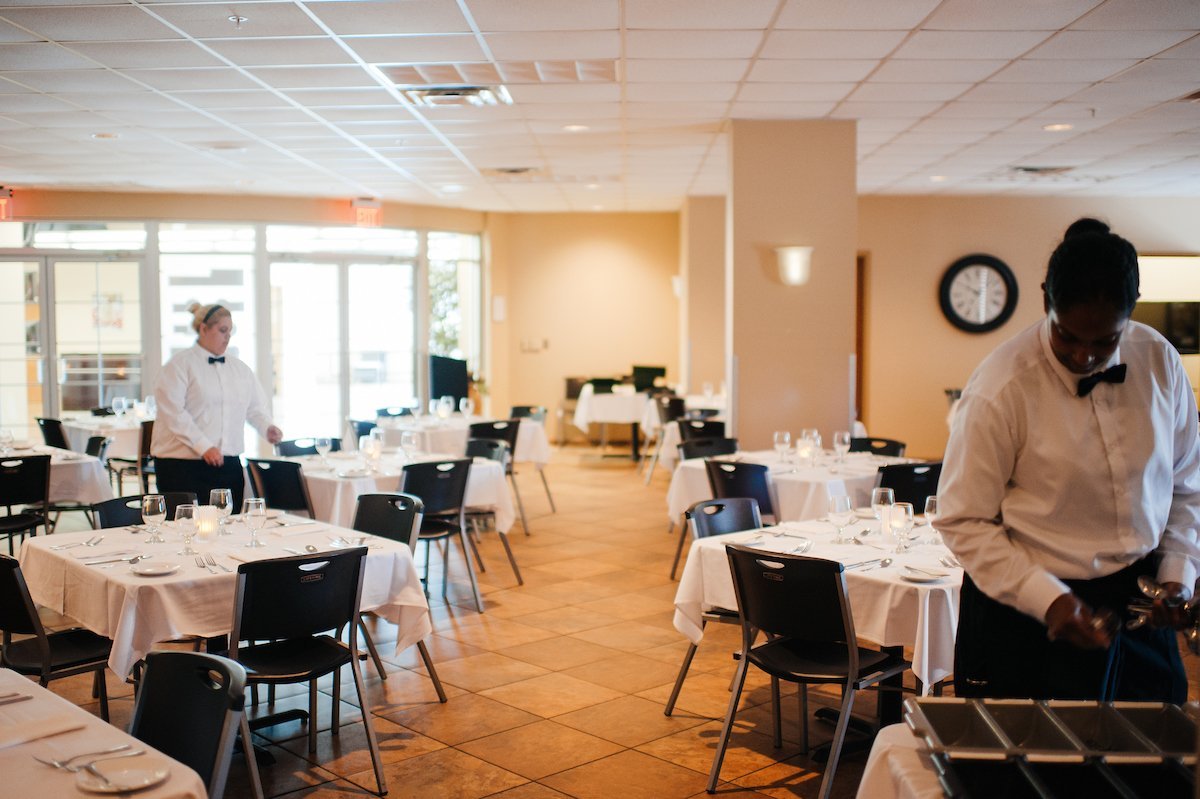
The Louisiana Culinary Institute is a well-lighted, air-conditioned facility with an up-to-date media center, two (2) demonstration labs, a full-service restaurant kitchen, a project kitchen, a bakery project kitchen, a baking demonstration lab, a dining room, an Amphitheater with a residential kitchen, and adequate dry storage and cold storage space. There is approximately 35,000 square feet of usable space, on two (2) floors.

The overall ratio of students to instructors is sixteen to one (16:1). Laboratory classes are typically broken into multiple smaller groups (up to 18), each with an instructor.

LCI also prepares the students in its programs for the workforce by offering certification with the National Restaurant Association Educational Foundation’s (NRAEF) ManageFirst Program® in ServSafe® Food Safety and Sanitation.

Admission Requirements and Process

Upon successful completion of the following requirements and procedures, potential students can proceed with the enrollment process. The Acceptance Committee will then consider all the requirements in order to determine whether a potential student will be accepted or denied admission.

It’s easy to apply for one of our culinary programs. The application can be downloaded from our website or completed online. Apply early to secure a spot since space is limited.

General Requirements

  • High school graduation
    Applicants must have proof of high school graduation, which includes a High School Diploma, official High School Transcripts, Home School Certificate or GED (the website also…
  • Completed application with references
    Applicants submit a completed application, including three (3) professional references who are not related to the applicant.
  • Personal essay
    Applicants submit a 500-word essay explaining why they wish to pursue a career in the food service industry.
  • Application fee
    Applicants pay the $25 non-refundable application fee.
  • Culinary Math Test
    Applicants complete the Louisiana Culinary Institute developed Culinary Math Test.
  • Interviews
    Applicants successfully complete interviews with at least three (3) faculty/staff members, each of whom submits an interview score sheet to the Acceptance Committee.
  • Proof of citizenship and age
    Applicants provide proof of citizenship and proof that they are sixteen years of age or older, including two forms of identification of which one must be a photo ID and one that…
  • Registration fee
    Applicants pay the $75 registration fee upon acceptance and enrollment.

Application Process

  1. 1
    Submit your application
    Complete the application for admission online or download it from the LCI website, including three professional references and your personal essay.
  2. 2
    Pay the application fee
    A $25 non-refundable application fee is required; applications will not be considered valid until the fee is paid and are valid for one calendar year from submission and payment date.
  3. 3
    Take the Culinary Math Test
    Upon receipt of your application, essay, and application fee, the Admissions Officer will contact you to schedule the Louisiana Culinary Institute Culinary Math Test, required for all applicants.
  4. 4
    Interview with chef instructors
    Interview with the chef instructors (Admissions Panel), bringing your High School Diploma/Transcripts or GED, any college transcripts, and two proofs of citizenship.
  5. 5
    Meet with the financial aid advisor
    Each student is required to meet with the financial aid advisor to review the student’s financial position prior to enrollment; complete the FAFSA (school code 041123) no later than 2 weeks before your enrollment date.
  6. 6
    Acceptance and enrollment
    The Acceptance Committee decides on admission; once accepted, pay the $75 registration fee, and make the $750 tuition pre-payment on or before Orientation.

Program Schedule

Classes are held Monday through Thursday, from 8:00 am to 1:45 pm. This is 5 hours per day, 4 days per week, for a weekly total of 20 hours (minus 45 minutes per day for lunch). Additionally, students who do not have transfer credits for appropriate General Education classes will have class every Monday, Tuesday and Wednesday from 2:00 pm – 2:50 pm (for the first 3 semesters). This will bring those students’ weekly total to 23 hours (minus 45 minutes per day for lunch).

LCI does not offer courses in the evening or weekend. Courses are offered once per semester; order is subject to change.

Upcoming semester starts. Spring 2027 starts January 6, 2027; Fall 2027 starts August 31, 2027; Spring 2028 starts January 5, 2028; Fall 2028 starts August 31, 2028. Semester start dates are subject to change at administrative discretion.

New cohorts start regularly throughout the year. Our start dates are as follows:
  • January 06th, 2027
  • August 31st, 2027
  • January 05th, 2028
  • August 31st, 2028

Cost of Attendance and Financial Aid Information

Cost and Financial Aid Information is an estimate for general reference only. It is not an offer or guarantee of financial aid or of any price, and what a School charges you may differ.
Total Program Tuition
≈ $27,350
Total Program Cost
≈ $31,800
FAFSA Code
Net Price Calculator

Tuition and fees. Registration Fee $75.00; Fee Package $2,500.00; Laboratory Food $1,875.00; Tuition $27,350.00; Total Tuition and Fees $31,800.00.

Billing. Tuition will be billed on a semester basis, at a rate of $7,750.00 per semester for the first three semesters and $4,100 for the last semester of the Hospitality and Culinary Management program. The Fee Package will be billed at a rate of $1,375.00 at the beginning of the first semester and $375.00 at the beginning of the next three (3) semesters. The Laboratory Food will be billed at a rate of $625.00 at the beginning of each of the first three semesters only. A tuition pre-payment of seven hundred fifty dollars ($750.00) is required on or before Orientation.

Application and registration. A $25 non-refundable application fee is due with the application; the $75 registration fee is paid upon acceptance and enrollment.

Financial aid. The Louisiana Culinary Institute (LCI) offers Financial Aid for those who qualify in the form of Title IV Federal Student Aid (Pell Grants, Direct Loans, PLUS Loans, etc.). LCI also accepts Veterans Affairs Aid and Vocational Rehabilitation payments, as well as the Taylor Opportunity Program for Students (TOPS). To receive student aid, a student must complete the Free Application for Federal Student Aid (FAFSA®) at www.studentaid.gov every year, no later than 2 weeks before the enrollment date, using the LCI school code (041123).

Financial aid advising. To ensure that every student’s eligibility for financial aid and scholarship opportunities is reviewed, each student is required to meet with the financial aid advisor to review the student’s financial position prior to enrollment. The student’s out of pocket cost is determined after eligibility for financial aid, scholarships, and transfer credits are considered.

Military students. Veteran benefits are available to veterans, active duty military, spouses and dependents that qualify; LCI is a military friendly school and students eligible for Vocational Rehabilitation and Employment may be able to have tuition, fees, books and more paid by the VA.

Scholarships. Scholarship opportunities include the LRAEF Scholarship, the James Beard Foundation Scholarship Program, the National Restaurant Association Education Foundation scholarships and ACFEF scholarships, among others listed on the LCI Scholarships page; ProStart® students are eligible for scholarships and advanced credit.

What is included. The fee package includes two uniforms (two jackets, two pairs of pants, two hats, two towels and two white aprons), a starter knife set, a bi-metallic stem thermometer, and all textbooks. LCI does not provide housing, transportation, uniform shoes, white dress shirts, undergarments, or non-required equipment.

Program disclosure. Of the students who completed this program within normal time, the typical graduate leaves with $20,000 of debt (AOS in Hospitality and Culinary Management disclosure, posted 2022).

Required Courses

Subject #NameCredits
CA 111ServSafe® Food Safety and Sanitation2
CA 101Professional Cooking I2
CA 121Restaurant Production and Service I1
CA 109Bread Basics1
CA 102Professional Cooking II4
CA 104Professional Cooking IV4
MAT 101Essentials of Math3
CA 122Restaurant Production II1
CA 132Restaurant Service II1
CA 105Professional Cooking V2
CA 106Professional Cooking VI2
CA 143Restaurant Production III2
CA 211Introduction to Hospitality and Restaurant Management2
CA 112Catering and Volume Food Service2
ENG 101English Composition3
CA 103Professional Cooking III2
CA 110Introduction to Baking and Pastry2
CA 225Restaurant Production V2
CA 311Wine Fundamentals2
LS 200Career Management2
CA 224Restaurant Production IV2
NUT 201Nutrition2
MAT 102Controlling Costs2
CA 226Restaurant Production VI2
PSY 201Psychology for Leadership3
HCM 252Hospitality and Restaurant Marketing2
HCM 232Hospitality Accounting2
HCM 303Human Resource Management and Supervision4
HCM 301Small Business Development and Entrepreneurship4

Career Outcomes

Your education, experience, and network provide a substantial base for the variety of opportunities that your future holds. Understanding the ins and outs of the culinary business, coupled with real-world experience in mitigating problems, overcoming challenges, and thinking outside of the box to create successful outcomes are all critical skills that lead a wide array of career options:

  • Accommodations Manager
  • Catering manager
  • Chef
  • Conference Center Management
  • Event Management
  • Hotel Management
  • Restaurant Management
  • Nutritionist
  • Food stylist
  • Personal Chef
  • Caterer
  • Chef Instructor
  • Bed and Breakfast Chef
  • Resort Chef
  • Hotel Chef
  • Event Venue Chef
  • Executive Chef

Job placement assistance. While the Louisiana Culinary Institute (LCI) cannot guarantee job placement after graduation, a reasonable effort will be made to assist the student in securing suitable employment. LCI will assist the student with applications and employment forms; proper résumé writing and interviewing with prospective employers; contacts with employers to identify job openings and opportunities; and contact with employers of graduating students.

Licensure. Currently, there are no national or state legal requirements for licensure for culinary arts professionals, and there are no unique requirements for career paths or for employment and advancement opportunities within the culinary arts.

What to expect as a Louisiana Culinary Institute student

The Louisiana Culinary Institute (LCI) does not provide student housing. However, it will lend assistance utilizing the Baton Rouge Chamber of Commerce’s “Information on Local Housing Availability”, and will assist the student in procuring living quarters. LCI currently has partnerships with some local apartments and Chase Hotel Suites to assist with relocation and transition into housing.

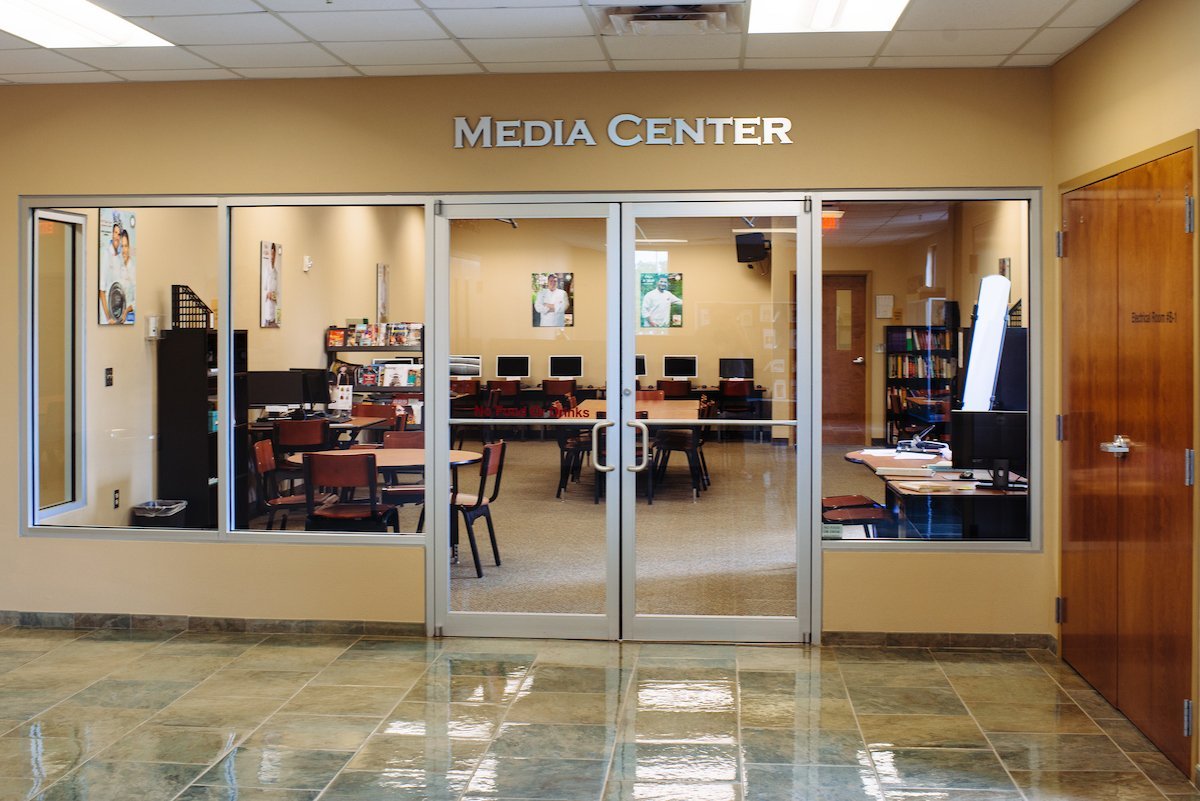
LCI will also assist students in obtaining counseling, medical, and legal services as requested, and will assist students in applying for outside Scholarships. LCI provides adequate, lighted parking and a Media Center for student, faculty and staff use, which includes Internet capable computers.

Uniforms. All uniforms must be clean, neat, pressed and worn in compliance with the Uniform Policy; two uniforms are included in the fee package.

Campus Address

Baton Rouge
10550 Airline Highway
Baton Rouge, LA 70816

Why Accreditation Is Important

Accredited. LCI is accredited by the Commission of the Council on Occupational Education (COE).

State licensed. Louisiana Culinary Institute is licensed by the Louisiana State Board of Regents and adheres to the rules and regulations of the Louisiana Proprietary Schools Advisory Commission.

  • A reliable indicator of quality
  • Approved program of study
  • Qualified instructors
  • Recognition by employers nationwide

Accreditations

Council on Occupational Education (COE)

Curriculum

The AOS in Hospitality and Culinary Management is 1215 clock hours / 65 semester credit hours over four semesters (White, Blue, Red and Green levels). Courses marked as online may be taken via the online learning system; the fourth-semester management courses must be taken via the online learning system. Courses are offered once per semester; order is subject to change.

Required Courses

Subject #NameLectureLabExternalTotalCredits

Images

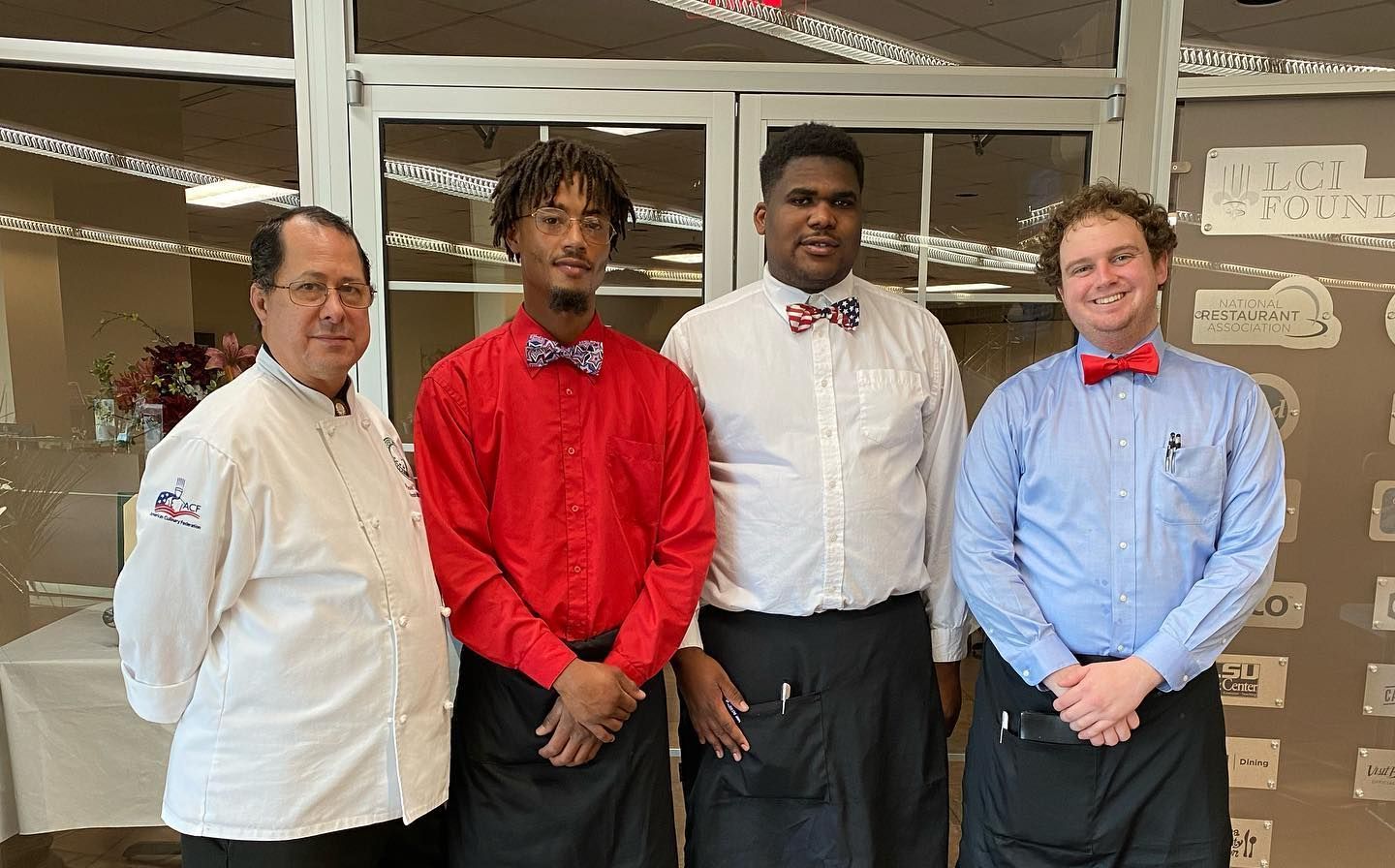
LCI hospitality students in dining room service attire with a chef instructor
LCI restaurant dining room
LCI amphitheater lecture hall
LCI Media Center entrance
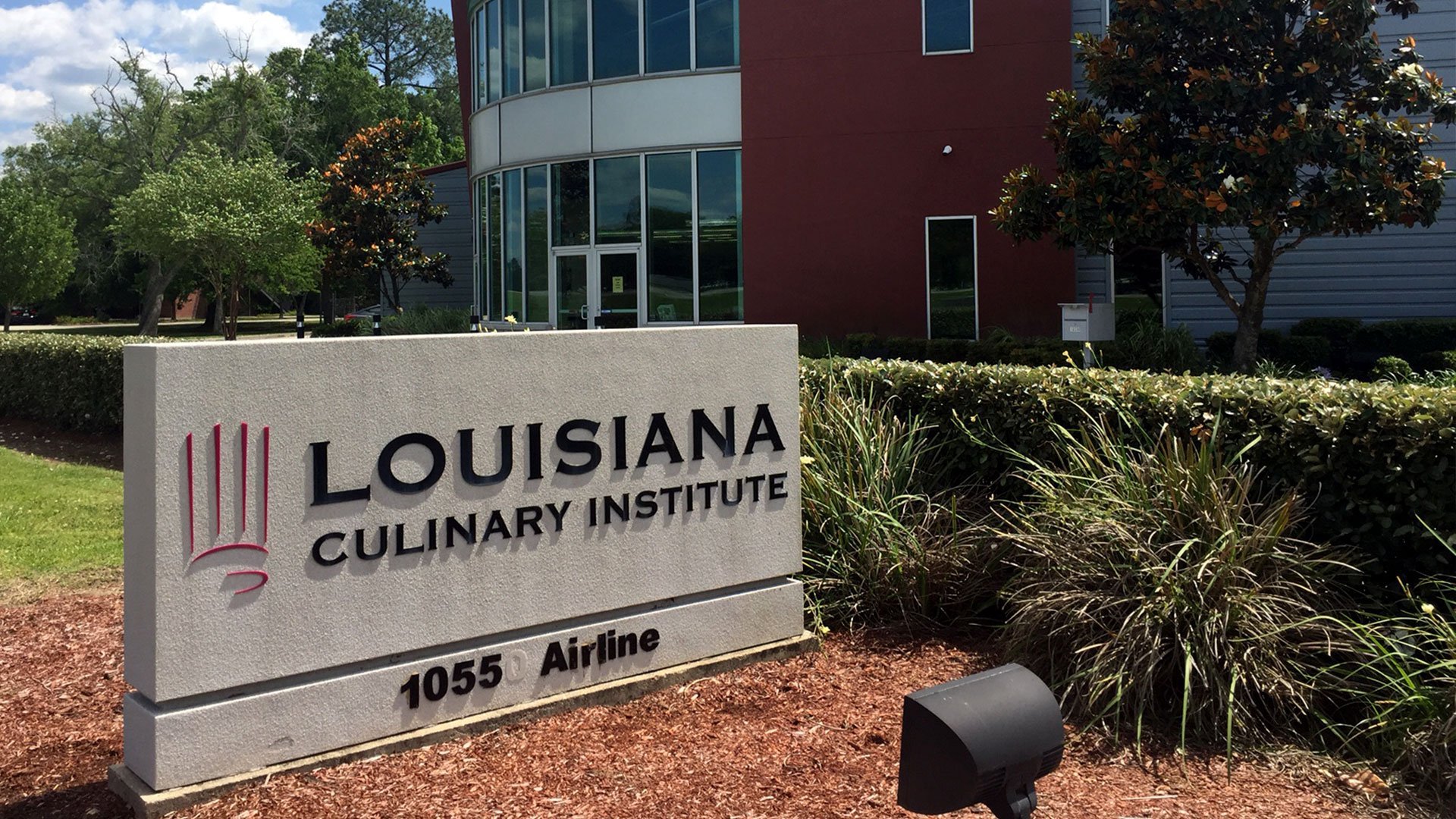
Louisiana Culinary Institute sign outside the Baton Rouge campus

Videos

Frequently Asked Questions

What do you learn in culinary school when you study hospitality and culinary management?
Culinary school provides the resources, skills, and lessons that you need to become a well-rounded, agile, proactive professional, inside and outside of the kitchen. You will learn from several different faculty members, each with a different perspective and expertise on each element of the culinary and hospitality business. From the operation inside the kitchen to managing people to growing a business, you will learn all of the skills, techniques, and applications to evolve and thrive in management. Your early classes will cover basic cooking, food safety, and restaurant production curriculum. It will progress into a focus more on professional cooking, as well as courses on English and math. Later, classes will be more business-centric: human resources, accounting, facility management, entrepreneurship, and more. Higher-level restaurant production courses are also a part of these later terms. You’ll also have more concentrated sector education like hospitality and restaurant marketing. At the end of your course and lab work at LCI, you will have all of the tools to be a competitive candidate in the hospitality management field.
What career opportunities are available with a degree in hospitality and culinary management?
Your education, experience, and network provide a substantial base for the variety of opportunities that your future holds. Understanding the ins and outs of the culinary business, coupled with real-world experience in mitigating problems, overcoming challenges, and thinking outside of the box to create successful outcomes are all critical skills that lead a wide array of career options. • Accommodations Manager: An accommodation manager is responsible for efficiently seeing to the needs of an establishment’s guests. This ranges from ensuring that the cleanliness and maintenance of the structure are upheld while maintaining a budget. You will also oversee and train a staff, while ultimately dealing with any issues. • Catering manager: The planning and organization of food and beverage services falls under the purview of a catering manager. You’ll be responsible for meeting client expectations, maintaining food and hygiene standards, and ultimately meeting budgetary goals. • Chef: While you’ll be well trained in food prep and service techniques and skills, you may not consider a role as a chef. However, many chefs run and manage their own restaurants. From traditional restaurants to contract catering to cruise ships, there is no shortage of experiences. The responsibilities will vary based on your role, but the skills learned in a management curriculum can be applied as a chef as well. • Conference Center Management: Conference centers are a quintessential hospitality staple. You’ll be responsible for your guests' needs and the efficiency of any event that you host. In this role, find the balance between customer service and proper business management can be a challenge. Last-minute details and problem-solving will be common in this position. • Event Management: Event management is another key hospitality service. Whether it’s promotional, professional, or personal, creating and managing an efficient and effective event is the ultimate goal. • Hotel Management: Hotels and restaurants are at the forefront of the hospitality and culinary industry. The fact that some of the most prestigious restaurants are in major hotels creates even more overlap. The day-to-day management of the hotel staff is the primary responsibility. Peripheral duties include budgeting, overseeing guest services, and the front-of-house roles like reception. Any food and beverage element in your hotel will also be under your leadership. • Restaurant Management: Obviously, with training and experience in a restaurant setting, restaurant management makes perfect sense. Whether it's as an executive chef, or strictly in a leadership role, your education will prepare you for this task. • Nutritionist • Food stylist • Personal Chef • Caterer • Chef Instructor • Bed and Breakfast Chef • Resort Chef • Hotel Chef • Event Venue Chef • Executive Chef
What scholarships are available for culinary school to study hospitality and culinary management?
There are many scholarship opportunities available for culinary students. This is especially true for LCI students in every program. These scholarships consider a range of criteria and vary in value. They include: • LRAEF Scholarship: The Louisiana Restaurant Association Education Foundation (LRAEF) scholarship program supports the continuing education of individuals pursuing a career in the culinary or hospitality sectors. These awards are merit-based, and values vary based on funds availability. • Niche.com $500 Culinary Scholarship: Open to all high school and college students interested in studying culinary arts. This scholarship can be used to pay for tuition, supplies, and other education-related expenses. • Culinary and Hospitality Program Scholarship: Open to students in the United States and Canada interested in taking food-related classes. Provided by TigerChef, two $1,000 scholarships are awarded each year. • The James Beard Foundation Scholarship Program: This scholarship is for food-focused candidates with exceptional talent. It is an annual scholarship provided by the James Beard Foundation. • National Restaurant Association Education Foundation Scholarship: This scholarship is provided by various funders and is for students interested in food-service-related post-secondary training. • WebstrauntStore Biannual Culinary & Hospitality Scholarship: This is a one-time grant for currently enrolled or prospective culinary arts or hospitality management students.
What financial aid is available for culinary school to study hospitality and culinary management?
As with any post-secondary education, there are many different financial aid options. To receive financial aid, simply fill out a FASFA, Free Application for Federal Student Aid.
What are the admission requirements for Louisiana Culinary Institute?
Again, with most post-secondary education destinations, several prerequisites need to be met or achieved to gain admission. To be accepted to Louisiana Culinary Institute, the following requirements need to be met. • Proof of high school graduation or equivalent. • Complete the application and pay the $25.00 application fee. • Provide three references that can attest to your personal character. • Submit a short (500-word maximum) describing your desire to earn a culinary arts degree. • Complete the LCI-developed Culinary Math Test. • Complete an interview with the Admissions Panel. • Provide proof of citizenship. This requires two forms of ID. One must be a photo ID. • Once accepted, a $75 registration fee is required.
What opportunities are available for military students who want to study hospitality and culinary management
One very well earned benefit for the members of our nation’s military is the GI Bill™. This funds your education, and LCI is a military-friendly school that knows all of the ins and outs of this benefit. With an extensive support staff system that is focused on your success, LCI is well-versed in understanding your experience that can translate to academic credit.
How can ProStart help you accelerate your path to becoming a pastry chef?
ProStart is a two-year program offered at select high schools that focuses on culinary arts and hospitality management. There are a number of benefits that come with participating in and completing the ProStart program. ProStart students are eligible for scholarships and academic credit that can reduce the cost of culinary school, and accelerate your time in the program.
Do you offer online courses?
LCI does not currently offer online courses, however the Hospitality and Culinary Management program is a hybrid of face to face and online coursework. It is important to remember, that basic culinary instruction will require a presence in the kitchen under the guidance of a chef instructor. The opportunity to learn to cook alongside a chef instructor is a far better learning experience than distance learning through the use of videos or other remote instructional tools.
Do you offer evening courses?
LCI does not offer courses in the evening or weekend. All culinary courses are offered Monday-Thursday from 8:00-1:45 pm. General education courses are offered on Monday-Wednesday from 1:50-2:50 pm. LCI has designed courses to be administered during periods that offer students with the full utilization of the LCI faculty and facility.
Do you rent out your kitchens for individual use?
Kitchens and other facility areas are rented often for multiple customized uses. Please review our facility rentals page for additional information and contact us for individual quotes and the availability of our spaces.
Are there dorms? If not, where do students stay?
LCI does not provide on campus housing. Our students stay in a variety of housing options around Baton Rouge and its surrounding areas. LCI Student Services staff assist students with housing searches before and during enrollment. LCI currently has partnerships with some local apartments and Chase Hotel Suites to assist with relocation and transition into housing. Because relocating can add an additional financial burden, the LCI Foundation also offers a Louisiana Non-Resident Scholarship for eligible students that can be used toward tuition and fees.
Do you offer private party cooking lessons?
LCI offers many customizable options. Leisure Classes are a deliciously popular way to prepare tasty creations under the direction of one of our many talented chef instructors. These fun classes are offered throughout the year. Please view our Leisure Class Schedule to review our upcoming classes or to register for a leisure class. For a customized lesson or offsite event, please contact our catering department to schedule an event or training that meets your needs.
Can you double major?
LCI offers the opportunity to successfully complete multiple programs in an expedited time period. After completing one culinary program, students often continue on into another concentration to add industry skills and knowledge. A degree in more than one culinary discipline adds marketability to a culinary professional.
Do I need a GED or High School Degree to participate?
LCI requires that students have proof of High School graduation or an equivalent. Acceptable forms of proof include the following: High School Diploma, Official High School transcripts, GED, HISET, High School Equivalency documentation or an acceptable Home School Certificate.
What is the tuition?
Each student has a unique financial situation that impacts the student’s financial contribution towards the cost of attendance. To ensure that every student’s eligibility for financial aid and scholarship opportunities is reviewed, each student is required to meet with the financial aid advisor to review the student’s financial position prior to enrollment. The student’s out of pocket cost is determined after eligibility for financial aid, scholarships, and transfer credits are considered. For specific information relating to common and general fees, please review our program disclosures.
Is your culinary program accredited?
The Louisiana Culinary Institute is licensed by the State of Louisiana Board of Regents; is accredited by the Commission of the Council on Education (COE); and is a member of the Louisiana Restaurant Association (LRA).

Other Programs at Baton Rouge

Louisiana Culinary Institute in Baton Rouge, LA also offers these 5 programs at 10550 Airline Highway, Baton Rouge, LA 70816.

Louisiana Culinary Institute

Culinary Arts – Advanced Baking and Pastry

Associate Of Occupational Studies

On-CampusFinancial Aid
Baton Rouge
Baton Rouge, LA
Next start
Jan 6, 2027
Duration
16 Months
1,335 clock hours / 65 semester credits
App fee
$25
Tuition
$31,000 for the Program
Louisiana Culinary Institute

Culinary Arts – Advanced Culinary Arts

Associate Of Occupational Studies

On-CampusFinancial Aid
Baton Rouge
Baton Rouge, LA
Next start
Jan 6, 2027
Duration
16 Months
1,335 clock hours / 65 semester credits
App fee
$25
Tuition
$31,000 for the Program
Louisiana Culinary Institute

High School Culinary Skills Development Summer Class

Continuing Education

On-CampusFinancial Aid
Baton Rouge
Baton Rouge, LA
Next start
Rolling enrollment
Duration
1 Day
8 AM - 1:45 PM
App fee
—
Tuition
$250 for the Program
Louisiana Culinary Institute

Italian Date Night: Chicken Marsala & Creamy Risotto

Continuing Education

On-CampusFinancial Aid
Baton Rouge
Baton Rouge, LA
Next start
Rolling enrollment
Duration
1 Day
5 PM - 8 PM
App fee
—
Tuition
$150 for the Program
Louisiana Culinary Institute

Pastry Techniques: Chantilly Cake

Continuing Education

On-CampusFinancial Aid
Baton Rouge
Baton Rouge, LA
Next start
Dec 5, 2026
Duration
1 Day
9:00 AM - 1:00 PM
App fee
—
Tuition
$150 for the Program
Ready to get started?
Request information about Hospitality and Culinary Management at Baton Rouge.
Hospitality and Culinary Management