
Nashville Film Institute

Cinema Production

Nashville Campus
Nashville, TN
Diploma · On Campus
Cinema Production
Accredited by the Accrediting Council for Continuing Education & Training (ACCET) and authorized by the Tennessee Higher Education Commission.
On campus in Nashville, TN: lectures and labs meet Monday through Thursday, with day and evening class schedules.
Tuition is $20,800 plus $2,000 for books and camera ($22,800 total). From 1/1/2027: $20,900 tuition plus $2,500 materials ($23,400 total).
This program takes about 9 months (36 weeks) to complete. It totals 900 clock hours: 504 lecture and 396 lab hours.
A $100 non-refundable application fee is due at the time of application.
Federal financial aid is available for those who qualify, including Pell Grants and Direct Loans (FAFSA school code 042461).

Cinema Production is a Diploma program offered by Nashville Film Institute in Nashville, TN. The program takes 9 months (36 weeks) to complete, with a total tuition of $20,800.

Program Overview

The Cinema Production Program focuses on the theory, art, craft and practical application of Filmmaking. Students learn screenwriting, directing, producing, production design, cinematography, post-production, and marketing and distribution. As students learn the theory behind these disciplines, they will immediately begin to apply that knowledge in real productions.

Our philosophy is to have students learn all the stages and roles involved in making a film. The best way to achieve that is by actually making films. Throughout this diploma program, students collaborate on various projects to create their own films. By the end of the program, students gain the necessary skills, invaluable connections, and the content for their very own professional demo reel.

At the completion of the program, students will be able to:

  • Write a screenplay in master scene format.
  • Adequately capture production sound design.
  • Properly use basic three-point light and grip work.
  • Using DaVinci, edit content to meet client needs.
  • Direct a scene as well as commercial, corporate, and music videos.
  • Produce commercials, music videos, and short films.
  • Professionally light a frame for film and video.

Five Core Projects. Students will collaborate to produce Five Core Projects throughout the program: a Non-dialogue Film, a Commercial / Corporate Video, a Music video, a Documentary and a Narrative Short Film. Because these productions require collaborative teamwork, attendance and participation from each student is required.

Show. Tell. Do. Show: the instructor demonstrates theoretical concepts with examples. Tell: instructors, who are industry experts, provide lectures with key information. Do: students demonstrate understanding of concepts through in-class skills exercises and lab work.

Lockstep program. Students enter the school and move through the entire program as a group from start to finish in a prescribed series of modules. Graduates of the program receive a Diploma. Completion of the Cinema Production Program fulfills the first semester requirements of the Occupational Associate Degree in Cinema program upon transfer.

Equipment and facilities. Students have access to industry-standard gear, including professional cameras and lighting. The 10,000 square foot campus includes three 24-seat classrooms, a studio with cyclorama wall, a sound/recording room, a screening area and an equipment room. NFI’s maximum class size is 24 students per instructor, with a maximum of 12 students to one instructor where hands-on equipment is taught.

What sets this Program apart

All Film All Day. We believe in getting our students totally immersed in the film industry and eliminating distractions. We provide the fast track, avoiding unrelated topics and useless credit hours. We get our students out of the traditional classroom, in the field, on set, and behind the camera. It’s hands-on creativity every single day.

Learn From Film-Makers. At the NFI, all of our faculty are actively involved in the film industry. They’re producers, writers, editors, actors, stylists, and more. This provides our students with rich perspectives on trends and technology, exposure to an active network of professionals, and real-world mentoring.

Hands on education. Reading is great but there isn’t a substitute for getting your hands dirty. Work with industry standard equipment; work alongside industry professionals and be truly comfortable on-set the day you graduate.

Make mistakes. We create an environment where you feel comfortable making mistakes and learning from them. The best filmmakers push the boundaries but that pairs with mistakes and failures. Don’t fear failure my friends!

Admission Requirements and Process

Admission to Nashville Film Institute is open to any high school graduate or GED recipient who is seriously interested in the field of professional cinema production or the video industry. The minimum required age is 18. However, if a potential student is under the age of 18 but has graduated from high school and has parental consent, he or she is welcome to apply. No previous experience is necessary, and no admissions tests are required. Students may apply at any time. Accepted students may choose to begin with the next available cohort or at a later start date.

Prospective students may complete an application online at www.nfi.edu, in person, or by mail. Individuals applying in person may come to the school campus during regular office hours (9 a.m. to 5 p.m., Monday through Thursday). Out-of-area students may submit the application by mail and should contact the school regarding available openings before returning a completed application.

At NFI we take the time to interview and get to know each person who applies to our school.

Nashville Film Institute is authorized to enroll students in the M-1 non-immigrant category; only the Cinema Production Program is eligible for international student admission, with additional requirements (video interview, proof of English proficiency, financial statements and an enrollment deposit).

General Requirements

  • High school diploma or GED
    Admission is open to any high school graduate or GED recipient who is seriously interested in the field of professional cinema production or the video industry.
  • Minimum age
    The minimum required age is 18; an applicant under 18 who has graduated from high school and has parental consent is welcome to apply.
  • No experience or entrance test
    No previous experience is necessary, and no admissions tests are required.
  • Official transcripts
    An official high school transcript (or GED/HiSET) showing the date of graduation must be delivered directly to NFI; transcripts marked “issued to student” are not considered…
  • Prior colleges
    All students are required to notify the school of any post-secondary institutions they have attended and provide official transcripts to NFI.
  • Foreign credentials
    Applicants who attended secondary school outside the United States must also provide a credential evaluation from a NACES member organization, plus an official English translation…
  • New Student Orientation
    All newly enrolled students are required to attend New Student Orientation, typically held on the Friday before the first scheduled week of class.

Application Process

  1. 1
    Complete the Application for Admission
    Complete the admission application online at www.nfi.edu, in person, or by mail; failure to fully complete the application and disclose all required information can subject it to rejection.
  2. 2
    Pay the application fee
    Submit the $100 non-refundable application fee via check, money order or online via NFI.edu.
  3. 3
    Submit official transcripts
    Have official high school, GED/HiSET and/or post-secondary transcripts sent directly to NFI; students are responsible for requesting them.
  4. 4
    Apply for financial aid
    Students interested in federal financial assistance complete the FAFSA online and list NFI’s school code 042461.
    FAFSA Code for Nashville Campus: 042461
    Complete FAFSA Application
  5. 5
    Tour the campus
    Students are strongly encouraged to tour the NFI campus before completing the Enrollment Agreement; contact NFI to arrange an individual appointment.
  6. 6
    Receive acceptance and Enrollment Agreement
    Once the application is received and entrance requirements are verified, NFI sends confirmation of acceptance along with the Enrollment Agreement.
  7. 7
    Attend New Student Orientation
    All newly enrolled students attend New Student Orientation before the scheduled class start date.

Program Schedule

Class schedules. Day class: lecture classes Monday–Thursday 10:00 am – 1:15 pm; lab classes Monday–Thursday 2:00 pm – 4:45 pm. Evening class: lecture classes 2:00 pm – 5:30 pm; lab classes 10:00 am – 12:45 pm. Friday: no regularly scheduled classes or labs (make-up classes possible).

Upcoming start dates. February 1, 2027; July 5, 2027; September 27, 2027.

Students receive the actual holiday off; to maintain 900 contact hours, class and lab times are extended during the class week or rescheduled for a Friday following the holiday. New Student Orientation is typically held on the Friday prior to the first scheduled week of class.

New cohorts start regularly throughout the year. Our start dates are as follows:
  • February 01st, 2027
  • July 05th, 2027
  • September 27th, 2027

Cost of Attendance and Financial Aid Information

Cost and Financial Aid Information is an estimate for general reference only. It is not an offer or guarantee of financial aid or of any price, and what a School charges you may differ.
Total Program Tuition
≈ $20,800
Total Program Cost
≈ $22,800
FAFSA Code
Net Price Calculator

Tuition and fees. Tuition $20,800; Books & Camera $2,000; Total Cost $22,800. Effective 1/1/2027 the new tuition and fees are: Tuition $20,900; Materials $2,500; Total Program Cost $23,400. A $100 non-refundable application fee is due at the time of application; it cannot be paid with financial aid and is not included in the total cost of the program.

Cost of attendance. For a student living off campus (not with parents): tuition $20,800, materials $2,000, room and board $13,500, expenses/transportation $2,655, total $38,955. For a student with no dependents living with parents: tuition $20,800, materials $2,000, room and board $1,800, expenses/transportation $2,655, total $27,255. NFI only collects for tuition and materials; the other items are provided for reference.

Payment options. Option 1: payment of the total program cost prior to start. Option 2: monthly payments paid to NFI — $2,533.33 due before class starts, then 8 monthly payments of $2,533.33, no interest (NFI Retail Installment Agreement required). Option 3: financial aid plan with no balance due. Option 4: financial aid plan with a balance, paid to NFI in monthly payments (balance divided by 9, no interest). Option 5: financial aid plan with a balance paid to TFC Loan Corporation over 24 or 36 months, with interest. NFI accepts payment by check, money order, and most major credit cards. A $5.00 late fee per day is assessed for any monthly payment made after the seventh day of the month.

Federal financial aid. Financial aid is available to students who qualify. The NFI participates in the Federal Pell Grant and Federal Direct Loan programs; Federal Student Aid includes Pell Grants, Subsidized and Unsubsidized Stafford Loans, and Parent PLUS Loans. Complete the FAFSA and list NFI’s school code 042461. Maximum Federal Student Aid for the duration of the Cinema Production Program: Pell Grant $6,345; Subsidized Stafford Loan $3,500; Unsubsidized Stafford Loan $6,000 (independent) or $2,000 (dependent); Parent PLUS Loan up to the program cost minus any Federal Student Aid received.

Veterans. Nashville Film Institute is approved by the Tennessee State Approving Agency for training of veterans and their eligible dependents.

Scholarships. Merit Based and Need Based Scholarships provide financial assistance to domestic and international students accepted full-time to the Cinema Production Program and pay up to 25% of the program tuition. The High School Scholarship awards one $5,000 scholarship twice per year, and the Student Achievement Scholarship awards $2,500 (up to 6 per year), toward Cinema Production Program tuition.

Camera policy. Camera packages issued by NFI (camera issued in week 4) only become the property of the student once the student has completed 720 hours (80%) of the 900 scheduled program hours.

Use NFI’s Net Price Calculator at https://www.nfi.edu/netpricecalc/ for an estimate.

Required Courses

Subject #Name
Week 1Grip and Electric
Week 2Film Studies
Week 3Camera Basics (Film Composition)
Week 4Cinematography 1
Week 5Screenwriting 1 (Storytelling & Format)
Week 6Directing 1
Week 7Producing 1 (Licensing & Binder)
Week 8Production - On Campus
Week 9Editing 1 (Intro to DaVinci)
Week 10Screenwriting 2
Week 11Sound 1 (Location Sound)
Week 12Screenwriting 3
Week 13Pitch, Sales, and Marketing
Week 14Content Creation and Monetization
Week 15Cinematography 2 (Multi-Camera)
Week 16Music Video Production
Week 17Editing 2
Week 18Production Design
Week 19Screenwriting 4
Week 20Cinematography 3 (RED Camera)
Week 21Documentary
Week 22Editing 3 (After Effects)
Week 23Color Correction
Week 24Titles and Visuals
Week 25Sound 2 (ADR & Foley)
Week 26Directing 2 (Casting the Actor)
Week 27Cinematography 4
Week 28Producing 2
Week 29Directing 3
Week 30Cinematography 5
Week 31Directing 4
Week 32Final Project Shoot Week
Week 33Art of the Edit
Week 34Sound 3 (Music Editing & Supervision)
Week 35Sound 4 (Mixing & Mastering)
Week 36Marketing Yourself (Demo reel & resume)

Career Outcomes

With a Diploma in Cinema Production, students will be prepared to enter the film industry in positions with titles including:

  • Production Assistant (PA, On-set or Office)
  • Trainee Assistant Director (TAD)
  • 3rd Assistant Director (3rd AD)
  • 2nd Assistant, Camera (2nd AC)
  • 3rd Assistant Camera (3rd AC)
  • Grip, Electric, Sound Assistant
  • Assistant Editor
  • Sound Editor
  • Crafty
  • Script Supervisor
  • Director of Photography (DP)
  • Web Content Creator
  • Assistant Producer
  • Production House Owner

NFI does have placement assistance available to all graduates, including resume preparation, interview techniques, personalized career advice, and industry and career training contacts. The school cannot guarantee placement or employment.

Campus Address

Nashville Campus
191 Polk Avenue
Nashville, TN 37210

Why Accreditation Is Important

Nashville Film Institute is accredited by the Accrediting Council for Continuing Education & Training (ACCET). ACCET is listed by the US Department of Education as a nationally recognized accrediting agency.

Nashville Film Institute is authorized by the Tennessee Higher Education Commission (THEC) and approved by the Tennessee State Approving Agency for training of veterans and their eligible dependents.

  • A reliable indicator of quality
  • Approved program of study
  • Qualified instructors
  • Recognition by employers nationwide

Accreditations

ACCET

Student Demographics

These are demographics for all students at the Nashville Campus (IPEDS, 2024).

Gender Distribution
Women25%(15)
Men75%(45)
Race/Ethnicity Distribution
Primary Ethnic Group
White
58.3% · 35 students
White58.3% · 35
Black/African American26.7% · 16
Hispanic/Latino8.3% · 5
Asian6.7% · 4
American Indian/Alaska Native0% · 0
Native Hawaiian/Pacific Islander0% · 0
Two or More Races0% · 0
International Students0% · 0

Curriculum

900 total clock hours, 9 months, 36 weeks: 504 lecture clock hours and 396 lab clock hours (14 lecture hours per week / 11 lab hours per week). The following is a typical course sequence; sequence and courses are subject to change. Students must work through each module in order, as each module serves as a prerequisite for the next module.

Projects. Project 1: Non-dialogue Film (a one-minute non-dialogue narrative film). Project 2: Commercial / Corporate Video. Project 3: Music Video. Project 4: Documentary. Project 5: Narrative short film. Each student will submit an individual edit of all projects, even when working in groups.

Cinematography. The cinematography courses begin with the basics of photography then progress to motion picture theory. Students receive training on high-definition cameras and gain insight into the science behind photographic and filmmaking processes, and receive hands-on training with instruments used in lighting and grip.

Directing. In these four courses, students learn how to clearly convey ideas and how to lead a film crew with confidence. Students assume the role of ‘Actor’ to better understand the craft of acting so they can make the best casting decisions and encourage meaningful performances.

Editing. Four courses in editing teach students both the theoretical and technical side of video editing: how to log, capture, and prepare footage for editing; how to create a sequence; syncing audio and picture; and understanding rhythm and timing within the cut.

Business. Students learn all elements of the business of filmmaking, beginning with legal corporate formation. In the Marketing Yourself course, students learn about how to sell themselves to potential clients, polish their resumes, and perfect their demo reels.

Post-production. Students are exposed to the important stage of color correction, are introduced to creative titling and various visual effects techniques, and get an introduction to creative possibilities available in DaVinci.

Producing. Students are introduced to basic work requirements of a producer, with an emphasis on the business of film production: budgeting, production management, financing, and distribution.

Screenwriting. Students learn story and various screenwriting techniques, including character development, dialogue, and the three-act structure, and write the scripts necessary to shoot five core productions.

Sound. The sound courses cover everything from capturing quality location sound to post-production mixing and output, including boom technique, shotgun and lavalier microphones, ADR, Foley, stereo and 5.1 mixing, and working with the music supervisor.

Required Courses

Subject #NameLectureLabExternalTotal
Week 1Grip and Electric1411025
Week 3Camera Basics (Film Composition)1411025
Week 4Cinematography 11411025
Week 5Screenwriting 1 (Storytelling & Format)1411025
Week 6Directing 11411025
Week 7Producing 1 (Licensing & Binder)1411025
Week 8Production - On Campus1411025
Week 9Editing 1 (Intro to DaVinci)1411025
Week 10Screenwriting 21411025
Week 11Sound 1 (Location Sound)1411025
Week 12Screenwriting 31411025
Week 13Pitch, Sales, and Marketing1411025
Week 15Cinematography 2 (Multi-Camera)1411025
Week 17Editing 21411025
Week 19Screenwriting 41411025
Week 20Cinematography 3 (RED Camera)1411025
Week 22Editing 3 (After Effects)1411025
Week 23Color Correction1411025
Week 24Titles and Visuals1411025
Week 25Sound 2 (ADR & Foley)1411025
Week 26Directing 2 (Casting the Actor)1411025
Week 27Cinematography 41411025
Week 28Producing 21411025
Week 29Directing 31411025
Week 30Cinematography 51411025
Week 31Directing 41411025
Week 32Final Project Shoot Week1411025
Week 33Art of the Edit1411025
Week 34Sound 3 (Music Editing & Supervision)1411025
Week 35Sound 4 (Mixing & Mastering)1411025
Week 36Marketing Yourself (Demo reel & resume)1411025

Images

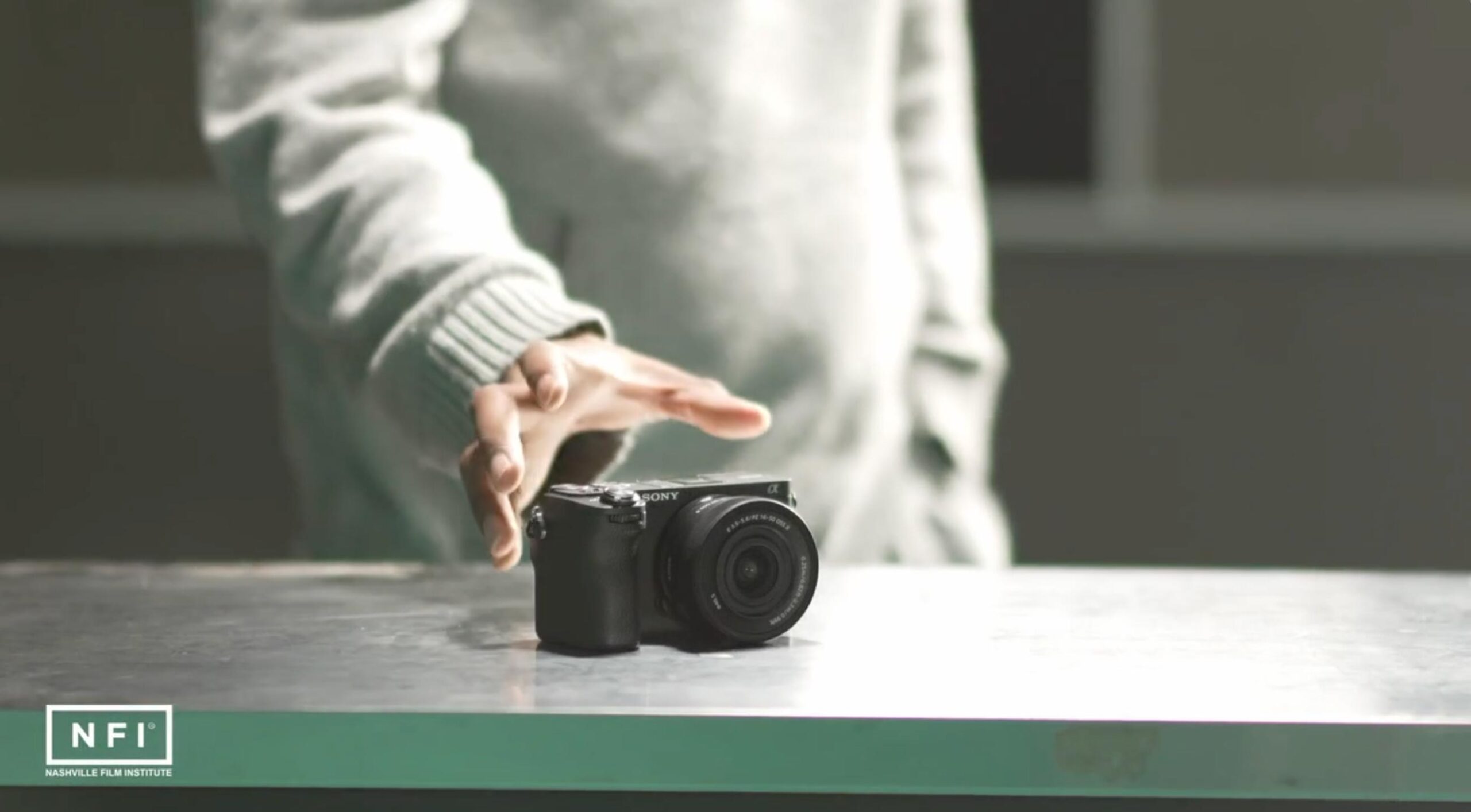
Nashville Film Institute filmmaker setting a camera on a table, still from NFI's 2026 homepage video
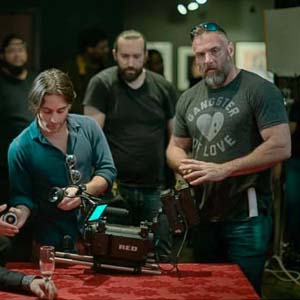
Cinema Production Program lead instructor Micah Ellars working with students and a RED camera
Studio interview shoot with lights and camera crew, still from Nashville Film Institute's commercial

Videos

Frequently Asked Questions

How long is the Cinema Production Program?
While familiarity with film production can be beneficial, it is not required for our program. We teach a comprehensive curriculum designed for students of all levels.
Is prior film experience necessary?
While familiarity with film production can be beneficial, it is not required for our program. We teach a comprehensive curriculum designed for students of all levels.
Does NFI provide housing?
No. While we may be able to assist potential students in connecting with other students and/or rental firms, we do not take responsibility for student housing.
Can I audit a class?
Absolutely. Participants may be able to participate in specific courses, though no credit would be given for such participation. Contact NFI for more information.
How are students graded?
NFI students are evaluated on a number of metrics. Similar to most schools, students’ grades are influenced by attendance, tests, and project completions.
Does the NFI provide accommodations for students with disabilities?
Yes. To the extent possible, we are willing to make reasonable accommodations to support and engage students with disabilities. However, given the nature of the film trade and our hands-on program, some disabilities and impairments may hinder a student’s ability to complete the program.
Does the NFI promote diversity?
Yes. We actively seek to promote a culture of diversity and inclusion at the NFI. Our school is filled with students from a wide array of locations, races, nationalities, genders, religions, and sexual orientations. We celebrate the diversity of our student body.
Does the NFI provide disability services?
Yes. Please download this PDF for more information.
What are some common career opportunities in film?
• DIRECTOR: Literally responsible for delivering a final picture, or producing a film for a studio or investors by managing the entire film making process from pre-production to sale or distribution. A producer oversees all the non-artistic aspects of a film from initial fund raising, to budgeting and scheduling, hiring and firing, to making sure that a finished film is delivered as promised. The power-brokers of Hollywood. • CINEMATOGRAPHER: The Director of Photography. Responsible for capturing the director’s vision onto moving picture, whether film or video. Works closely with the director to frame the on-screen action, and to design the lighting for a specific scene. The true artistes of filmmaking. • GAFFER: The chief lighting technician on a set, a gaffer is a member of the electrical department who is responsible for operating lights and lighting equipment on a set. Will assist the cinematographer achieve their artistic vision for a scene by collaborating on the lighting design. • KEY GRIP: The chief of a group of grips, responsible for the mechanical stagings on-set, whether they be cranes, camera dollies and track, pyrotechnics, etc. Grips are the mechanical engineer and muscle behind the scenes — often doubling as a construction coordinator and a backup for the camera crew. Key grips work closely with the gaffer. • EDITOR: Under the tutelage of the director, responsible for artfully assembling all of the production footage into a finished movie over the course of months, and sometimes years. Where editors used to literally “cut” the film and splice it together in a painstaking analogue process, now all their work in the cutting room is done on computers. Editors are key contributors to a film’s final form, oftentimes making artistic contributions equal to that of the director. • POST PRODUCTION SUPERVISOR: The person responsible for overseeing the entire post-production of a project. Helps to ensure that the film is delivered on time and on budget while satisfying the sometimes-competing needs of the director and the producers. • IN-HOUSE MEDIA PRODUCTION: Many corporations now staff in-house video production teams. Often, these teams consist of directors, writers, producers, cinematographers, and editors. Responsibilities generally include documenting the corporate history, creating promotional pieces (including commercials), generating social media content, producing training materials, etc.

Other Programs at Nashville Campus

Nashville Film Institute in Nashville, TN also offers these 3 programs at 191 Polk Avenue, Nashville, TN 37210.

Nashville Film Institute

Cinema

Occupational Associate'S Degree

On-CampusFinancial Aid
Nashville Campus
Nashville, TN
Next start
Jan 4, 2027
Duration
2 Years
60 semester credit hours (1,200 hours)
App fee
$100
Tuition
$37,500 for the Program
Nashville Film Institute

Cinema Production – Interactive Distance Learning (Hybrid)

Diploma

HybridFinancial Aid
Nashville Campus
Nashville, TN
Next start
Mar 1, 2027
Duration
36 Weeks
900 clock hours
App fee
$100
Tuition
$17,800 for the Program
Nashville Film Institute

Summer Film Camp

Continuing Education

On-CampusFinancial Aid
Nashville Campus
Nashville, TN
Next start
Rolling enrollment
Duration
5 Days
Five-day summer camp
App fee
—
Tuition
$365 for the Program
Ready to get started?
Request information about Cinema Production at Nashville Campus.
Cinema Production