Aircraft Mechanic
Aircraft and avionics equipment mechanics and technicians install, test, adjust, and repair equipment and systems in aircraft.
$79,870 median pay5% job growth
Explore Aircraft MechanicFlight Training programs prepare you for the core tasks of the job:
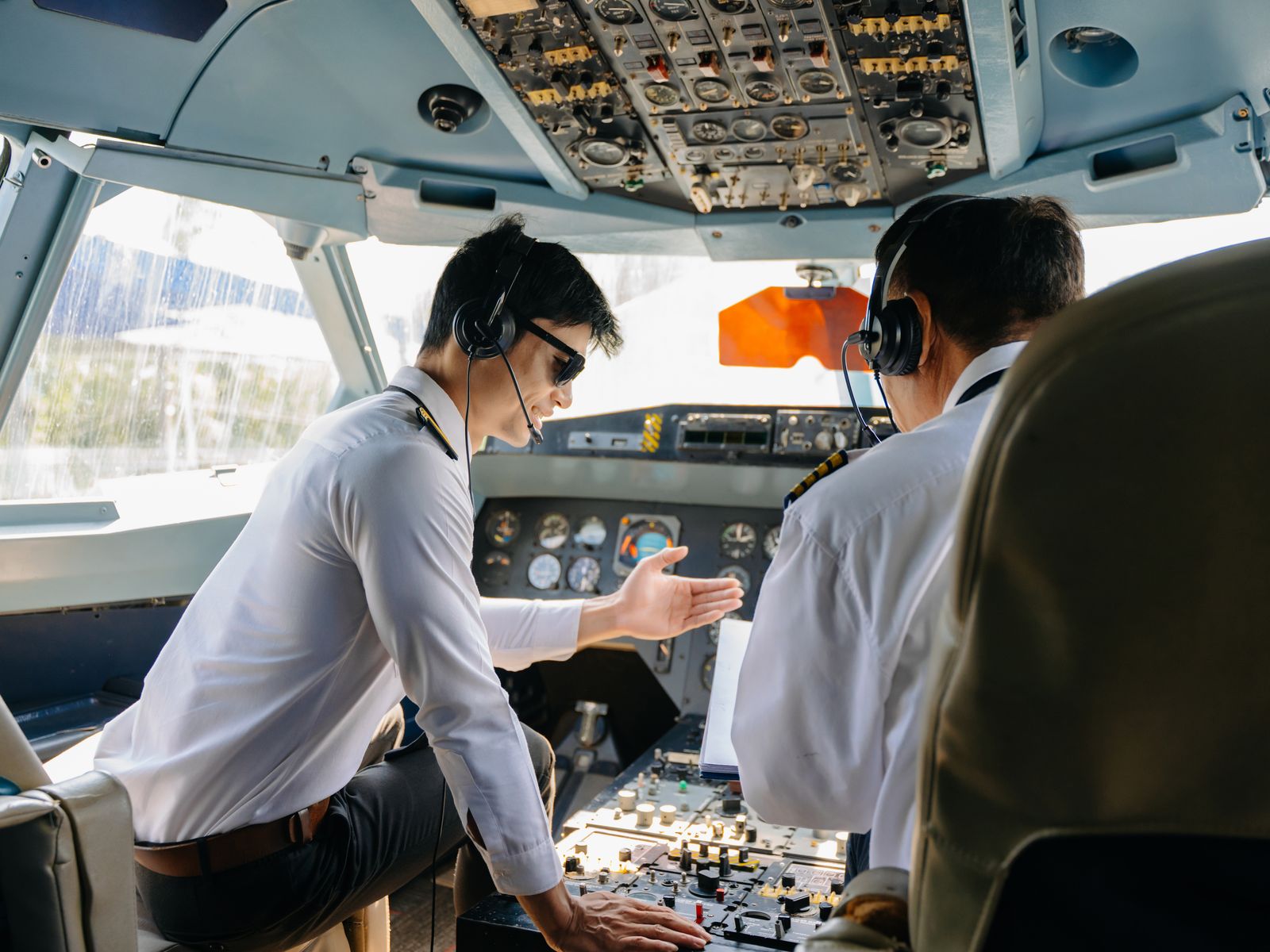
Pilots earn FAA certificates one step at a time, from student and private pilot through the instrument rating to the commercial pilot certificate, which takes at least 250 hours of flight time. Commercial pilots earned a median of $123,220 a year in May 2025, according to the U.S. Bureau of Labor Statistics.
Enter your ZIP to see in-person Flight Training programs, with cost, length and next start date.
287 in-person Flight Training programs listed in 37 states. Add your ZIP to see the closest ones.
See every in-person Flight Training program we list in your state, with costs, pay and licensing.
Job titles that people in this occupation report, from O*NET.
The median pay is $123,220 a year ($59.24 an hour): half earn more, half earn less.
Median annual wage over the past 5 years (2021 to 2025) · National. Shaded: where most earners fall, darker for the middle half.
Half of pilots earn more than $123,220 and half earn less. The middle half earn between $84,540 and $190,440. The top 10% earn over $266,620 and the bottom 10% under $58,850, so the highest earners stretch the range above the median.
Median annual wage, 2021 to 2025, national. Not adjusted for inflation.
| Path | Typical length | Paid while training? | Best for |
|---|---|---|---|
| Flight school | See each program | No | Earning FAA certificates and ratings. The FAA certifies hundreds of civilian flight schools |
| 2- or 4-year aviation degree | 2 to 4 years | No | Pilot training plus a degree. BLS says airline pilots typically need a bachelor’s degree |
| Flight instructing or charter flying | Until you reach airline minimums | Yes | Building flight hours toward the airline transport pilot certificate |
| Credential | Issued by | Required? | What it covers |
|---|---|---|---|
| Private pilot certificate | Federal Aviation Administration | Yes, first | Flying for yourself, not for pay. Age 17 and at least 40 hours of flight time for airplanes |
| Instrument rating | Federal Aviation Administration | Yes, for most commercial work | Flying in low visibility. Needed to carry passengers for pay more than 50 miles away or at night |
| Commercial pilot certificate | Federal Aviation Administration | Yes, to be paid to fly | Age 18 and at least 250 hours of flight time for airplanes, plus a medical exam, knowledge test and checkride |
| Flight instructor certificate | Federal Aviation Administration | No | Teaching others to fly. Needs a commercial or airline transport pilot certificate first |
| Airline transport pilot certificate | Federal Aviation Administration | Yes, to fly for an airline | Age 23 and 1,500 hours of flight time for most pilots. Fewer hours with some aviation degrees or military flying |
You earn FAA certificates in order. Most professional pilots go from student pilot to private pilot, add an instrument rating, then earn a commercial pilot certificate, a multi-engine rating and finally the airline transport pilot certificate. Each step has a written knowledge test and a practical flight test called a checkride.
The FAA sets minimum flight hours rather than a set number of weeks. A private pilot certificate for airplanes takes at least 40 hours of flight time and a commercial pilot certificate at least 250. How long that takes depends on how often you fly, and each program page lists its own length.
It depends on the school, the aircraft and how many certificates the program covers. Each program page on Career School App shows the tuition and costs the school publishes, so you can compare programs near you.
Commercial pilots earned a median of $123,220 a year in May 2025, according to the U.S. Bureau of Labor Statistics. Airline pilots, copilots and flight engineers had a higher median of $232,140, according to BLS. Airline pilots usually start as first officers and get raises as they build experience and seniority.
It depends on the job. BLS says commercial pilots typically need flight training, and some employers require or prefer a degree. Airline pilots typically need a bachelor’s degree in any field. An aviation degree from an FAA-authorized school can also lower the flight hours needed for a restricted airline transport pilot certificate.
Every pilot on a scheduled airliner must hold an airline transport pilot certificate. For most pilots it takes 1,500 hours of flight time and a minimum age of 23. Former military pilots can qualify with 750 hours, and graduates of FAA-authorized aviation degree programs with 1,000 or 1,250 hours, for a restricted certificate at age 21.
You must be at least 18 and already hold a commercial or airline transport pilot certificate, usually with an instrument rating. Then you pass the flight instructor knowledge and practical tests. BLS says many pilots do this right after the commercial certificate to build flight time at less cost.