Kentucky Horseshoeing School

24-Week Intermediate Farrier Course

Richmond
Richmond, KY
Diploma · On Campus
24-Week Intermediate Farrier Course
KHS is accredited by the Accrediting Commission of Career Schools and Colleges (ACCSC) and licensed by the Kentucky Commission on Proprietary Education.
Classes meet on campus in Richmond, Kentucky, Monday through Friday from 8:00 a.m. to 5:00 p.m.
Tuition is $19,000 plus a $2,000 lab fee, for a program total of $21,000 per the 2025 KHS catalog; the required tool kit is $3,134.
This program takes about 24 weeks to complete (960 clock hours over two 12-week terms).
A non-refundable $50 application fee is charged.
Financial aid is available for qualified students, including Pell Grants, federal loans and GI Bill® benefits; the KHS federal school code is 042396.

24-Week Intermediate Farrier Course is a Diploma program offered by Kentucky Horseshoeing School in Richmond, KY. The program takes 24 weeks to complete, with a total tuition of $19,000.

Program Overview

The 24-Week Intermediate Farrier Course is designed to provide students with the fundamental knowledge and practical skills necessary to begin a professional career in farriery. This program represents the minimum level of formal training recommended for individuals intending to pursue employment or apprenticeship opportunities within the industry.

The course focuses on the development of essential farrier skills and provides students with a strong working foundation in hoof care, trimming, balancing, and the shoeing of sound horses. Students learn the principles of equine limb anatomy, hoof structure and function, biomechanics, gait analysis, and equine conformation as they relate to maintaining soundness and proper movement.

Instruction includes the safe and proper use of farrier tools, hoof trimming techniques, balancing methods, and the shaping and application of manufactured and handmade shoes using the forge. Students are introduced to the principles of metallurgy, basic shoe fabrication, and elementary shoe modifications commonly used in everyday farrier practice.

Academic coursework emphasizes distal limb anatomy, biomechanics, hoof balance, and the relationship between conformation and movement. Students also receive introductory instruction in common causes of foot-related lameness and the selection and application of shoes appropriate for maintaining soundness in healthy horses.

The practical portion of the course is heavily focused on developing efficiency, consistency, and competency in trimming and shoeing horses to an acceptable professional standard. Through demonstrations, guided instruction, and repetitive hands-on application, students work toward mastering the foundational skills expected of entry-level farriers.

While the 24-week course provides substantial practical and theoretical training, its primary objective is to establish a solid foundation in fundamental farrier practices rather than advanced or specialty applications. Students seeking more comprehensive training in therapeutic shoeing, advanced fabrication, performance horse applications, and business development are encouraged to continue into the 36-Week Career Track Farrier Course.

Students enrolled in this course are responsible for completing assigned readings and homework. Each student is required to provide a laptop computer or comparable device, as portions of the coursework and assignments require computer use.

What sets this Program apart

Legacy and Experience. Kentucky Horseshoeing School has been at the forefront of farrier education for decades. Graduates of KHS can be found practicing their craft all over the world.

Expert Instructors. KHS boasts a team of highly experienced and accomplished farriers who are dedicated to sharing their expertise with students. These instructors possess an in-depth understanding of various horse breeds and shoeing techniques, ensuring that students receive a well-rounded education.

Comprehensive Curriculum. From anatomy and physiology of the horse’s hoof to forging techniques and corrective shoeing, the program equips students with a solid understanding of the science and art behind the craft.

State-of-the-Art Facilities. Students have access to fully equipped forging labs, shoeing stations, and live horses for practice, allowing them to hone their skills in a controlled and supportive setting.

Industry Connections. Kentucky Horseshoeing School has built strong connections within the farrier community. These connections may lead to potential internships, employment opportunities, or networking prospects that can jumpstart their careers.

Class size. Classes are limited to a maximum number of 14 students so that we can offer each of our students personal and individualized instruction.

Horse Capital of the World. Here in the “Horse Capital of the World,” we afford our students the opportunity to work on a wide variety of horse types and breeds. Additionally, our students are exposed to noted veterinarians, farriers and equine experts who frequently visit KHS as guest lecturers.

Admission Requirements and Process

A completed KHS application is the first criterion for admission; applicants meet it when they submit an application form filled out in its entirety, including an essay responding to one of three given prompts. There is a required $50.00 application fee. A High School Diploma, General Education Development (GED) or equivalent certificate is the minimum requirement for admissions. KHS does not admit ability-to-benefit students.

Excessive physical strength is not required to become a successful farrier; however, you must understand the physical demands necessary to learn and perform the proper techniques of trimming and shoeing a horse, so a physical examination is required. Although no previous experience is necessary, all relevant experience will be considered when class placements are made. Due to the nature of the course materials, KHS does not accept transfer of credit from other institutions. KHS maintains an open-door policy of admission; classes are limited to 14 students and enrollment is granted on a first come first-serve basis.

Prerequisite: High School Diploma or equivalent.

General Requirements

  • Completed application and essay
    Submit a KHS application filled out in its entirety, including an essay (maximum 500 words) responding to one of three given prompts.
  • Application fee
    A required, non-refundable $50.00 application fee is paid by Visa or MasterCard over the phone, check, money order, or through the school’s secure website.
  • High school diploma or GED
    A High School Diploma, General Education Development (GED) or equivalent certificate is the minimum requirement for admissions, and the document must be provided in English.
  • Government-issued identification
    Provide KHS with a photocopy of your driver’s license, passport or another form of government issued identification.
  • Physical examination
    Pass a sports physical performed by your personal doctor or a medical professional and submit a completed KHS physical form indicating past medical history and medications.
  • Health insurance
    Provide proof of health insurance with your enrollment paperwork.
  • Laptop computer
    Each student is required to provide a laptop computer or comparable device, as portions of the coursework and assignments require computer use.
  • International students
    International students must provide proof of their immigration status, and foreign diplomas not in English are verified through an approved agency at the student’s expense.

Application Process

  1. 1
    Contact the school
    Contact KHS by phone, e-mail, the website or mail; an admissions representative will schedule an appointment with you.
  2. 2
    Interview and campus tour
    The admissions representative interviews you and, when possible, gives a tour of the campus where you can meet school officials and instructors; a tour is not required but is highly recommended.
  3. 3
    Financial aid preview
    Meet with a financial aid director for a financial aid preview.
  4. 4
    Submit your application
    Complete the application for admission, including the essay answering one of three given prompts, along with the $50.00 application fee.
  5. 5
    Acceptance and tuition deposit
    KHS sends an acceptance letter; a $500.00 tuition deposit holds your spot in the class (14 maximum).
  6. 6
    Financial aid appointment
    Complete your financial aid appointment to go over tuition and financial aid packaging; typically the FAFSA (KHS school code 042396) is the first step.
  7. 7
    Complete enrollment
    Meet with your admissions representative to complete enrollment paperwork, provide proof of high school graduation or GED, identification, medical physical and health insurance, and sign the enrollment agreement.

Program Schedule

Typical week. Classes are held Monday-Friday, 8:00 a.m.-5:00 p.m. with a 1-hour break for lunch, with makeup time available Monday, Wednesday and Thursday evenings from 6:00 p.m.-9:00 p.m. (not mandatory but recommended). Programs are measured in clock hours, and work outside the classroom (homework, etc.) is required. Terms are 12 weeks in length and the maximum class size is 14 students.

Start dates. Upcoming class starts are January 4, 2027; March 29, 2027; July 5, 2027; and September 27, 2027. 24-week graduation for those classes is June 17, 2027; September 23, 2027; December 16, 2027; and March 30, 2028 respectively. 2027 classes are nearly full, and the school encourages interested students to apply early as enrollment is limited.

2026-2027 breaks. Thanksgiving Break November 25-27, 2026; Winter Break December 18, 2026 - January 1, 2027; Summer Break June 18 - July 4, 2027.

New cohorts start regularly throughout the year. Our start dates are as follows:
  • January 04th, 2027
  • March 29th, 2027
  • July 05th, 2027
  • September 27th, 2027

Cost of Attendance and Financial Aid Information

Cost and Financial Aid Information is an estimate for general reference only. It is not an offer or guarantee of financial aid or of any price, and what a School charges you may differ.
Total Program Tuition
≈ $19,000
Total Program Cost
≈ $21,000
FAFSA Code

Tuition and fees. Intermediate Farrier: Tuition $19,000; Lab Fee $2,000; Total $21,000. The lab fee will help to cover the cost of student use of consumables. This includes but is not limited to, horseshoes, coke, steel, nails, sandpaper, and propane. KHS reserves the right to change the tuition; any tuition changes will occur at the beginning of an academic term and will not affect continuing students that have no break in attendance.

Application fee and deposit. An application fee of $50.00 is required and is non-refundable. Upon acceptance, a tuition deposit of $500.00 is due to secure the student’s place in a program.

Tools and books. A complete farrier tool kit is necessary to ensure proper instruction and learning for each student at KHS. Required Tool Kit: $3,134.00 (price subject to change); all required textbooks are provided as a part of the Student Tool Kit. Prospective students are responsible for the costs of all tools ordered when cancellation occurs less than 30 days prior to term start date.

Housing (optional). 2024-2025 housing rates for the 24-week course: Bunk Room (men only) $2,400; Double Room/Women’s Quad $3,000; Single Room $3,800; Apartment (single occupancy) $5,000. A damage deposit of $500.00 is required with the signed Housing Contract.

Cost of attendance. The KHS Consumer Information budget for this program is 960 hours with a total cost of $30,153 (tuition, housing, tools, and living expenses).

Payment. Any individual financial arrangement must be made with the Financial Aid Office prior to the beginning of each term. All students are required to pay their tuition, fees, and other course charges on or before the first day of each term.

Financial aid. Financial assistance is available for qualified students. KHS offers the following types of financial aid to students that qualify: Federal Pell Grants, Federal Subsidized Loans, Federal Unsubsidized Loans, Federal PLUS Loans, Alternative Educational Private Loans, Veterans Educational Benefits and Scholarships. KHS is approved for benefits under both the Montgomery and the Post 9-11 GI Bills® as well as Veterans attending through Veterans Readiness programs. If completing a FAFSA application, the Kentucky Horseshoeing School code is 042396.

Required Courses

Name
Lecture
Cadaver Leg Trimming
Live Horse Trimming
Demonstrations
Shop Forging
Shoeing Feet & Horses
Individual Practice Time in Forge
Review
Examination
Lecture/Class
Cadaver Leg Trimming
Live Horse Trimming
Demonstrations
Shop Forging
Shoeing Feet and Horses
Review
Examination

Career Outcomes

Career Services. Please note: Students enrolled in the 24-Week Intermediate Farrier Course are not eligible for Career Services. The 24-week course is our minimum recommended training for those looking to further their education with an apprenticeship; KHS states it will make every effort to place qualified graduates of its 24 and 36 week classes in a qualified position. During the final 12 weeks, students have the option to participate in a work interview (ride-along) prior to job placement.

Outcomes. For the 24 Week Intermediate Farrier Course (ACCSC program code 2005, Diploma), the 2025 annual report covering class starts 10/23, 01/24 and 04/24 shows a graduation rate of 88% (7 of 8 students) and an employment rate of 100% (7 of 7 graduates employed in field). Graduation and employment rates are from the school’s ACCSC Graduation and Employment Chart (2025 annual report) posted on its Consumer Info page.

Compensation expected. The salaries mentioned here are a range of potential salaries; no guarantee is made. Farrier graduates can earn from $18,000 to $30,000 in compensation as an entry level position, depending on the work schedule and the area population. Farrier apprenticeships are negotiated on an individual basis and often can include housing or a housing allowance as well as work transportation. No licensure is required for this trade in the United States.

What to expect as a Kentucky Horseshoeing School student

Theoretical. Lectures will be presented on a whiteboard or with PowerPoints which include high quality pictures and up to date information on the industry; students will participate in dissections, view high speed videos of horses on Poly-track Surfaces, and learn from the KHS Workbook, The Principles of Farriery, The Horse Conformation Handbook, Horse Gaits, Balance, and Movement, and the Essential Hoof Book. Class sizes are limited to 14 to ensure students receive the one-on-one attention they need.

Practical. Students will begin with an introduction to all their tools and how to use them. Demonstrations will be done on cadaver legs first and students will be able to practice on them until they are competent enough to work on live horses. They are required to pass out trimming on a cadaver leg by the end of their first week and, beginning in their second week, they will go out trimming to local farms on Monday and Tuesday of each week. At the end of every week, a forging assignment will be due.

Campus life. The KHS dormitories on our Richmond Campus offer numerous options for both male and female students. Meals can be prepared in the large dormitory kitchen or purchased at local cafes and restaurants. A Resident Advisor resides on the KHS campus to oversee the students residing in the dormitories. Numerous continuing education events, attended by practicing farriers and veterinarians from around the world, occur on-site many weekends throughout the school year, and students are encouraged to attend.

Campus Address

Richmond
3612 Lexington Road
Richmond, KY 40475

Why Accreditation Is Important

Kentucky Horseshoeing School is accredited by the Accrediting Commission of Career Schools and Colleges (ACCSC), No. M072302, and is licensed by the Kentucky Commission on Proprietary Education.

  • A reliable indicator of quality
  • Approved program of study
  • Qualified instructors
  • Recognition by employers nationwide

Accreditations

Accrediting Commission of Career Schools and Colleges (ACCSC)

Student Demographics

These are demographics for all students at the Richmond Campus (IPEDS, 2024).

Gender Distribution
Women35.5%(11)
Men64.5%(20)
Race/Ethnicity Distribution
Primary Ethnic Group
White
90.3% · 28 students
White90.3% · 28
Hispanic/Latino6.5% · 2
Black/African American3.2% · 1
Asian0% · 0
American Indian/Alaska Native0% · 0
Native Hawaiian/Pacific Islander0% · 0
Two or More Races0% · 0
International Students0% · 0

Curriculum

The 24-Week Intermediate Farrier Course is 960 clock hours: Module 1 (the twelve-week survey course, 480 hours) followed by Module 2 (the intermediate course, 480 hours), combining lecture, cadaver leg and live horse trimming, demonstrations, shop forging and shoeing. The 24-week program focuses on an academic curriculum that delves deep into distal limb anatomy, including specific limb anatomy, principles of biomechanics, and their relationship to movement, conformation, and shoe usage. The program covers the essential concepts of metallurgy as they pertain to farriery, and lectures also encompass shoe manufacturing, specialty shoes, and modifications.

Required Courses

NameTotal
Lecture78
Cadaver Leg Trimming14
Live Horse Trimming72
Demonstrations22
Shop Forging107
Shoeing Feet & Horses79
Individual Practice Time in Forge91
Review8
Examination9
Lecture/Class12
Cadaver Leg Trimming14
Live Horse Trimming180
Demonstrations24
Shop Forging126
Shoeing Feet and Horses104
Review8
Examination12

Images

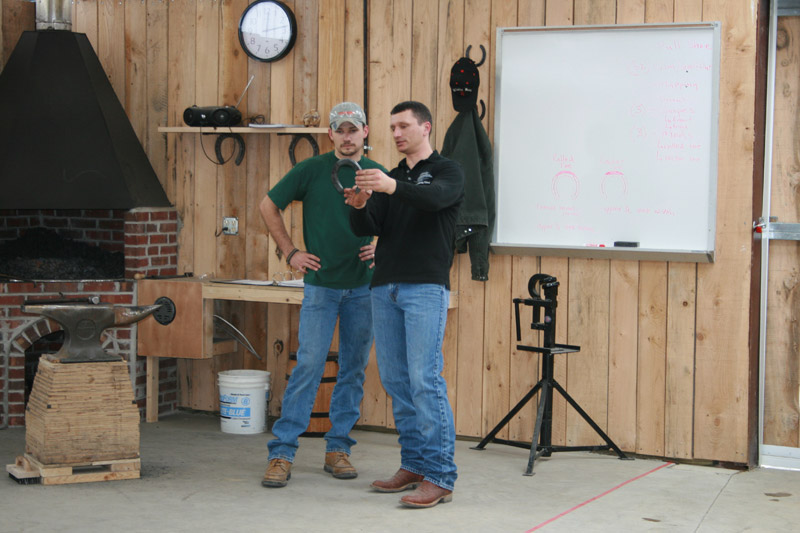
Instructor answering a student's questions in the KHS forge shop
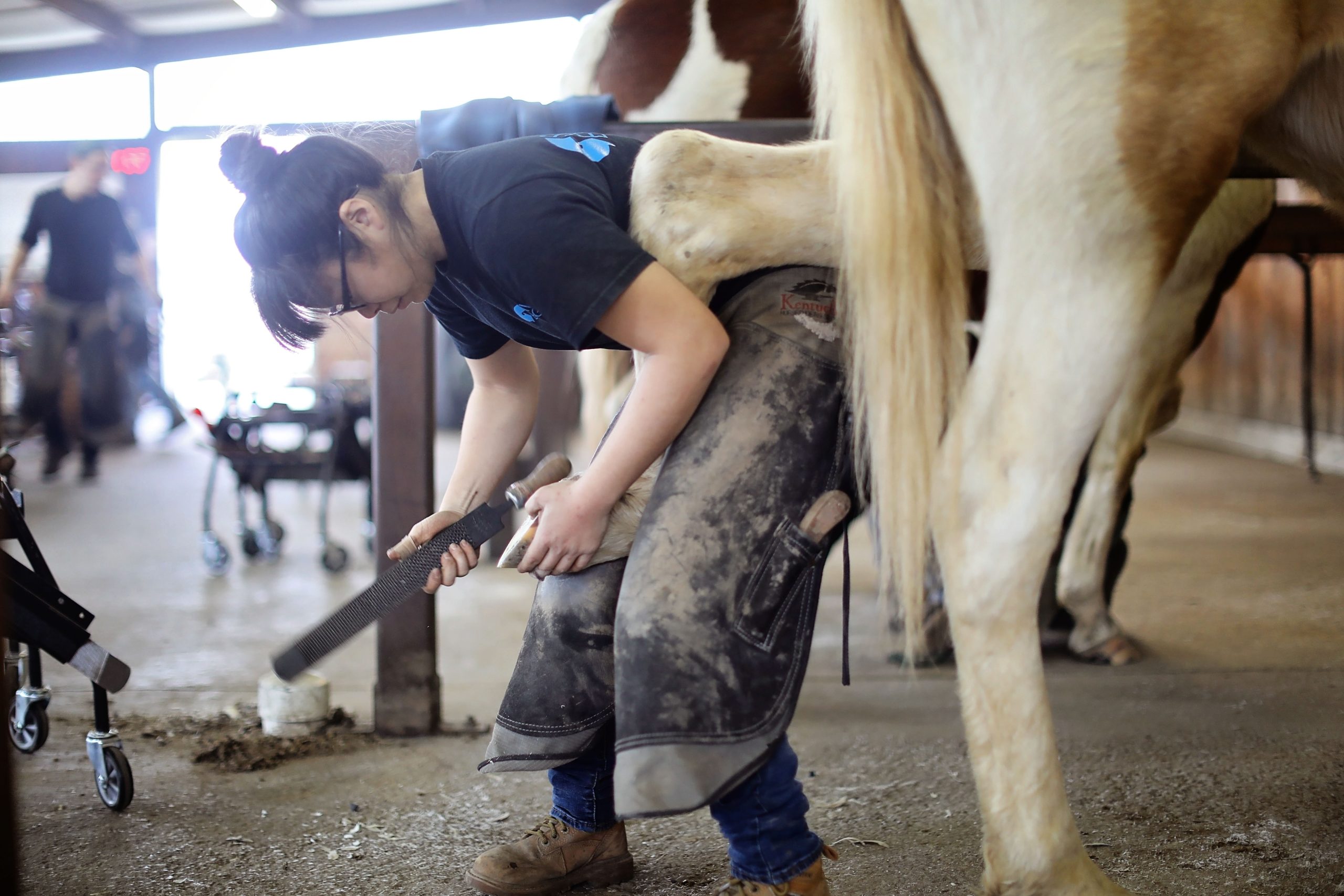
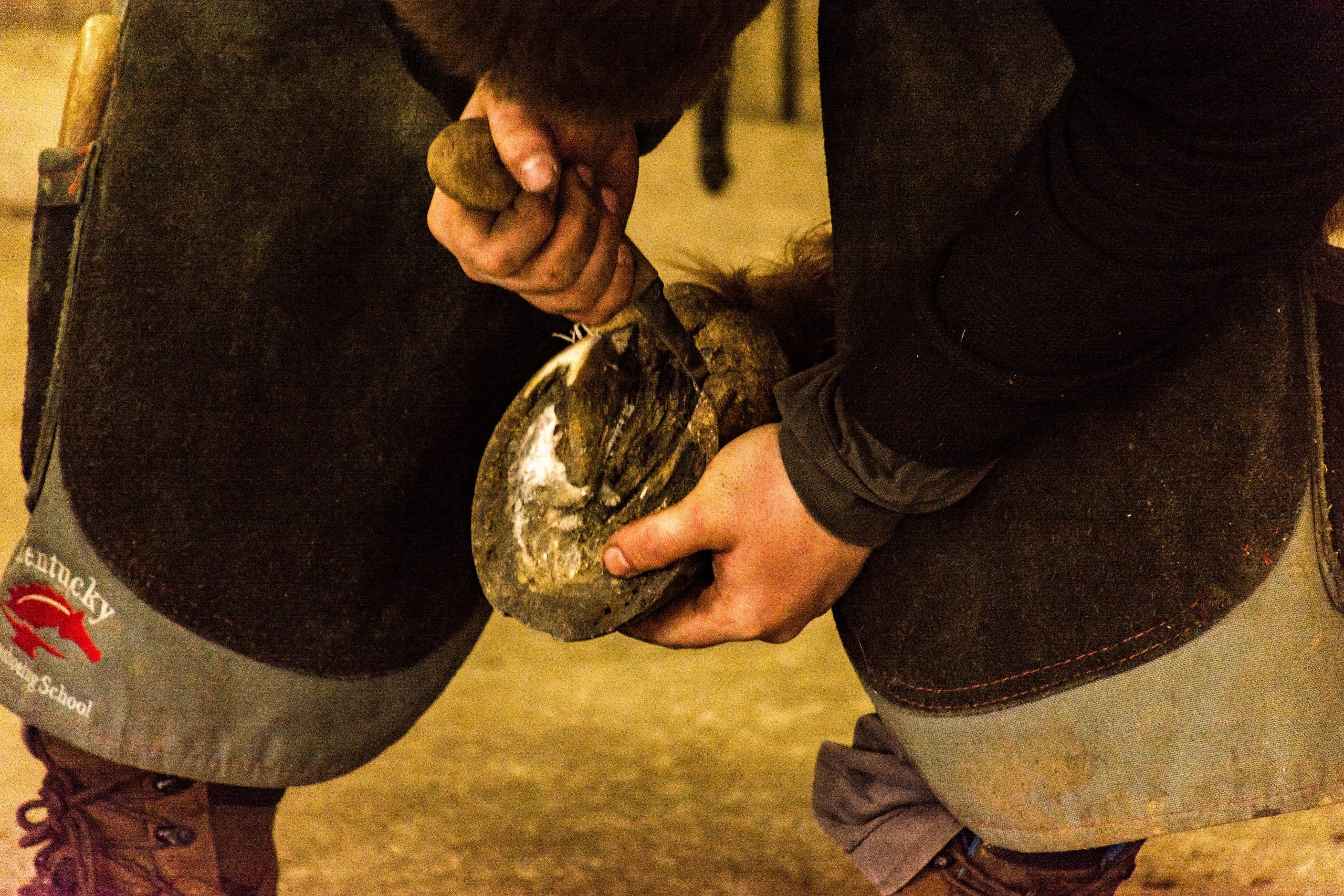
Kentucky Horseshoeing School student rasping a hoof at a cross-tie station
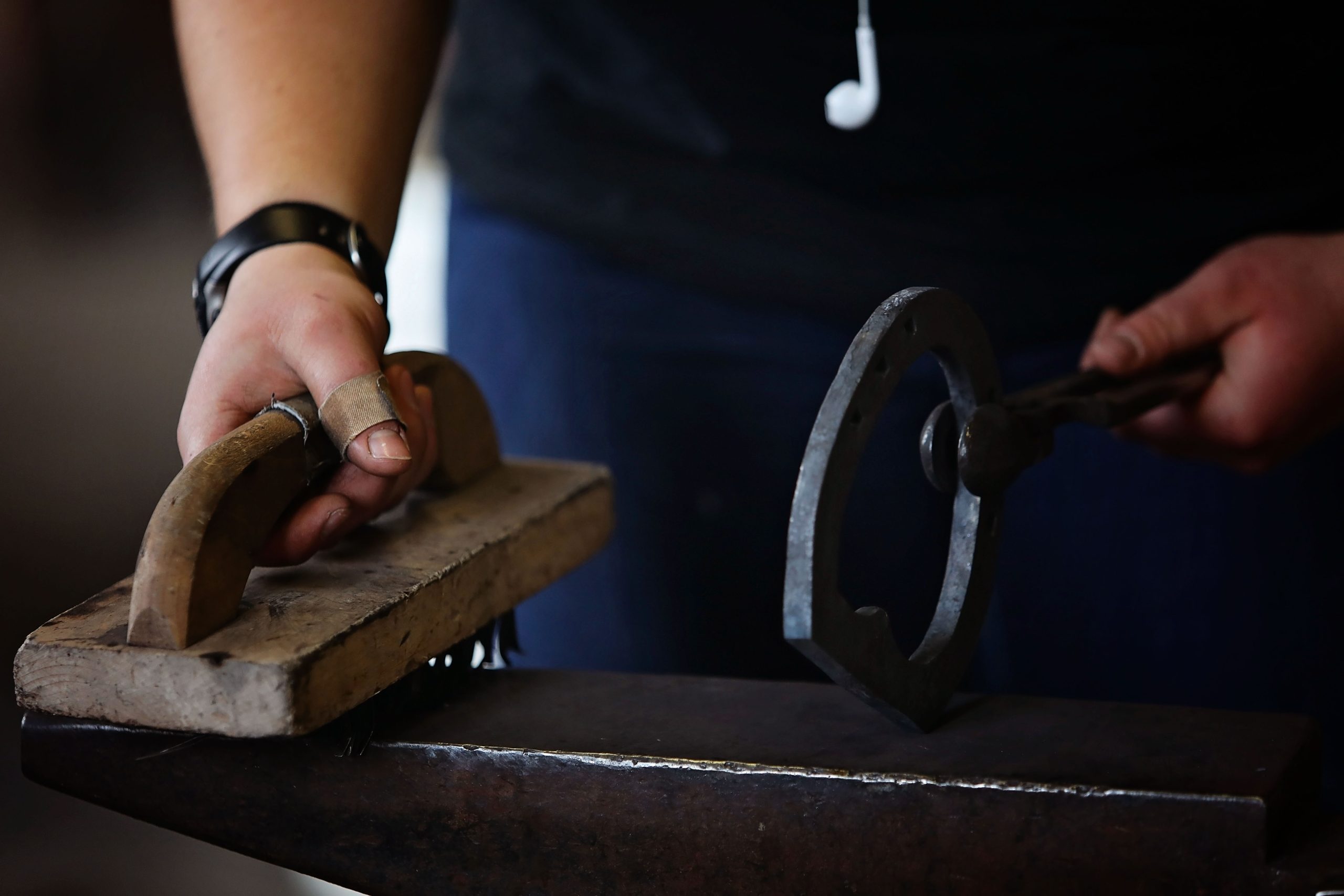
Shaping a horseshoe at the anvil in the KHS forge shop
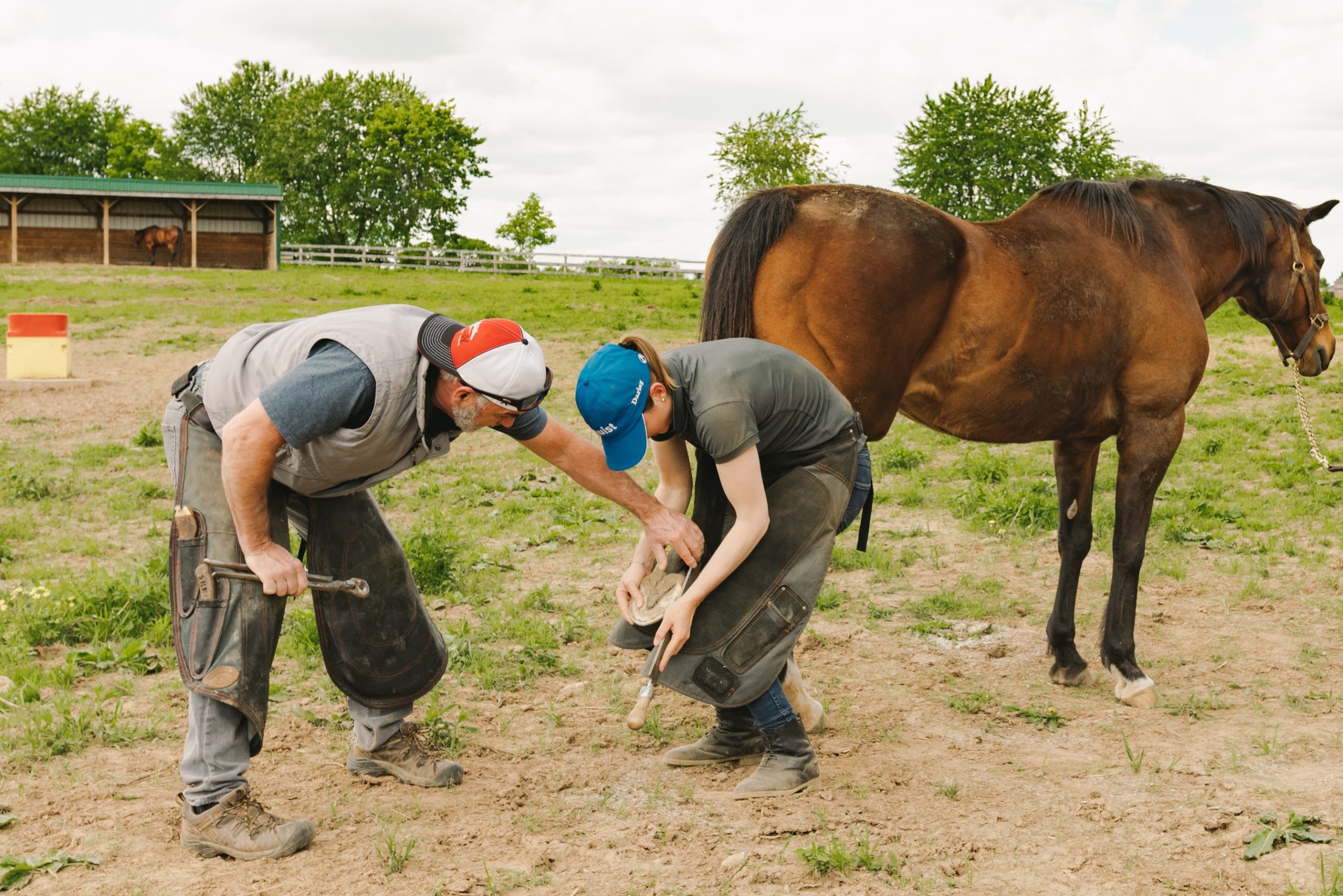
KHS students trimming a horse outdoors on a Kentucky farm
Student fitting a shoe to a hoof at Kentucky Horseshoeing School
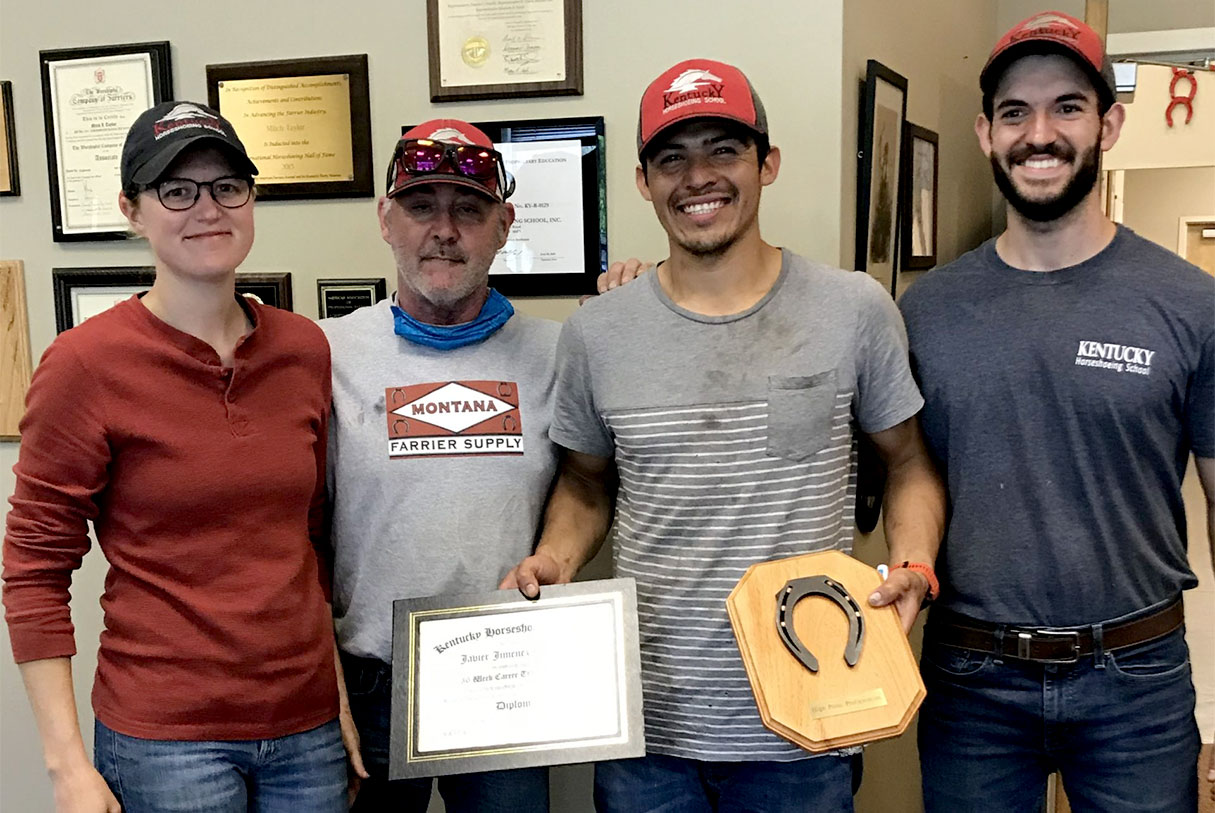
Kentucky Horseshoeing School graduates with their awards

Videos

Frequently Asked Questions

Can I make a living as a farrier?
Good, dependable, smart, and efficient professional farriers are in high demand today. In any business, there are variables that will determine one’s level of success. You have to factor in things like location, work habits, and willingness to travel, but it’s very possible to make a good living as a farrier. Our programs at KHS are designed to groom you for success. We prepare you to make farriery your career and your livelihood, not your hobby.
Is financial aid available?
Yes, Kentucky Horseshoeing School offers both Federal Financial Aid as well as private student financing. Please contact our admissions office for financial aid options.
Who are my instructors?
All instruction at the Kentucky Horseshoeing School is supervised by Mitch Taylor, CJF, AWCF. KHS also employs three assistant instructors at all times. These staff members are practicing AFA Certified Farriers, trained by Taylor to instruct students in basic farrier techniques. Mitch’s training of instructors insures that techniques are consistent throughout the program. These positions prove helpful in instructing from the student viewpoint and provide valuable insight and incentive for attending students.
What about class sizes?
One of the keys to success at KHS is our attention to class size. We limit student enrollments to 14 students per class so that we can offer each of our students personal and individualized instruction.
How are Kentucky Horseshoeing School instructors selected?
At Kentucky Horseshoeing School, our instructors are chosen based on both their professional expertise and their ability to teach effectively. Every instructor is a graduate of our rigorous 36-Week Career Track Farrier Program and has at least five years of real-world farrier experience. In addition, all instructors are Certified by the American Farriers Association (AFA) and complete an intensive one-year instructor training program before teaching students. To ensure they continue providing the highest quality education, every instructor also completes a minimum of five hours of annual professional development focused specifically on instructional methods and teaching techniques. This combination of industry experience, professional certification, and ongoing instructor development ensures our students learn from highly qualified professionals who are committed to both the craft of farriery and excellence in education.
What kind of teaching can I expect?
KHS instruction is designed to be well-rounded. You will acquire skills through a combination of classroom instruction, hands-on-training, laboratory demonstrations and field tours. In addition to basic horseshoeing and shoe making, you will learn equine anatomy, physiology, and the fundamentals of biomechanics. When not in the classroom, you are encouraged to further your skills on your own. Our shop and forge areas are open for practice when a staff member is present. During your tenure, you will master the fundamentals of farrier craftsmanship. You will learn how to trim a horse for proper balance and how to recognize and treat common types of lameness and gait problems. You will be guided through basic and advanced forging techniques, using both coal and gas forges.
How are exams structured?
Our exams are designed to prepare you for a career in farriery. They’re set up to take you step-by-step through the concerns you’ll encounter in your daily work, and they reflect what you will encounter as a career professional, taking part in the voluntary certification programs offered through the American Farrier’s Association. Our exams include written, practical, and oral components. KHS understands that each student will progress at his/her own rate and asks only that you put forth your best effort in order to reach your full potential.
What if I’ve never handled horses before?
Good horsemanship is an integral part of a farrier practice, so we incorporate these concerns into our instructional program. We start you with the basics, so inexperience is not a problem.
Will I get a chance to work on a lot of horses?
KHS is located in one of the most heavily populated equine areas of the world. Subsequently, we’re able to maintain regular accounts which reflect the diversity of horses that farriers can expect to find as they establish regular practices. Many horse owners bring their horses to the school, but we also travel short distances to many large farms. Students have the opportunity to work on many horses and many types of horses while at KHS.
In addition to shoeing horses, what other areas of instruction will I receive?
Contemporary farriery involves much more than shoeing horses, and our curriculum reflects that. We study mechanics, movement, and anatomy extensively, preparing our students to understand biomechanical horseshoeing. And we address the business concerns necessary to run a successful small business.
What do I do after school hours or on weekends?
Outside of the formal instruction period (8am to 5pm Monday through Friday), KHS students have numerous opportunities to engage in various activities. Numerous continuing education events, attended by practicing farriers and veterinarians from around the world, occur on-site many weekends throughout the school year, and students are encouraged to attend these events. And, because we’re in the heart of horse country, students often attend equine events in nearby communities. At KHS you are less than an hour’s drive from many of the industry’s star venues and events. In Lexington, you will find Keeneland Race Course, the Red Mile Harness Track and the Kentucky Horse Park (site of the Rolex 3-Day Event, the U.S. Polo Open, and the Egyptian Event). And to the west, in Louisville , you will find Churchill Downs-home of the Kentucky Derby, along with the Kentucky State Fairgrounds, which annually hosts the World Champion Horse Show.
What about tools?
KHS recommends that students outfit themselves with the appropriate tools when they arrive at the school. For that purpose, the staff at KHS has assembled a quality tool kit for each student. This selection of tools is chosen to ensure the best quality available at a competitive price, and is offered at a student discount from our supplier. With proper care and maintenance these tools should provide many years of useful service. Students who already possess their own tools may supplement their kit upon arrival. KHS staff members will help you evaluate and select the additional tools and equipment you will need.
What kind of facilities does KHS have?
Teaching and hands-on training at Kentucky Horseshoeing School is conducted in our new state-of-the art teaching campus. Our custom-designed 23,000 square foot facility is comprised of three individual shops, two classrooms, a welding shop and lounge facilities. These areas are designed to provide the optimum educational venue while assuring a safe environment. The entire facility is outfitted with the latest equipment and visual learning aids. KHS has four fully equipped work areas, with more than 30 workstations, complete with anvils and both propane and coal-fired forges. This allows each student to work at his or her own forge station and enhances student safety. For further efficiency and ease of learning, beginning and advanced forging classes/continuing education clinics are held in separate buildings. Although students may elect to lease apartment housing in nearby communities, KHS offers deluxe dormitories in a variety of configurations for both male and female students for an additional charge. A senior staff member resides on campus at all times and supervises students living on campus. Meals can be prepared in the dormitory kitchens or purchased at local cafes and restaurants. A lounge equipped with a television, VCR, and a library of educational videos is also available for student use. Additionally, KHS has wireless Internet capabilities for students to access the Internet.
Is Kentucky Horseshoeing School an approved school for training using the GI Bill®?
Yes. KHS is approved for benefits under both the Montgomery and the Post 9-11 GI Bills® as well as Veterans attending through Veterans Readiness programs.

Other Programs at Richmond

Kentucky Horseshoeing School in Richmond, KY also offers these 3 programs at 3612 Lexington Road, Richmond, KY 40475.

Kentucky Horseshoeing School

12-Week Farrier Survey Course

Diploma

On-CampusFinancial Aid
Richmond
Richmond, KY
Next start
Jan 4, 2027
Duration
12 Weeks
480 clock hours
App fee
$50
Tuition
$11,000 for the Program
Kentucky Horseshoeing School

36-Week Career Track Farrier Course

Diploma

On-CampusFinancial Aid
Richmond
Richmond, KY
Next start
Jan 4, 2027
Duration
36 Weeks
1,440 clock hours
App fee
$50
Tuition
$28,000 for the Program
Kentucky Horseshoeing School

Farrier Specialty Courses

Continuing Education

On-CampusFinancial Aid
Richmond
Richmond, KY
Next start
Rolling enrollment
Duration
—
App fee
—
Ready to get started?
Request information about 24-Week Intermediate Farrier Course at Richmond.
24-Week Intermediate Farrier Course