

Kentucky Horseshoeing School
12-Week Farrier Survey Course
Diploma
On-CampusFinancial Aid
Richmond
Richmond, KY
Next start
Jan 4, 2027
Duration
12 Weeks
480 clock hours
App fee
$50
Tuition
$11,000 for the Program
36-Week Career Track Farrier Course is a Diploma program offered by Kentucky Horseshoeing School in Richmond, KY. The program takes 36 weeks to complete, with a total tuition of $28,000.
The 36-Week Career Track Farrier Course is Kentucky Horseshoeing School’s most advanced and comprehensive professional training program. Building upon the foundational skills introduced during the first 24 weeks, this performance-based curriculum is designed for students who want to develop a higher level of technical ability, deeper industry knowledge, and the confidence needed for long-term success as professional farriers.
Created for individuals seeking the most complete preparation before entering the profession, the program combines extensive hands-on training with advanced theory and practical application. Graduates leave with a broader, more refined skill set and a stronger foundation for building a successful and sustainable farrier career.
This program moves beyond fundamental farrier practices to provide in-depth training in advanced hoof care, therapeutic applications, performance horse shoeing, and modern farrier techniques. Students develop a strong understanding of anatomy, physiology, biomechanics, lameness, pathology, and equine locomotion, with an emphasis on analyzing movement, identifying biomechanical abnormalities, and applying corrective and therapeutic shoeing strategies.
A significant portion of the course focuses on advanced shoe fabrication and forging. Students learn to design, build, and modify shoes for remedial, therapeutic, and gait-altering applications while developing greater proficiency in forging, gas welding and brazing, MIG welding, and tool fabrication. Instruction also includes the use of modern farrier materials and technologies such as adhesives, urethanes, non-ferrous shoeing applications, synthetic materials, and contemporary therapeutic products increasingly utilized throughout the industry.
In addition to standard shoeing practices, students receive specialized instruction in breed-specific and sport-specific shoeing techniques tailored to the unique demands of various equine disciplines and breeds. Throughout the program, students learn to interpret radiographs and collaborate professionally with horse owners and veterinarians while formulating treatment plans.
Beyond technical instruction, the Career Track program includes comprehensive education in personal health and longevity within the trade, professionalism, client relations, and small business management. Topics include scheduling, pricing, record keeping, customer service, communication skills, and strategies for developing and maintaining a successful farrier practice. Career Services support is also available to students enrolled in this program.
Students enrolled in this course are responsible for completing assigned readings and homework. Each student is required to provide a laptop computer or comparable device, as portions of the coursework and assignments require computer use.
Legacy and Experience. Kentucky Horseshoeing School has been at the forefront of farrier education for decades. Graduates of KHS can be found practicing their craft all over the world.
Expert Instructors. KHS boasts a team of highly experienced and accomplished farriers who are dedicated to sharing their expertise with students. These instructors possess an in-depth understanding of various horse breeds and shoeing techniques, ensuring that students receive a well-rounded education.
Comprehensive Curriculum. From anatomy and physiology of the horse’s hoof to forging techniques and corrective shoeing, the program equips students with a solid understanding of the science and art behind the craft.
State-of-the-Art Facilities. Students have access to fully equipped forging labs, shoeing stations, and live horses for practice, allowing them to hone their skills in a controlled and supportive setting.
Industry Connections. Kentucky Horseshoeing School has built strong connections within the farrier community. These connections may lead to potential internships, employment opportunities, or networking prospects that can jumpstart their careers.
Class size. Classes are limited to a maximum number of 14 students so that we can offer each of our students personal and individualized instruction.
Horse Capital of the World. Here in the “Horse Capital of the World,” we afford our students the opportunity to work on a wide variety of horse types and breeds. Additionally, our students are exposed to noted veterinarians, farriers and equine experts who frequently visit KHS as guest lecturers.
Business Module. Being a successful farrier is more than having the skills. The Kentucky Horseshoeing School offers the most comprehensive Business Module of any technical horseshoeing school in the United States. The materials developed for the Kentucky Horseshoeing School are structured specifically for Farriers, and include:
A completed KHS application is the first criterion for admission; applicants meet it when they submit an application form filled out in its entirety, including an essay responding to one of three given prompts. There is a required $50.00 application fee. A High School Diploma, General Education Development (GED) or equivalent certificate is the minimum requirement for admissions. KHS does not admit ability-to-benefit students.
Excessive physical strength is not required to become a successful farrier; however, you must understand the physical demands necessary to learn and perform the proper techniques of trimming and shoeing a horse, so a physical examination is required. Although no previous experience is necessary, all relevant experience will be considered when class placements are made. Due to the nature of the course materials, KHS does not accept transfer of credit from other institutions. KHS maintains an open-door policy of admission; classes are limited to 14 students and enrollment is granted on a first come first-serve basis.
Prerequisite: High School Diploma or equivalent.
Typical week. Classes are held Monday-Friday, 8:00 a.m.-5:00 p.m. with a 1-hour break for lunch, with makeup time available Monday, Wednesday and Thursday evenings from 6:00 p.m.-9:00 p.m. (not mandatory but recommended). Programs are measured in clock hours, and work outside the classroom (homework, etc.) is required. Terms are 12 weeks in length and the maximum class size is 14 students.
Start dates. Upcoming class starts are January 4, 2027; March 29, 2027; July 5, 2027; and September 27, 2027. 36-week graduation for those classes is September 23, 2027; December 16, 2027; March 30, 2028; and June 29, 2028 respectively. 2027 classes are nearly full, and the school encourages interested students to apply early as enrollment is limited.
2026-2027 breaks. Thanksgiving Break November 25-27, 2026; Winter Break December 18, 2026 - January 1, 2027; Summer Break June 18 - July 4, 2027.
Tuition and fees. Career Track Farrier: Tuition $28,000; Lab Fee $2,000; Total $30,000. The lab fee will help to cover the cost of student use of consumables. This includes but is not limited to, horseshoes, coke, steel, nails, sandpaper, and propane. KHS reserves the right to change the tuition; any tuition changes will occur at the beginning of an academic term and will not affect continuing students that have no break in attendance.
Application fee and deposit. An application fee of $50.00 is required and is non-refundable. Upon acceptance, a tuition deposit of $500.00 is due to secure the student’s place in a program.
Tools and books. A complete farrier tool kit is necessary to ensure proper instruction and learning for each student at KHS. Required Tool Kit: $3,134.00 (price subject to change); all required textbooks are provided as a part of the Student Tool Kit. Prospective students are responsible for the costs of all tools ordered when cancellation occurs less than 30 days prior to term start date.
Housing (optional). 2024-2025 housing rates for the 36-week course: Bunk Room (men only) $3,600; Double Room/Women’s Quad $4,500; Single Room $5,400; Apartment (single occupancy) $6,000. A damage deposit of $500.00 is required with the signed Housing Contract.
Cost of attendance. The KHS Consumer Information budget for this program is 1440 hours with a total cost of $44,230 (tuition, housing, tools, and living expenses).
Payment. Any individual financial arrangement must be made with the Financial Aid Office prior to the beginning of each term. All students are required to pay their tuition, fees, and other course charges on or before the first day of each term.
Financial aid. Financial assistance is available for qualified students. KHS offers the following types of financial aid to students that qualify: Federal Pell Grants, Federal Subsidized Loans, Federal Unsubsidized Loans, Federal PLUS Loans, Alternative Educational Private Loans, Veterans Educational Benefits and Scholarships. KHS is approved for benefits under both the Montgomery and the Post 9-11 GI Bills® as well as Veterans attending through Veterans Readiness programs. If completing a FAFSA application, the Kentucky Horseshoeing School code is 042396.
| Name |
|---|
Farrier Apprenticeship Placement. KHS strongly believes that working apprenticeships provide the best means for farriers to complete their education. That’s why placing our top graduates in working internships has always been our goal. Apprenticeships not only allow our students to extend their education under a trained master; they also allow students to obtain valuable first-hand experience and learn what is involved in successfully operating a working farrier service. Most apprenticeships include paid compensation, with salaries negotiated on an individual basis. While KHS cannot guarantee a paid apprenticeship to all graduates, we will make every effort to place qualified graduates in a qualified position.
Career Services. KHS provides an active placement assistance program without additional charge, including class instruction in job searching and interviewing techniques, assistance in preparation of application letters and resumes, and assistance in establishing job interviews. Employment opportunities may require relocation. During the final 12 weeks, students have the option to participate in a work interview (ride-along) prior to job placement.
Outcomes. For the 36 Week Career Track Course (ACCSC program code 2999, Diploma), the 2025 annual report covering class starts 04/23, 07/23, 09/23 and 01/24 shows a graduation rate of 94% (29 of 31 students available for graduation) and an employment rate of 100% (29 of 29 graduates employed in field). Graduation and employment rates are from the school’s ACCSC Graduation and Employment Chart (2025 annual report) posted on its Consumer Info page.
Compensation expected. The salaries mentioned here are a range of potential salaries; no guarantee is made. Farrier graduates can earn from $18,000 to $30,000 in compensation as an entry level position, depending on the work schedule and the area population. Farrier apprenticeships are negotiated on an individual basis and often can include housing or a housing allowance as well as work transportation. No licensure is required for this trade in the United States.
Theoretical. Lectures will be presented on a whiteboard or with PowerPoints which include high quality pictures and up to date information on the industry; students will participate in dissections, view high speed videos of horses on Poly-track Surfaces, and learn from the KHS Workbook, The Principles of Farriery, The Horse Conformation Handbook, Horse Gaits, Balance, and Movement, and the Essential Hoof Book. Class sizes are limited to 14 to ensure students receive the one-on-one attention they need.
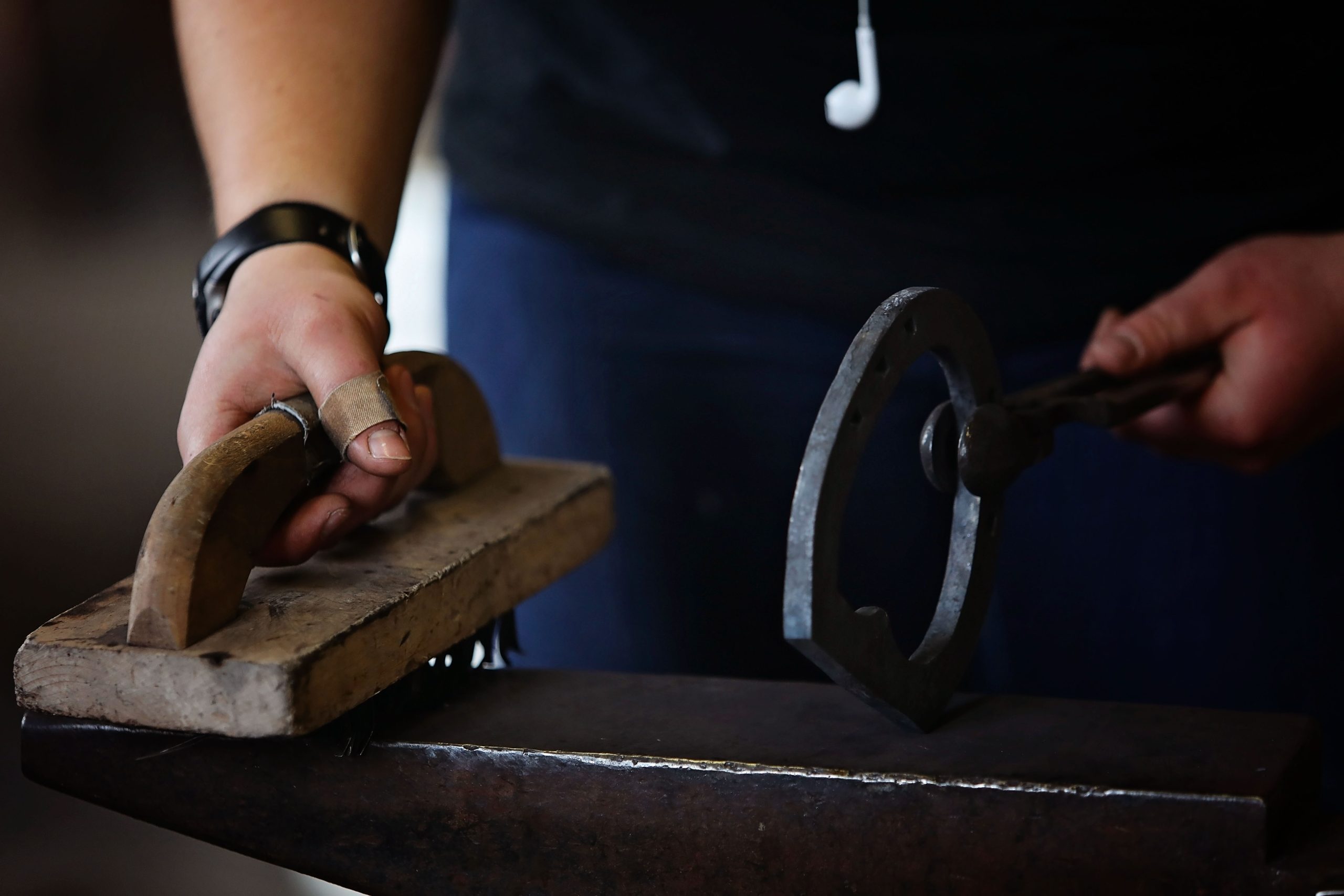
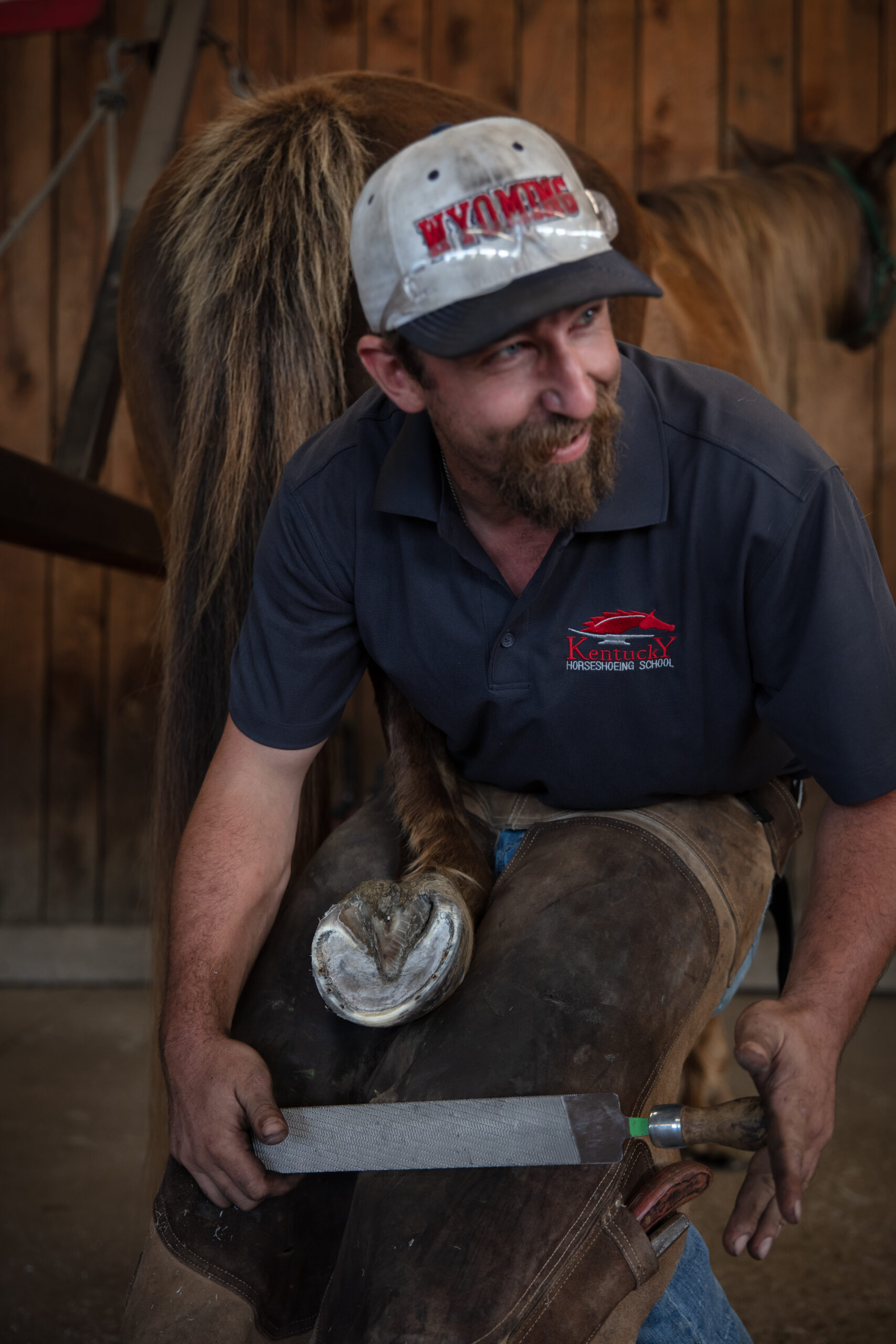
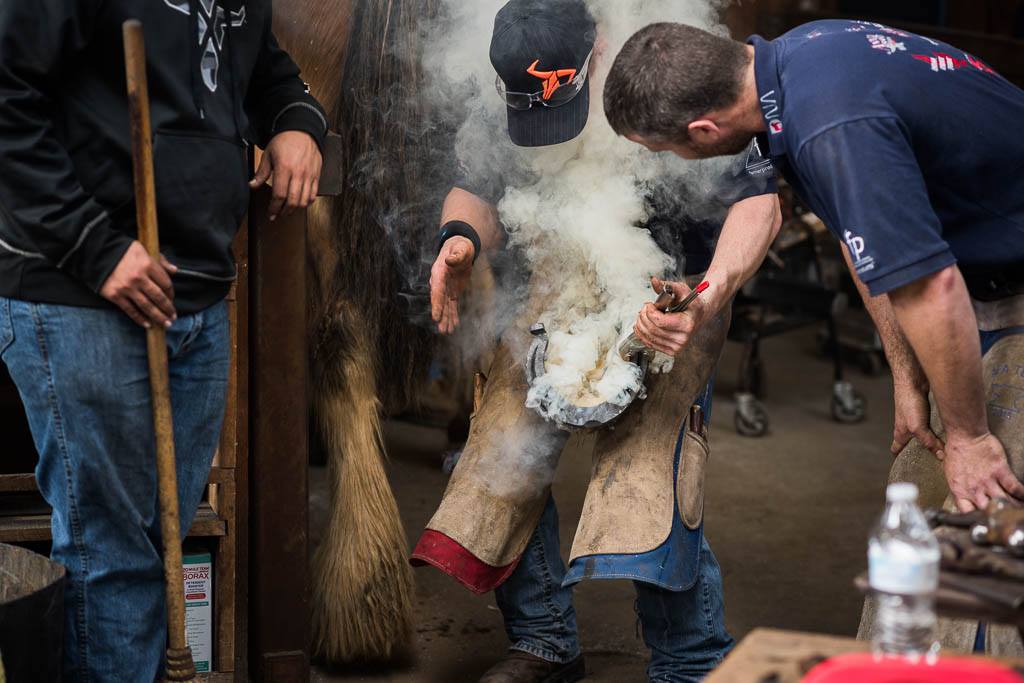
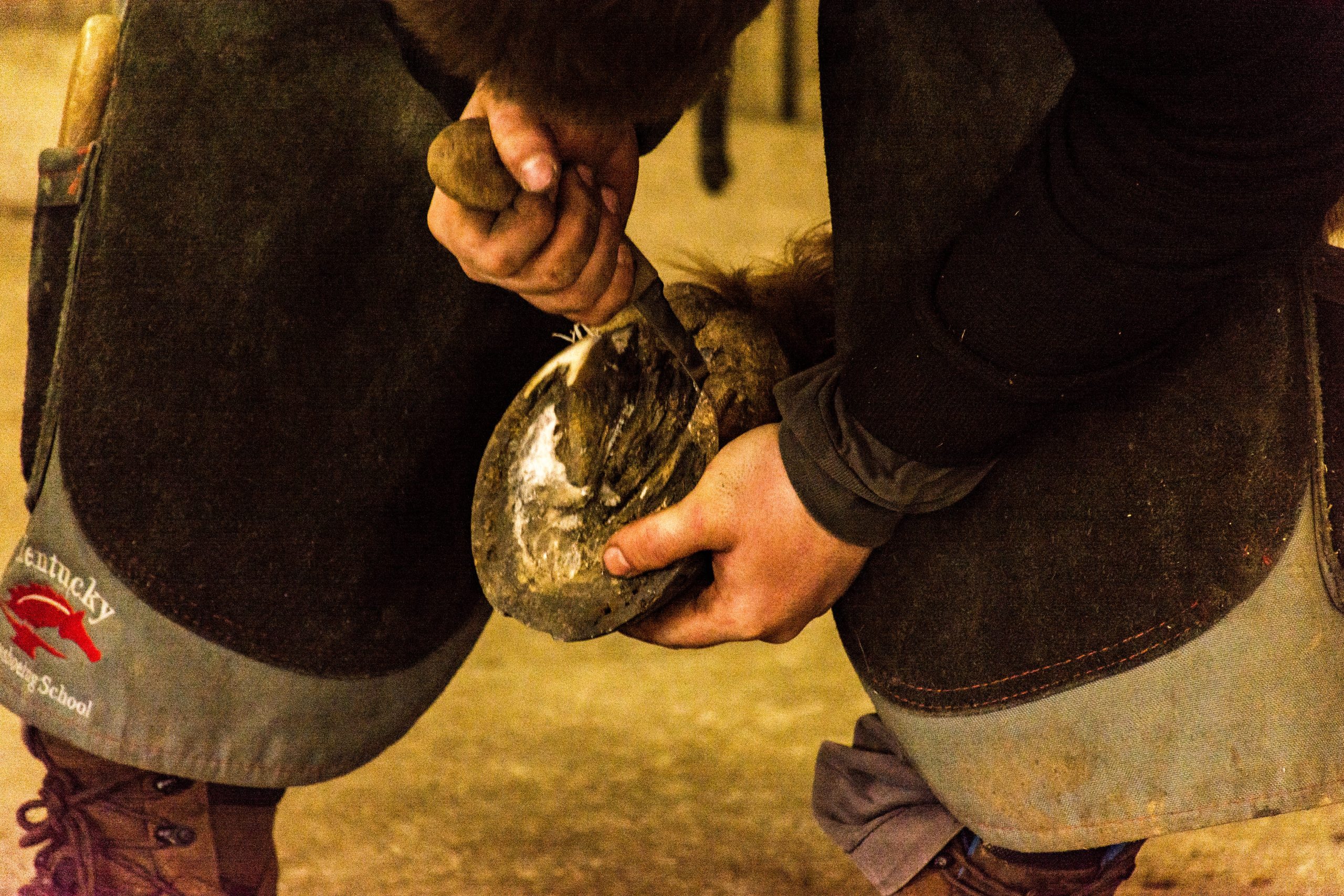
Practical. Students will begin with an introduction to all their tools and how to use them. Demonstrations will be done on cadaver legs first and students will be able to practice on them until they are competent enough to work on live horses. They are required to pass out trimming on a cadaver leg by the end of their first week and, beginning in their second week, they will go out trimming to local farms on Monday and Tuesday of each week. At the end of every week, a forging assignment will be due.
Campus life. The KHS dormitories on our Richmond Campus offer numerous options for both male and female students. Meals can be prepared in the large dormitory kitchen or purchased at local cafes and restaurants. A Resident Advisor resides on the KHS campus to oversee the students residing in the dormitories. Numerous continuing education events, attended by practicing farriers and veterinarians from around the world, occur on-site many weekends throughout the school year, and students are encouraged to attend.
Kentucky Horseshoeing School is accredited by the Accrediting Commission of Career Schools and Colleges (ACCSC), No. M072302, and is licensed by the Kentucky Commission on Proprietary Education.
These are demographics for all students at the Richmond Campus (IPEDS, 2024).
The 36-Week Career Track Farrier Course is 1,440 clock hours: Module 1 (480 hours), Module 2 (480 hours) and Module 3, the Career Track module (480 hours), combining classroom instruction plus lab and workshop instruction. In Module 3 the Career Track student will gain a thorough understanding of advanced anatomy, biomechanics, lameness, and pathology, modern materials (use of adhesives, urethanes, non-ferrous shoe appliances, gas welding and brazing, MIG welding, and tool making), personal health strategies, advanced business strategies, critical thinking strategies, farrier/vet relations, public speaking, and breed and sport specific shoeing techniques.
| Name | Total |
|---|---|
Kentucky Horseshoeing School in Richmond, KY also offers these 3 programs at 3612 Lexington Road, Richmond, KY 40475.
Diploma
Diploma
Continuing Education