

Pima Medical Institute

Diagnostic Medical Sonography (DMS)

Phoenix Campus
Phoenix, AZ
Associate Degree · Hybrid
Diagnostic Medical Sonography (DMS)
Pima is institutionally accredited by ABHES; the catalog lists no programmatic accreditation for DMS at the Phoenix campus.
Hybrid at Pima Medical Institute’s Phoenix, AZ campus: in-person instruction combined with online learning; externship hours are completed in person.
Tuition $46,695.00; total $50,193.00 incl. registration fee, textbooks, uniform and technology fee (effective July 1, 2026).
90 weeks: six 15-week semesters, 82.5 semester credits and 2,160 clock hours, including 30 weeks of clinical externship.
No application fee; a $150 registration fee is charged for each enrollment (included in the total cost).
Federal aid (Pell Grants, Direct Loans, Work-Study) for those who qualify; FAFSA school code 041771. Payment plans are available.

Diagnostic Medical Sonography (DMS) is an Associate Degree program (Hybrid) offered by Pima Medical Institute in Phoenix, AZ. The program takes 90 weeks to complete, with a total tuition of $46,695.

Program Overview

This diagnostic medical sonography program prepares you for an entry-level career as a sonographer, combining advanced imaging technology with hands-on patient care. The associate degree builds real, guided experience with the equipment and techniques used in hospitals and imaging centers every day.

Program objective. To develop in students the intrapersonal and professional skills needed to perform as competent entry-level general sonographers through didactic instruction, hands-on laboratory practice, and clinical experiences. Among the topics covered in the curriculum are anatomy and physiology, pathophysiology, ultrasound scanning techniques and protocols, the sonographer’s scope of practice, medical terminology, patient care, communications, medical law and ethics, and other topics necessary to be effective members of the sonography team.

Graduates of this program receive an Associate of Applied Science Degree.

What sets this Program apart

Core skills you’ll develop. Sonographic physics and instrumentation; abdominal, small parts and vascular imaging; patient care and communication; image analysis and recognizing abnormal findings; and medical law, ethics and professional practice.

A path to a bachelor’s degree. Pima Medical also offers an online Bachelor of Science in Radiologic Sciences for ARDMS-certified sonographers looking to advance.

Admission Requirements and Process

Admission to the Diagnostic Medical Sonography program at the Phoenix campus combines Pima Medical Institute’s institutional admissions requirements with the program’s own: high school completion, two entrance exams and an interview with the program team. Some programs set additional requirements in their admissions materials, so ask the campus for the program-specific Prospective Student Handout.

General Requirements

  • High school diploma or equivalent
    Submit proof of valid high school completion or its equivalent: a high school diploma or transcript, a GED® report and certificate, a state-recognized equivalency certificate…
  • Eligibility to study in the U.S.
    Applicants must be legally authorized to pursue education in the United States: U.S. citizens, lawful permanent residents, or holders of a valid visa that permits study.
  • Wonderlic Scholastic Level Exam
    Applicants to degree programs (other than Nursing) must reach a minimum score of 20 on the Wonderlic SLE. A passing score is good for one year.
  • PMI math admission test
    Associate degree applicants must score at least 80% (24 of 30 correct) on the math admission test. A calculator is allowed, the time limit is 45 minutes, and the test can be taken…
  • Program interview
    The DMS program requires an interview with the program director and/or faculty; the campus’s program-specific Prospective Student Handout has the details (catalog p. 86).
  • Background check and drug screening
    A background check and/or drug screen may be required before enrollment, during the program, or before externship, at the student’s own cost. Every applicant signs the Adverse…
  • Vaccinations
    Required vaccinations and titers are an out-of-pocket expense; the list is available on request. If a student is unable to obtain a required vaccination, Pima cannot guarantee…
  • Minimum age at externship sites
    Externship sites may have a minimum age requirement; Pima cannot guarantee externship placement for a student younger than 18.

Application Process

  1. 1
    Submit the Prospective Student Information Form
    Send the form and your high school verification to the Phoenix campus admissions office. Applicants under the legal age need the written approval of a parent or legal guardian.
  2. 2
    Meet with a medical career specialist
    Talk through your career interests and goals, then complete the DMS interview with the program director and/or faculty.
  3. 3
    Pass the entrance exams
    Take the Wonderlic SLE and the PMI math admission test.
  4. 4
    Submit your documents
    Provide the documentation the campus asks for and meet the program’s admission requirements.
  5. 5
    Request transfer credit (if applicable)
    Submit transcripts for any previous education you want evaluated before the program starts.
  6. 6
    Apply for financial aid
    Complete the Free Application for Federal Student Aid (FAFSA) at studentaid.gov using Pima Medical Institute’s federal school code 041771.

Program Schedule

Program length. At the Phoenix campus the program is 82.5 semester credits and 2,160 clock hours over 90 weeks: six semesters of 15 weeks each, including 24 externship credits across 30 externship weeks.

Hybrid delivery. The Phoenix campus offers this program in a hybrid format, which combines in-person instruction with online learning so students can engage with course materials at times that suit them; externship hours are completed entirely in person. The catalog directs students to the campus’s Prospective Student Handout for course-specific delivery methods, and attendance is required on campus for every course that includes on-ground delivery.

Class times. The campus’s 2026 start date calendar schedules DMS cohorts as morning (AM) classes; the campus class schedule sets morning classes 8:00 AM - 12:00 PM, Monday through Friday.

Cost of Attendance and Financial Aid Information

Cost and Financial Aid Information is an estimate for general reference only. It is not an offer or guarantee of financial aid or of any price, and what a School charges you may differ.
Total Program Tuition
≈ $46,695
Total Program Cost
≈ $50,193
FAFSA Code
Net Price Calculator

Tuition Price List, effective July 1, 2026. The total cost of the Diagnostic Medical Sonography program at the Phoenix campus is $50,193.00: tuition $46,695.00, registration fee $150.00, textbooks $2,463.00, uniform $165.00, technology fee $720.00. The price list’s cost per credit hour is $566.00.

Price list notes. Textbooks and uniform include tax at 9.1%. The technology fee shown is the combined charge for every enrollment period of the program; students who take longer than the published length (for example, to retake a course) continue to be charged a technology fee for each additional semester. The registration fee is charged for each enrollment, unless the student returns to the same program within 180 days. Students enrolling in a hybrid program have the option to purchase a laptop for an additional fee. Additional expenses may include required immunizations, health insurance, background check, drug screening, clinical registration fees, and travel or parking for clinical externships or field trips; the campus administrator can give details.

Financial aid. Pima Medical Institute participates in federal student aid programs for students who qualify: Federal Pell Grants and Federal Supplemental Educational Opportunity Grants, the Federal Work-Study Program, and Direct Subsidized, Direct Unsubsidized and PLUS loans. Apply with the FAFSA using the Phoenix campus’s federal school code 041771. Pima offers payment plans, and retail installment contracts are available to all students. Selected programs at this campus are approved for veterans educational benefits by the Arizona State Approving Agency.

Curriculum

The 82.5 credits combine 675 theory hours, 405 lab hours and 1,080 clinical externship hours. Semester I (15 credits) covers general education and science foundations; Semesters II to IV (40.5 credits) build sonographic physics, patient care, and abdominal, small parts, vascular and obstetric/gynecologic scanning through paired theory courses and scanning labs. Semesters V and VI (27 credits) are clinical practicums under the direct supervision of qualified clinical staff, alongside a professional practice course and an examination review course. Courses list the earlier semesters’ courses as prerequisites.

Required Courses

Subject #NameCredits

Career Outcomes

Where the degree can take you. Entry-level roles include diagnostic medical sonographer, abdominal sonographer, vascular sonographer, OB/GYN sonographer or musculoskeletal sonographer, with job titles such as sonographer, ultrasound technologist and ultrasonographer. These roles exist across a variety of environments, including hospitals, physicians’ offices, medical and diagnostic labs, outpatient imaging departments and free-standing urgent care facilities.

Certification. Phoenix graduates apply for certification through the American Registry of Radiologic Technologists (ARRT); Pima’s licensure disclosure adds that graduates of its DMS programs may be eligible to apply for the American Registry for Diagnostic Medical Sonography (ARDMS) board examination through one of the available pathways. Certification and state registration requirements vary.

Career advancement. Graduates can pursue specialty credentials independently, such as abdominal, breast, cardiac, musculoskeletal, pediatric, obstetric/gynecologic or vascular sonography.

Career Services. Pima Medical Institute students get access to the Career Services team for help finding the right job opportunities, building a resume, strengthening interview skills or general guidance.

What to expect as a Pima Medical Institute student

Clinical practicum. Externship hours must be completed entirely in person, because hands-on clinical experience is essential for developing the practical skills and confidence needed for real-world patient care. Students develop clinical competence by observing, assisting and performing the full range of sonographer responsibilities, and their learning is determined in part through frequent critique and evaluation.

Labs. The Arizona student-to-instructor ratio for Diagnostic Medical Sonography labs is 10:1 (updated 9/1/2026).

Progression. Students in degree programs who fail a course or externship are charged tuition for repeating it, at the cost per credit in their enrollment agreement.

Licensure and location. Pima’s State Licensure Determination Disclosure lists Arizona under “Program does not lead to licensure or Licensure Not Required” for Diagnostic Medical Sonography. Completion requires on-ground attendance at the campus where the student is enrolled and cannot be completed solely by distance education; moving out of state may affect a student’s ability to complete the program, so discuss any planned relocation with the Student Services Coordinator and/or Program Director.

Technology for hybrid courses. Online and hybrid coursework needs Windows 10 or later or MacOS 13 or later, an Intel i3 processor or equivalent, 8 GB RAM, a 250 GB SSD, internet access of at least 5 Mbps upload and 10 Mbps download, a Chrome, Firefox or Safari browser, speakers, a webcam and a microphone; Chromebooks are not fully supported.

Campus Address

Phoenix Campus
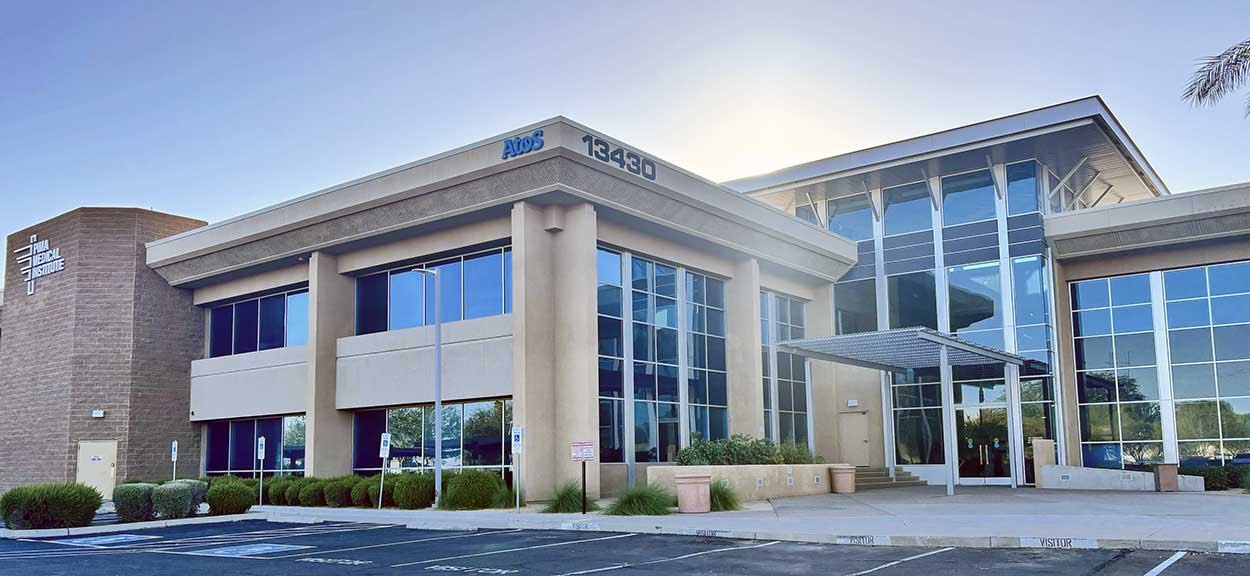
13430 N. Black Canyon Highway
Suite 100
Phoenix, AZ 85029

Why Accreditation Is Important

When you attend an accredited institution, you are attending a school that has undergone a rigorous process that evaluates educational quality. It's not easy to become or remain an accredited institution. The rules and regulations are strict, precise and designed to protect students. Here are some of the benefits:
  • A reliable indicator of quality
  • Approved program of study
  • Qualified instructors
  • Recognition by employers nationwide

Accreditations

Accrediting Bureau of Health Education Schools (ABHES)

Images

Diagnostic Medical Sonography (DMS) — image 1
Diagnostic Medical Sonography (DMS) — image 2
Diagnostic Medical Sonography (DMS) — image 3
Diagnostic Medical Sonography (DMS) — image 4

Frequently Asked Questions

What is a diagnostic medical sonographer?
A diagnostic medical sonographer, also called an ultrasound technologist, uses high-frequency sound waves to create images of the inside of the body. Physicians use these images, known as sonograms, to help diagnose medical conditions.
What does a diagnostic medical sonographer do day to day?
Sonographers prepare patients for exams and explain the procedure, position patients and operate imaging equipment, review images for quality and analyze results for abnormalities before summarizing findings for physicians. They also maintain equipment and keep detailed patient records.
What will I learn in this program?
You’ll learn anatomy and physiology, sonographic physics and instrumentation. You will also learn abdominal, small part and vascular imaging techniques, alongside patient care and professional communication. This program builds from foundational imaging concepts toward clinical practicums in your final two semesters.
How do I get certified as a diagnostic medical sonographer after graduation?
Completing this program makes you eligible to apply for certification. Phoenix graduates are eligible to apply for certification through the American Registry of Radiologic Technologists (ARRT). Eligibility pathways and requirements can vary depending on your specific campus and program. Confirm the details that apply to your campus with your medical career specialist.
How does Pima Medical prepare me for the ARDMS or ARRT certification exam?
Your final semester includes Sonography Examination Review, which builds on the imaging and clinical knowledge from earlier semesters to help prepare you for ARDMS certification or ARRT certification, depending on campus location, and your transition into professional practice.
Are there other sonography specialties I can pursue?
Yes. Beyond general abdominal and vascular sonography, ARDMS offers specialty credentials in areas such as breast sonography, cardiac sonography (echocardiography), musculoskeletal sonography, pediatric sonography and obstetric/gynecologic sonography, which you can pursue as you advance in your career.
Is there a clinical component to this program?
Yes. Your final two semesters include two clinical practicums of hands-on experience under the supervision of practicing professionals.
Is this program accredited?
Pima Medical Institute is institutionally accredited by the Accrediting Bureau of Health Education Schools (ABHES).
Is financial aid available?
Eligible students may be able to fund their education through federal financial aid programs, including Federal Pell Grants, federal student loans and scholarships. Speak with our financial services team or visit our Financial Aid page to learn more.

Other Programs at Phoenix Campus

Pima Medical Institute in Phoenix, AZ also offers these 10 programs at 13430 N. Black Canyon Highway, Suite 100, Phoenix, AZ 85029.

Pima Medical Institute

Dental Assistant (DEN)

Certificate

On-CampusFinancial Aid
Phoenix Campus
Phoenix, AZ
Next start
Rolling enrollment
Duration
30 Weeks
App fee
None
Tuition
$17,405 for the Program
Pima Medical Institute

Dental Hygiene (DH)

Associate Degree

HybridFinancial Aid
Phoenix Campus
Phoenix, AZ
Next start
Rolling enrollment
Duration
72 Weeks
App fee
None
Tuition
$72,414 for the Program
Pima Medical Institute

Medical Assistant (MA)

Certificate

On-CampusFinancial Aid
Phoenix Campus
Phoenix, AZ
Next start
Rolling enrollment
Duration
35 Weeks
App fee
None
Tuition
$17,152 for the Program
Pima Medical Institute

Medical Assistant (MA)

Certificate

HybridFinancial Aid
Phoenix Campus
Phoenix, AZ
Next start
Rolling enrollment
Duration
35 Weeks
App fee
None
Tuition
$17,152 for the Program
Pima Medical Institute

Phlebotomy Technician (PHL)

Certificate

On-CampusFinancial Aid
Phoenix Campus
Phoenix, AZ
Next start
Rolling enrollment
Duration
13 Weeks
App fee
None
Tuition
$4,840 for the Program
Pima Medical Institute

Sterile Processing Technician (SPT)

Certificate

On-CampusFinancial Aid
Phoenix Campus
Phoenix, AZ
Next start
Rolling enrollment
Duration
35 Weeks
App fee
None
Tuition
$16,401 for the Program
Pima Medical Institute

Surgical Technology (ST)

Associate Degree

On-CampusFinancial Aid
Phoenix Campus
Phoenix, AZ
Next start
Rolling enrollment
Duration
75 Weeks
App fee
None
Tuition
$37,940 for the Program
Pima Medical Institute

Veterinary Assistant (VTA)

Certificate

On-CampusFinancial Aid
Phoenix Campus
Phoenix, AZ
Next start
Rolling enrollment
Duration
30 Weeks
App fee
None
Tuition
$17,458 for the Program
Pima Medical Institute

Veterinary Assistant (VTA)

Certificate

HybridFinancial Aid
Phoenix Campus
Phoenix, AZ
Next start
Rolling enrollment
Duration
30 Weeks
App fee
None
Tuition
$17,458 for the Program
Pima Medical Institute

Veterinary Technician (VTT)

Associate Degree

HybridFinancial Aid
Phoenix Campus
Phoenix, AZ
Next start
Rolling enrollment
Duration
47 Weeks
App fee
None
Tuition
$18,624 for the Program
Ready to get started?
Request information about Diagnostic Medical Sonography (DMS) at Phoenix Campus.
Diagnostic Medical Sonography (DMS)