

Pima Medical Institute
Dental Assistant (DEN)
Certificate
On-CampusFinancial Aid
Phoenix Campus
Phoenix, AZ
Next start
Rolling enrollment
Duration
30 Weeks
App fee
None
Tuition
$17,405 for the Program
Sterile Processing Technician (SPT) is a Certificate program offered by Pima Medical Institute in Phoenix, AZ. The program takes 35 weeks to complete, with a total tuition of $16,401.
Sterile processing technicians, also known as central service technicians, are behind-the-scenes healthcare professionals who safeguard patient safety during surgical operations. They clean, decontaminate, inspect, assemble, package, and sterilize the medical instruments and surgical trays used in hospital operating rooms and outpatient surgical centers.
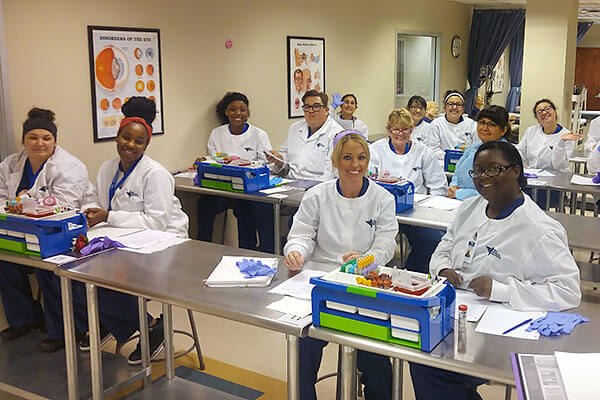
Program objective. To develop in students the intrapersonal and professional skills needed to perform as competent entry-level sterile processing technicians through didactic instruction, hands-on laboratory practice, and externship experiences. Among the topics covered in the curriculum are surgical instruments, microbiology, medical equipment, surgical terminology, storage and distribution, skills required for sterilization and decontamination, and other topics necessary to be effective members of the sterile processing technician team.
Graduates of this program receive a certificate and are eligible to apply to take the Certified Registered Central Service Technician examination through the Healthcare Sterile Processing Association. The courses within the program are acceptable for credit toward PMI’s Health Care Administration Associate of Applied Science Degree Program.
Core skills you develop. Pima lists six skill areas for this program:
A 400-hour hospital externship. The externship provides hands-on clinical experience in a hospital and/or surgery center and meets the clinical hour requirements to sit for the Healthcare Sterile Processing Association certification exam; a certification review course prepares students for the CRCST exam.
Sterile Processing Technician applicants meet Pima Medical Institute’s institutional admissions requirements and a program-specific entrance exam score: a minimum of 16 on the Wonderlic Scholastic Level Exam, higher than the 14 required for other certificate programs.
The program is 35.5 semester credits and 900 clock hours, completed in 35 weeks on a five-day schedule or 39 weeks on a four-day schedule, including a 10-week, 400-hour externship (8.5 credits).
On-ground delivery. The Phoenix 2026 start-date calendar runs morning, afternoon and evening sessions of this program on-ground; classes and labs are taught on campus and externship hours are completed in person.
Class times. Morning classes meet 8:00 AM to 12:00 PM and afternoon classes 1:00 PM to 5:00 PM Monday through Friday; evening classes meet 5:30 PM to 9:50 PM Monday through Thursday.
The Phoenix campus Tuition Price List, effective July 1, 2026, lists the Sterile Processing Technician (SPT) program at a total cost of $17,607.00: tuition $16,401.00, registration fee $150.00, textbooks $626.00, uniform $165.00, technology fee $265.00. The cost per credit hour is $462.00. Textbooks and uniform include tax at 9.1%.
The registration fee is charged for each enrollment, unless returning to the same program within 180 days. The total technology fee included in the Tuition Price List is the combined cost of charges for each enrollment period of the program, as published in the PMI Catalog. Additional student expenses may include, but are not limited to, required immunizations, health insurance, background check, drug screening, clinical registration fees, and travel/parking expenses related to clinical externships or field trips.
Financial aid. Pima Medical Institute participates in federal financial aid programs, including the Federal Pell Grant and federal student loans, for students who qualify; grant options may also include the Federal Supplemental Educational Opportunity Grant. Institutional scholarships and payment plans are available for those who qualify, and each campus has a financial services department to help students obtain financial aid information. Pima accepts VA and military education benefits for those who qualify, including the Post-9/11 GI Bill® (Chapter 33), Montgomery GI Bill® Active Duty (Chapter 30) and Selected Reserve (Chapter 1606), Survivors’ and Dependents’ Educational Assistance (Chapter 35), Veteran Readiness and Employment (Chapter 31) and MyCAA for military spouses. Financial aid starts with the Free Application for Federal Student Aid (FAFSA); the federal school code for the Phoenix campus is 041771.
The program is organized as a Career Prep Sequence, three Professional Sequences and an externship sequence: 345 theory hours, 155 lab hours and 400 externship hours, for 35.5 semester credits.
The Professional Sequences cover the principles of sterile processing, surgical instruments, microbiology and infection control, sterilization procedures, storage and distribution, surgical terminology, decontamination and medical equipment, with lab practice in instrument identification, sterilization and decontamination.
The externship and certification review follow successful completion of the Career Prep Sequence and Professional Sequences I through III.
| Subject # | Name | Credits |
|---|---|---|
Graduates can work as sterile processing technicians or central service technicians in hospital Central Sterile Supply Departments (CSSD), outpatient ambulatory surgical centers, dental surgery clinics and specialty surgical practices, endoscopy suites and cardiac catheterization labs, and medical equipment sterilization contract companies; advancement paths include sterile processing supervisor, central service manager, surgical instrument specialist and CRCST-certified technician lead.
Certification. Graduates are eligible to take the Certified Registered Central Service Technician (CRCST) credentialing examination through the Healthcare Sterile Processing Association (HSPA). Pima’s Licensure Determination Disclosure lists the program as not leading to licensure, or licensure not required, in Arizona.
Career Services. Pima’s Career Services team is responsible for externship placements and partners with more than 15,000 employers who provide real-world training to students; after graduation it provides job placement assistance, including help with cover letters, resumes and interview skills.
Externship. Students hone their skills in patient care equipment, general cleaning, wrapping and packaging, assembling instrument sets, sterilization and cleaning, case carts and distribution. Externship absences must be made up prior to graduation, and externship absences in excess of 15 percent of the scheduled clinical hours may result in termination.
When you attend an accredited institution, you are attending a school that has undergone a rigorous process that evaluates educational quality. It's not easy to become or remain an accredited institution. The rules and regulations are strict, precise and designed to protect students. Here are some of the benefits:
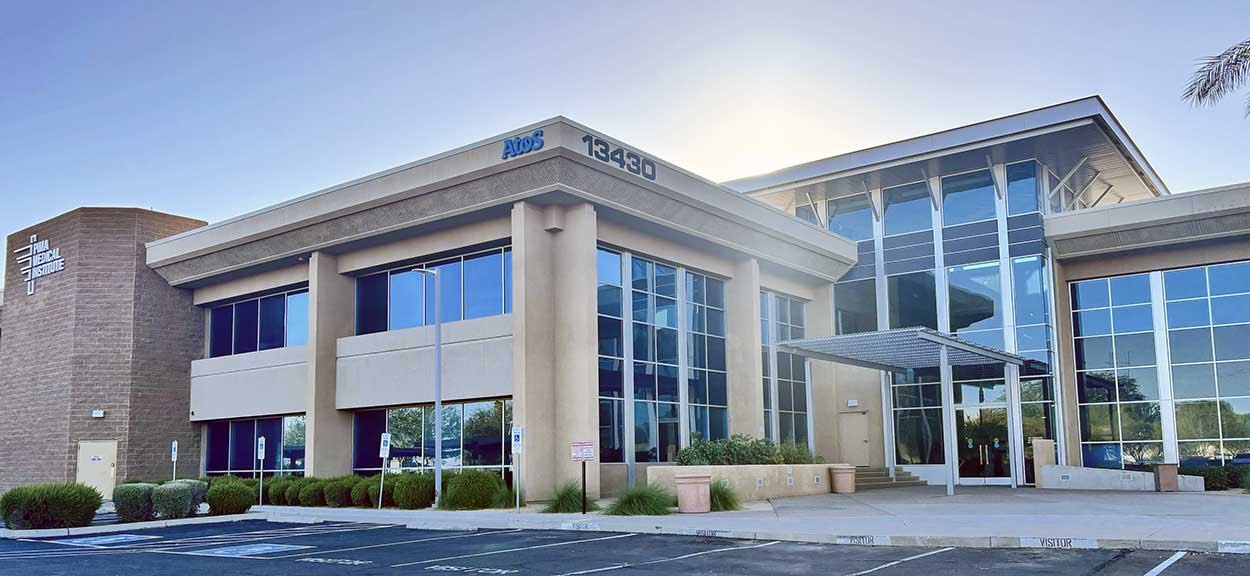
Pima Medical Institute in Phoenix, AZ also offers these 10 programs at 13430 N. Black Canyon Highway, Suite 100, Phoenix, AZ 85029.
Certificate
Associate Degree
Associate Degree
Certificate
Certificate
Certificate
Associate Degree
Certificate
Certificate
Associate Degree